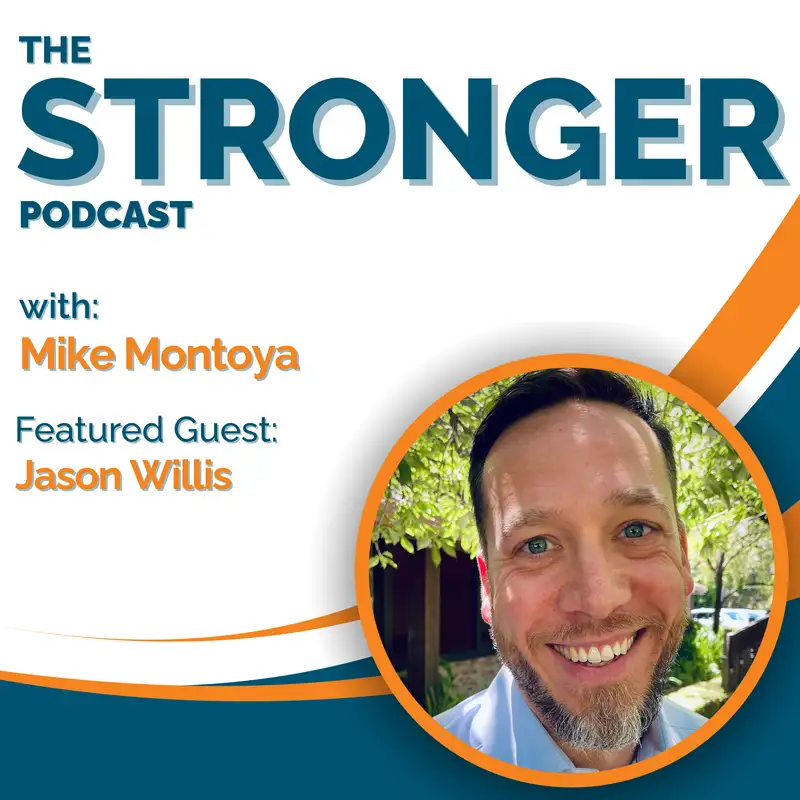
Most of the Kids Are Still Here: How States Can Help Schools Plan for Declining Enrollment (with Jason Willis)
Mike Montoya: Welcome to the Stronger Podcast. Each week, we have honest conversations with education and social impact leaders about their leadership and career journeys. We talk about their origins, inflection points, and the work that they're doing today. The conversations are honest, human, and practical. If you're here for real stories and real takeaways, you're in the right place.
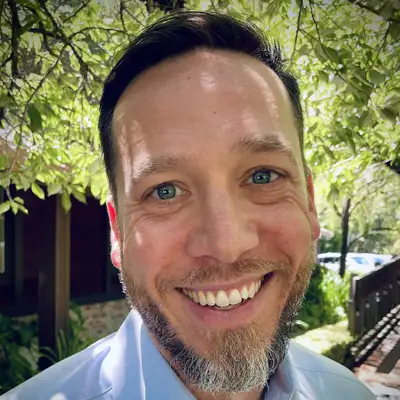
Mike Montoya: Let's jump in, and let's get Stronger together. Welcome back to The Stronger Podcast. Today, I'm with my longtime friend, Jason Willis. He's a senior policy fellow at WestEd and teaches public policy at the McGeorge School of Law in California. Today, we talk about a recent report declining enrollment in public schools, which was co developed by WestEd and Bellwether.
Mike Montoya: Let's jump into it. Good morning. Good afternoon, everybody in the Stronger Podcast land. It's fun to be here with you again today. Today, I'm with, Jason Willis, who is, a friend and colleague for many years of my career and my life. And, Jason is in the Bay Area in in California.
Mike Montoya: But, Jason, welcome to the show. And why don't you tell us where you're at? I think you're in the Bay Area. And then also, like, what is your job, roughly, so people understand what what you do roughly?
Jason Willis: Yeah. So still in the Bay Area. I think we actually... When, we first met Mike, was still here in the Bay Area. So I'm thrilled to be on the show today and looking forward to our discussion. So I spend my time, kind of in two places.
Jason Willis: The first is as a senior policy fellow at WestEd. It's a national nonprofit that's been supporting education human development issues for almost sixty years now. And I spend another portion of my time as clinical professor of public policy at the McGeorge School of Law at University of the Pacific.
Jason Willis: Campus is up in Sacramento. You can see the Capitol from classrooms. It's that close. So a lot of work, great opportunities for for students in that space.
Mike Montoya: That's awesome. So you're doing a little bit of driving around in the California. That's like a very normal thing, right, to do that that kind of activity. Yeah. For sure. For sure. But some history, though, before you became kind of connected with WestEd and and and that work, the policy work.
Mike Montoya: Right? But you had... You started out in education work, though, more on the finance side, right, in school districts. Is that true?
Jason Willis: Yeah. I mean, one thing folks may not know about my my professional history is I actually started out on Wall Street. I was credit rating analyst with Standard and Poor's. So help to basically assess the financial health of public entities, including school districts, cities, etcetera.
Jason Willis: And yeah, and then after that, came to California where I was in Oakland Unified as budget director, moved to Stockton as their CFO, and then spent about five years in San Jose Unified as assistant superintendent. So yeah, I've I've kind of experienced what it's like to to be in systems and pretty... I mean, particularly larger ones, which has always been kind of my passion and and space.
Mike Montoya: Yeah. I mean, the... And the public school systems, right, are are, like, where most kids in the country, like, live and go to school. Right? There's, I don't know, 70... 50,000,000 kids or 70,000,000 kids in in public schools across the country. And and, you know, California, of course, is is got a lion's share of those of those youngsters going through the processes and experiences.
Mike Montoya: So but so you've, like, learned how to, like, I call it pull the levers, know where they are. Right? And, you know, from the finance side, like, where where it's ins and outs in California funding is is a very complex thing. We won't get into school funding because that's like a that's like a five hour topic that can be a lecture for your for your policy group.
Mike Montoya: But I think one of the things that I wanted to talk with you about today was this work that you guys recently did in combination with Bellwether, right, and the work around declining enrollment in public schools. And so, like, we've all known that this is happening for a while.
Mike Montoya: Right? We see it happening, less kids showing up in classrooms, and people are like, where are the kids? Some of that was pandemic related. Right? But that is not the only feature going on here. And so I'm going just make sure our readers, our listeners hear about this.
Mike Montoya: They'll see this on the on our website. This is the the report. It's only 12 pages, which is good because people don't read 50 page reports anymore. So thank you for that. But tell us just give us the give us the the broad strokes about what this... Why you guys decided to do this this this work. And then like, what are some of the things that you learned?
Jason Willis: Yeah, I so this was a great piece I did with a colleague, Carrie Hahnel over at Bellwether, who, you know, in her own right, has just a great history and angle on public education work. And I think together, we've both been seeing the issue of declining enrollment for several years now.
Jason Willis: In fact, it really precedes the pandemic. It had begun basically in the middle, middle 10s and the pandemic, I think, really just simply accelerated a lot of that, particularly for parents that had means to change systems, move to different places in the country, to have, you know, options for choices, not every family has those kinds of options.
Jason Willis: And so, you know, we're kind of at a moment now where a lot of districts are experiencing this. And the biggest driver that I think, you know, may be less known to folks is that this is really coming from birth rates in The United States.
Jason Willis: So a much bigger kind of social and ecological problem challenge that we're having. And we are one among many, know, social systems that are, excuse me, dealing with the kind of results of that. And we're going to feel it for a while, right?
Jason Willis: So there's current projections that put us, you know, somewhere in the 30s before we start to see a flattening or increase in enrollment again. And we don't have necessarily all the public resources to continue to support the system design that we've had in the past with so many, many students.
Jason Willis: And so there's this moment where a lot of school systems, a lot of states are asking genuine questions about like, how do we find our way through this? And so part of this piece was really focused on the state level. There's been a number of pieces out there that look at some of the district responses, but really the way that Carrie and I went about this was thinking through how does the state genuinely be a support to school systems and how do they help them to navigate and move through these kinds of decisions, which are, I mean, genuinely difficult, right?
Jason Willis: If you talk to any school board, superintendent, cabinet leader, you know, they will tell you that closing a school or consolidating a school is nearly one of the most difficult things to do in any school system. And so that's really the kind of way that we went about trying to tackle the issue, knowing that the gravity of it is pretty big, and there's still a lot of misconceptions out there about it.
Mike Montoya: Yeah. So so it's coming regardless. And and and nothing... Nobody did anything wrong. It's just that people are having less kids. Right? And there's some other things that are featured here, right, which is, like, immigration has slowed down a little bit. Right? And there's also some some resistance to, like, you know, newcomers in in our country right now, right, which which is another piece of the puzzle.
Mike Montoya: Right? But like like fewer kids entering the school system. And so we can kind of see, like, the next ten to twelve years, right, that there will not be, a new spike of of of youngsters joining up. And so that means everything kind of, like, contracts.
Mike Montoya: Right? At the core of this problem, though, I think it basically, like, goes with, like, okay. Less kids means less dollars per kid coming into a school system, right, from state or federal funding. Also, local tax dollars, etcetera, are often associated with total numbers of kids.
Mike Montoya: And so all those things are featured, right, in this in this conversation. What do you think what do you think the necessary messages are that states need to be thinking about, right, as they as they kind of kind of start to grapple with this.
Mike Montoya: Right? Because, you know, there are more dollars in the state to do more things, but the question is always, like, about how they do it and what do they do with it. So what are you what are you guys thinking about and encouraging folks to think about?
Jason Willis: Yeah. I mean, that's a constant choice of any state legislature, administrative leader, governor, etcetera, is you got limited resources. Right? We're not a company out of Silicon Valley or, you know, building a portfolio of AI companies. So we do we have to make explicit choices about what we are deciding or not deciding to do.
Jason Willis: And that's really hard in a child and youth serving system. And nobody wants to feel like you can't provide something for a child or a youth. And so the question really becomes how do you optimize for that? And I think a lot of the kind of posture that states have typically taken around education policy and some of the challenges that are out there, like they vary, but generally it's really the money and then the written policy.
Jason Willis: And they really leave it up to the rest of the system to kind of figure out how best to then arrange the system, design the system in a way that's gonna help to alleviate that issue. And I think this one in particular, this issue in particular is really different, right?
Jason Willis: Most states have gone through some type of economic upswing or downturn. We saw that through the pandemic, those that were in systems during the great recession, you know, we could go on and on in history. But this is really different. This is fundamentally a different challenge that districts have very have any leader in public systems have faced in the last twenty years.
Jason Willis: And particularly because it's structural, right? Like the money's not coming back, right? Like, you know, you're not gonna get a recovery where, you know, money's just gonna come back into the system with the same number of students. You could get better at recruiting students.
Jason Willis: Right? We don't do that very well in traditional schools as compared to charters. Yeah. But, yeah, it's a fundamentally different issue, and I think states need to take... We... You know, certainly, Carrie and I think that states need to take a different posture on this.
Mike Montoya: Yeah. So there's... I think in business, right, there's... Yeah. When when when revenues are down, you cut costs somewhere, right, and you balance your budget roughly. That's how, like, businesses operate and function. Right? And public systems, though, have a lot of assets, and I call it things that are pretty fixed.
Mike Montoya: Right? Like buildings and bonds and lots of things that are, like, not easy to just, like, call it scale down. Right? So, like, those are harder things to shift around. And as I think what you said is essentially, like, closing a school, consolidating a school is like a real project or if you have to do multiple schools, right?
Mike Montoya: Lots of other districts have tried to do this historically, right? And it's always a lot of things going on here, right, in that regard. Like, why is it that why... I mean, you you don't have to have, like, the perfect answer here, but it's like, what are the things that districts really struggle with when it comes to, like, actually consolidating or closing a school?
Mike Montoya: Like, what are the things that people, like, run into when they have to think about that conversation?
Jason Willis: Yeah. I mean, I I think the first thing is don't jump to closure or consolidation. Right? Like, your circumstance... Yeah. I mean, your circumstance could be really different. In fact, you know, I think another important fact is that, yes, nationally, states are projected to or have been losing students year over year.
Jason Willis: That is true. But it doesn't mean that every district is losing. In fact, what we find there's actually some new analysis out, Bellwether has done some of this, where there are actually systems that are growing, particularly in the exurbs where costs are lower and families are able to move there to feel a little bit more comfortable.
Jason Willis: Makes sense, right? If inflation is running higher, you know, then the growth in income, you know, families are going to do what they feel like they need to for their kids. Bottom line. And so I think that the first thing is just understanding like where you are, right?
Jason Willis: And there could be circumstances where your projected enrollment is eroding so fast that you will have to consider that kind of a move, but that's not always the case. And I think once you get past that, then one of the biggest challenges is figuring out how best to adjust the expenditures that you currently have to the revenue that you will have.
Jason Willis: And I think that that's a really important frame. And I say that very intentionally will meaning you got to look into the future, right? You can't just like look to next year and say, oh, we've resolved the problem. And we've actually seen a lot of districts that have done this and they have started to get caught in this cycle of they cut one year and they're like, okay, the problem's resolved and they come back and they come back next year, more students are gone.
Jason Willis: So they cut more and it's this like death by a thousand cuts kind of thing. Right? And so the forecasting, the predictive, right, that's another challenge that we see with districts is that they're not looking far enough ahead. And then when they are making a decision to adjust their system, that they are adjusting it, what we want them to do is adjust for what it will be in five or even ten years.
Jason Willis: We don't want them to be adjusting for next year or the year after, because that is just a form of incrementalism that is really gonna wear on a community. And you can look at all kinds of systems around the country, including, you know, one that I, you know, have a, you know, a love struggle relationship with in Oakland, right?
Jason Willis: They just they've gone after this too many times. And it's really, it's really damaged the relationship with the with the community. I think the other thing that I would say too around this issue is that most people think very quickly about what they connect when you hear declining enrollment is the money. In fact, that's how you started. Right, Mike? Yeah.
Mike Montoya: That's how I started. That's where I went.
Jason Willis: For sure. Absolutely. Yeah. And I think that the the the opportunity here, right, we're very deficit minded in K 12. I don't know. I had to, like, break myself out of this at some point. But you gotta, like, turn this around, right? Because think about it.
Jason Willis: If I'm losing one or 2% of my kids in the next, you know, couple of years, those they're just gonna go somewhere else, but I still have 98 or 99% of those kids in my system. So what are we gonna do to help support them given the resources that we have?
Jason Willis: And I think that that question opens up all of new avenues with a in a conversation with community and with, with schools about what can be done for students in a way that isn't feeling like people are being weighed down by the heaviness of these discussions.
Mike Montoya: Yeah. So if we autom... If we if we quickly jump to, like, how the cuts are... What are the cuts gonna be and how are they gonna affect people? Like, that becomes like a like a... Almost like a death spiral. Right? People start to lose, like, confidence and trust.
Mike Montoya: Nobody likes to have the conversation of, like, oh, this is gonna be not fun anymore. Right? This is... Like, our schools are not gonna be great anymore because we don't have any money anymore. But as you said, like, the... Most of the money is still there.
Mike Montoya: Right? Like you said, 98% of kids are still gonna be there. But it's about, like, using them more... I call it... I'm gonna just use the word more wisely. Right? Making better long term choices about use of funds, right, with those projections. And the... I mean, typically, like, school districts look out one to three years type of thing.
Mike Montoya: Right? And and then, you know, that would be that would be normal. That's kinda like... Because there's lot of variables in there. But if you can get out to the five to ten year mark and think about, like, what it's gonna look like in in designing some systems around that future state, right, which will probably have, again, some variables.
Mike Montoya: Right? But, like, we're not gonna see new children born hitting hitting the hitting the schools. Right? They don't just show up, right, one year. They take some five or six years to become a kid that's gonna go to school. Right? So that that... That's a piece.
Mike Montoya: What do you... And and one of the things that you suggest is that states should be thinking about, like, funding to help school districts reimagine some of this work. Right? So tell me a little bit about, like, what you guys are thinking about in terms of, like, encouraging folks to, like, innovate, but also imagine, like, what do we do with these actual groups of kids? Like, what do districts kinda need in order in terms of support?
Jason Willis: Yeah. Yeah. I may go a little bit of a circuitous route, Mike. You know? Yeah. That's fine. Go anywhere you want. Yeah. You can, you can bring me back. I've always had this... And I I probably shared this with you, but I've always had this frustration about why we in public ed have really... I mean, public education, but also other spaces I've been in, behavioral health, social services, and we've struggled mightily to do this very thing, right to reimagine how it is that we can better serve whoever it is that our, our object is, if it's a student, if it's foster youth, if it's an incarcerated adult, etc, whatever the case is.
Jason Willis: And I have like really wrestled with this because I, you know, there's plenty of material out there. In fact, there have been efforts where states have actually encouraged this to happen, right? To the point where they're like dumping lots of money into the system to say like, hey, how do we, we're gonna help you reimagine the system.
Jason Willis: And I think one of the things that we have overlooked, right? Another kind of area that I've been doing a set of research in is really around issues of compliance and just how embedded this is, right? Like people think about it as like, oh, it's a thing you would just have to do, right?
Jason Willis: And it's just, we'll get this over with really quickly. So it's an it's a margin, it's an edge issue. And then I can go back to doing the things that actually are really helping to move outcomes. And it turns out that it is actually a fundamental part of our structures in schools, right?
Jason Willis: Like, by early estimates, we've got administrators spending nearly 40% of their time every week on compliance. We're also finding that the effects of that are not just the lost time, sixty minutes, hours a week, etc. But there are also emotional, cognitive and attentional tolls on these adults.
Jason Willis: And one of the tensions, the reason that I bring this up is because we do talk about in this piece, the opportunities of states providing grants to allow adults to kind of reimagine how school is done and how it's going to be operating.
Jason Willis: And I think that has to come along with a realization that one, they need permission to do this. Right? You can't just provide the money and say, Oh, go do it. Because I think that's been the shortcoming in prior efforts. We've said, oh, you can do it.
Jason Willis: Go ahead and feel free to do it, but we're not gonna take any other responsibilities off your plate as a result. As if magically, somehow, we're just gonna create more time in an adult's day or week to be able to both reimagine the system and then run the system the school that they're trying to do.
Jason Willis: I mean, this is like just the practical realities. And I think that that research has brought to bear a kind of realization for me about where there's some explanation about why we don't have all these, like, really committed, passionate adults jumping at the opportunity to do this, right?
Jason Willis: That it's not just the actual setup and the mechanism isn't actually practical or realistic, but our professionals are exhausted. Like, I don't... I mean, we could talk about this for another five hours in terms of like how the field is feeling and the commitment that they're making.
Jason Willis: And, you know, part of at least the lens that I'm looking through is that part of that comes from the way that the things that we ask of of our adults now, I think for me are starting to border on unreasonable. And needing to figure out how through things like a redesign, like an authentic redesign process, not only are you helping to rethink how students get a better experience, which is the main goal, but you're also reinvigorating people's spirit.
Jason Willis: And the reason that they got into this work in the first place, like no principal anywhere ever in The United States has said, I became a principal because I want to fill out a piece of paperwork and deliver it to state.
Mike Montoya: The plans, the plan, there's like there's like 20 plans that every school has to, at least. Right. There's the there's the local plan, there's the state plan, there's the federal plan. I mean, I'm using like really big sketches here, but like, but I've seen them and they're supposed to all align and they're supposed to always be measurable and they're supposed to be done every six weeks and always updated.
Mike Montoya: It's always like a it's like a you need a whole planning human, right? Or group of humans planning only. Right? Which there's not. They don't exist.
Jason Willis: Well, and here's the thing is, like, that actually is what happens because the rules are so stringent and the consequences of not following them combined with the type of people that we have in the system, at least by the work that we've done so far would suggest that they actually have to sacrifice the actual work of, for example, redesigning coursework for high school students or rethinking the engagement experience of middle schoolers for sitting down and filing a form or submitting data to the state.
Jason Willis: I mean, worse yet that they actually have to do that with such routine that they actually start to see redundancy in what they're reporting. And so I think that, yes, there is a huge opportunity with redesign. But if states are going to take that step, which Carrie and I clearly suggest, there are some other components that I absolutely believe are going to be necessary to create the conditions.
Jason Willis: Like that's one of the state's roles, create the conditions at the local level that is going to allow whatever that policy or program effort is trying to do to thrive, that it gets implemented well. And what we're saying here is, yes, send the money, write the policy, but then you got to think about some of the other conditions you have to change in those environments.
Mike Montoya: Yeah. You have to make space for people to do the work, right, that's necessary to do the re... Rethinking, redesigning stuff because, yeah, you can't just... Like, it's like the whole, like, fly the plane while you're building it type of thing is a is a huge challenge.
Mike Montoya: And and we already know that public school systems have... Even though they have a a good amount of money, they don't have enough money to do, like, three things at a big scale at the same time because there's just not enough people. They can... And I think during the pandemic and stuff, we flooded the system with lots of money, and there were lots of rules around all that magic money that happened twenty twenty to twenty twenty three.
Mike Montoya: Right? But then it all went away. Right? And so all those humans and people that were extra, right, in supporting kids learning loss and things that that were happening for extra tutoring and lots of stuff like that, like, none of that stuff really got put into the system in a structural way, right, for the system to, like, kinda reimagine the... How they do things.
Mike Montoya: Right? Okay. So we've created an interesting problem for ourselves as a society. And here we are. Right? Because public schools have been... In America have been around for a really long time. Let's just say, like, 1910 was when they really became a a a kind of a a thing in in the format that we're familiar with.
Mike Montoya: Right? So they haven't really been massively invented... reinvented for a hundred and thirty years. Right? So they're kinda, like, pretty similar. Right? They... So kids go to buildings, they sit in desks, things like that. Right? That's very common. There's a structure to the school day.
Mike Montoya: There's about a hundred and eighty days of learning during the during the year. There's summer school and all the other stuff, but we've put a lot of interventions in to solve, like, sort of student learning problems. I think the other thing that you mentioned in your paper, right, is that, like, while the numbers of kids are going down, then the types of supports that the kids that are still there need is going up.
Mike Montoya: Right? So we have different populations of kids that require, I call it, richer inputs. Right? So let's talk about that a little bit because I I wanna wanna take your voice. So
Jason Willis: Yeah. No. No. I I think you said it just just perfectly, Mike. Part of the... I think, like the assumption that people make is that if I have a profile of a system, let's say, you know, I'm in a system of 10,000 students, and half of them are students from economically disadvantaged backgrounds, a quarter of them are English learners, another quarter are students with IEPs.
Jason Willis: I think that the assumption is that if I lose 1% enrollment, that those are equal shares of all those different student populations. And what we're seeing is that generally that is not the case, that there is an imbalance of those types of families that are moving out.
Jason Willis: Now, here again, it's difficult to generalize because there's such different circumstances that, and you know, student populations that districts serve. But I, you know, what we're finding generally is that, again, it goes back to what I was saying, those that have means will, right?
Jason Willis: If they are dissatisfied with what's happening in the system or they are just not having kids, right, longer, you're gonna see declines in some places on that student population versus others. And so not only is the decline a loss of revenue, but also the makeup of the population changes too.
Jason Willis: And so what we've seen in some circumstances is that it's really just a math issue, right? It's like the denominator, right? Simple math, like numerator or denominator, the denominator is changing, right? And the students that are leaving to lower that denominator are not students that are English learners or students with IEPs, etcetera.
Jason Willis: So your need proportion, the kind of volume and the amounts of need that you have in the system is also starting to shift and change. And that means something really different. Like we've got some early emerging research to suggest that, you know, working in a school with a population of say 15% of those students that are from economically disadvantaged backgrounds is actually fundamentally really different than working in a school with 85% of those kinds of students.
Jason Willis: They're just like, the profiles just look really different, the set of needs, thereby the resources required to help create opportunity and access, also really different. And so that's another thing that systems have to contend with, as they're looking out in that five and ten year forecast, right?
Jason Willis: And that's why this idea of taking a step back, creating space for the school system, people internally, but also the community externally is really important to kind of plan out and like really think about that profile of a set of resources is probably gonna need to be different than what it currently is.
Jason Willis: It's not a matter of just scaling up or scaling down because we're just serving different sets of needs of students.
Mike Montoya: Yeah. So, like, the... It gets a little bit more challenging because you can't... As you said, you can't just dial it back and everything gets equally applied. Right? You have to find a way to sort of continue to meet the needs of the kids as they show up in different ways.
Mike Montoya: Right? Yeah. Yeah. Yeah. And that's like a... So the... That's a that's a... Like, I I... It's a little bit of a public will conversation. Right? It's like, what do we believe that we want this to happen? Do we want our schools to be able to function in a way that serves all children?
Mike Montoya: Right, and and the kids showing up with varied capabilities and and experiences and and backgrounds that are needing extra support. And this is at the core of this, this is the equity conversation. Right? And we've... Like, we don't we don't use those words so strongly in the marketplace anymore because because we're all getting annihilated by it, but it's important for people to remember.
Mike Montoya: Like, at the at the core of this, though, we're talking about, like, building a society that is that is using the public school systems as a way to ensure that there... That we have a foundational of literacy and and numeracy our society. Right?
Mike Montoya: And those are things that are, like, we have to remain committed to. I mean, there's lots of data and evidence that shows, like, you know, all in... If you look across the planet, right, like, places, organizations... Excuse me. Countries with really great public school systems, right, have really great economic outcomes, right?
Mike Montoya: And if it's not just about the economics, but it's like really they have populations that have a life that they want, that they're happy with, and that they can thrive. And so public schools are sort of fundamental to that, right? And I think in America, we have a real conversation going on, which is like, oh, do we really believe that public schools need to exist, and how do they how do they function?
Mike Montoya: And I think that's like right now, there's like tension in that space right now. We're like, huh, what should the schools be doing and how much should they be doing? Right? And that's kind of like at the heart of this is like, yeah, the kids are still here, though. Right? And so what are we gonna do about it? Right? Yeah.
Jason Willis: Yeah. Yeah. Yeah. No. I mean, I think it's true. And I... A couple things I would add just to what you're saying, Mike, that I think, like, bolster this conversation about, like, why public education in our country is really important. Why we should be thinking not just about, you know, because I have certain interests, I have certain angles on how the system should be built just like everybody else, but why we should be trying to come to more common agreement.
Jason Willis: And for me, it goes even deeper than economic argument, which is absolutely true for creating that opportunity and access for future generations. But I think actually, like, I'm a historian buff, so bit of a nerd if you...
Mike Montoya: Bring it in. Bring it in.
Jason Willis: But, you know, Jefferson's got a couple of these quotes, but I think the one that I really like the most is from FDR where he says, democracy can't succeed unless those who express their choice are prepared to choose wisely. And the real safeguard around that as a democracy is education, right?
Jason Willis: Now, I'm not saying that you have to like indoctrinate, that's not the point, right? It's about being informed. It's about being educated to understand, you know, the basic building blocks of what you said, literacy, numeracy, right? Science, social sciences in a way that allows you to be a productive contributor to the society that you're going to become an adult in.
Jason Willis: And in that way, right, if our public education system, which was meant for all, right, is starting to crack or show places in which there's fracturing. I think there's a question, not just to those parents and families about, hey, why are you leaving?
Jason Willis: But I think it's a mirror for us, right, to to like really rethink, hey, are we doing something here that we're making it actually harder for us to let that like passion and that resolve and belief around kids not be able to come through in the system.
Jason Willis: And I would say, you know, twenty years ago, Mike, like, you know, charter movement was just getting up off the ground. Like you had the homeschool, you had the kind of private parochial school, homeschool was like literally like fringe at that point. And I think that there was all this conversation about like competition, competition.
Jason Willis: And I think for a lot of the traditional systems, they either didn't experience that because they weren't in that kind of community. Or if they did, it was kind of like a, it was a jarring event, right? And it created all kinds of different tensions in different places.
Jason Willis: And I remember saying this to a room full of Chief Financial Officers a couple of years ago, and I said, you are going to have to sell yourselves, you're going to have to be able to say out loud, why is it that our high schools or our middle schools or elementary schools are doing great things for kids and you should come here to this system?
Jason Willis: We've never had to do that in the history of public education because we were always guaranteed it. Right? Always knew the kids in the boundary, right, in the geography. And I think that is so rapidly changing that one of the other things that I think states can help with is changing some of that mindset, right, to say, hey, like, how do you talk about the effectiveness of programs?
Jason Willis: Right? How do you talk about the avenues and places in which students can find and become passionate about the thing that they want? And maybe God forbid, we ask a question about what does it mean for students to be truly engaged from the minute they get into school, from the minute that they leave?
Jason Willis: Like, what might that look like? And I think those are the kinds of questions that we need to be, in some ways, like, asking ourselves from the mirror is my point.
Mike Montoya: That's that's very true. And I think if you ever if you ask any middle schooler or high schooler if they're engaged in school, like, the the number of answers that you'll get will be quite wild. Right? But, like, a lot of them are like, I'm bored to death.
Mike Montoya: Right? Or this doesn't... It's in any fun. What's the point and the purpose of this particular thing? And that's like... You know, we always hear that, like, from, kids are like, what's the point of, like, learning, you know, quadratic equations or whatever the hell it is that we're trying to pick up in middle school.
Mike Montoya: Right? But, like... So that's, like, normal. But at the same time, like, they go there because there's a, like, an incredible social experience, right, for them, and there's an opportunity for them. Like, I think kids are eager and deserve, right, to have opportunities, right, in the world.
Mike Montoya: And I think, like, it's kind of the the pressure is on the adults, right, in the in the systems that we have created and institutions that we have make to sure that those things are still possible. Right? Because not all... There's not enough private schools or charter schools in the universe, right, to serve all the kids that are in public schools.
Mike Montoya: Now we would have a... You know, the gap would be enormous, right, in order to go that direction. So it is on the public schools to like really figure out how do they like, I call it, continue to attract, right, you know, both talented adults, but also like, you know, that kids and families want to be there, right?
Mike Montoya: And, you know, when they have a good reputation, people flock to those neighborhoods where the great school is. Right? That's very common to happen. Like, real estate is a thing. Right? Oh. But, you know Yeah. In the cities, they don't have choices. Sometimes kids don't have a choice about, like, oh, I can go live at a better school.
Mike Montoya: I hear about kids commuting, right, hours in Los Angeles across the city to go to a particular school. And that's like a hard thing. Most kids aren't doing that, though. Right?
Jason Willis: No. It's... Yeah. I mean, that... That's not a that's a that's not a a common thing that you would see. And I think that's kind of, you know, goes back to where I would wanna see the entirety of the field. I'm talking end to end from, you know, teacher and custodian and instructional aide all the way up to state education leaders is you got to get past headline or the phrase that you're just going to keep saying to, you know, put your interest on the table.
Jason Willis: Like we, we have to realize that part of this is about how we've designed the system. And as I was saying, I think part of that is on us individually. Like, I'm always reflecting on like, what can I do better as an individual?
Jason Willis: Like, how can I show up in a way that's being open and productive and not, you know, reductive? But it's also like, you know, identifying what are those mechanisms that are actually holding us in place, those behaviors. And I think that, you know, if it's compliance or improvement plans that are not really working, or the way that we're talking with our colleagues across the table in labor about like, what are the right working conditions?
Jason Willis: Those are all spaces that I think we have in some ways found ourselves in a bit of a rut in a narrative that says, oh, it's always been that way. So it should always be that way. And I would suggest that like, if we are going to get to a place where frankly, the trust that the public has in our public education system actually starts to turn around, we're gonna have to have a very different conversation with each other in a way that's compromising and is really thinking about the student at the center of that work.
Mike Montoya: Yeah. Well... And we'll we'll kind of wrap an end there because I I love it when you brought it back to the the concept of, like, what's what's really at stake here, which is the life and experience of a kid, right, a single child, right, and centering the experience of those individuals in our conversations about, like, what are we doing to support that particular child's experience in time over time?
Mike Montoya: Right? And so the work the work is ahead. So in ten years, we're gonna know the answer to this question. Right? We're gonna we're gonna go through the next ten years of of our work. Right? And and schools and school systems are gonna are gonna have to tackle and wrestle with this.
Mike Montoya: Right? And so we appreciate the fact that that, you know, Ed Trust and WestEd and and Bellwether put together the work, right, that you guys have out into the world. We'll make sure that the show notes are inclusive of the of the documents and people can kinda check it out.
Mike Montoya: But I think, Jason, also, just to know that, like, we appreciate you for your work that you've done and the work that you're doing to... I call it shine the light on the thing because I think the sunlight helps a lot, right, to make sure that we don't forget about it because it's gonna be a thing, and and it's better to do it together when we know about each other. So
Jason Willis: 100%.
Mike Montoya: Alright. Thank you very much, Jase. Have a wonderful day. Good luck up in Sacramento. Take care.
Jason Willis: Yeah. Thanks, Mike.
Mike Montoya: That was Jason Willis. His big point, declining enrollment doesn't have to be the story about cuts, but most kids are still here. Plan five or ten years ahead and keep the kids at the center. Thanks for listening, everybody. We'll see you soon.
Mike Montoya: Thanks for listening to The Stronger Podcast. If this conversation inspired you, we invite you to follow the show and share it with someone who's on a journey to become a happier and healthier version of themselves. Links and resources are in the show notes.
Mike Montoya: See you next Thursday, 9AM eastern time. Have a great day, and stay strong. Podcaststhatmatter.org.
Creators and Guests