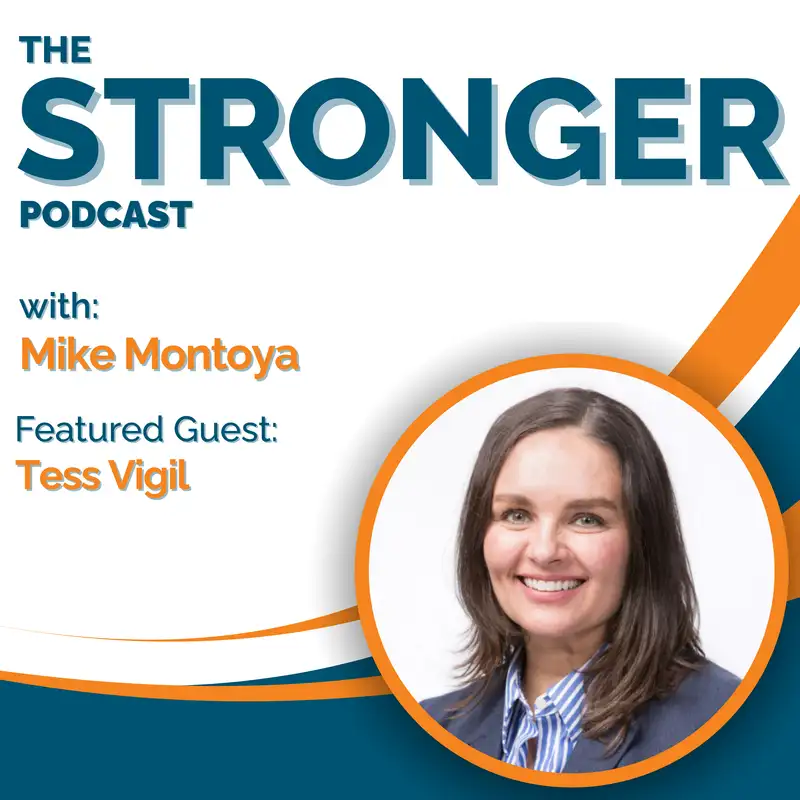
Not Everything That Ends Is a Failure: Career Pivots, Growth Mindset, and Redefining Fulfillment with Tess Vigil
Welcome to the Stronger Podcast. Each week, we have honest conversations with education and social impact leaders about their leadership and career journeys. We talk about their origins, inflection points, and the work that they're doing today. The conversations are honest, human, and practical. If you're here for real stories and real takeaways, you're in the right place.
Mike Montoya:Let's jump in, and let's get stronger together. Today's conversation is about possibility, the idea that careers, leadership, and even identity are not fixed. Tess Vigil shares her journey through education, entrepreneurship, organizational coaching, culturally responsive leadership, and health care innovation while reflecting on the moments that forced her to pivot, let go, and redefine what fulfillment actually means. Let's jump in. Good afternoon.
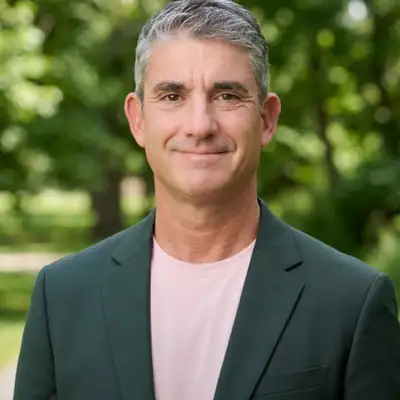
Mike Montoya:Good morning to everybody out in podcast land. I'm here today with Tess Vigil, who is a I've learned about Tess a couple years ago through our work, and and we've kind of been in the same space for parts of our career. And but Tess has been part of the Stronger Consulting team as a coach with some of our clients, and it's wonderful to spend time with you today. Tess, thanks for being here.
Tess Vigil:Thanks so much for having me, Mike. Really looking forward to it.
Mike Montoya:This is awesome. And so Tess and I have some cool things in the background. Like, we both grew up in Colorado, though she grew up in the metropolis of Denver, and I was from from small town. But it's good to have you here. Tell me, I like our listeners to know kind of where you're You're in Denver now, is that right?
Mike Montoya:Yes. And you have a journey that wasn't always in Denver. So like, I love people to kind of hear about like, what was your childhood ish like? Right? And maybe like, what was school like when you were younger when you were a young one?
Tess Vigil:Yeah, absolutely. So when I was younger, the only adults I knew were teachers. And that is just a real zinger of a line, but it's because my dad was a teacher, my mom was a teacher, and we were faculty kids and we lived at the school that we went to. So I grew up loving education and loving teachers. And so it's no wonder that I ended up in education for most of my career and I consider myself an educator above all else.
Tess Vigil:And I think that this was because when I was younger, all my friends were also faculty kids and I went to the school that my dad taught at and it just was a big teaching frenzy all the time. So, yeah, I grew up in Denver. The school is called Colorado Academy. And at that time, they had faculty housing on the campus of the school, which was really cool. And so my my fourth grade teacher lived next door and her daughters were my friends.
Tess Vigil:And then my English teacher lived across the way, and I'm still friends with her son. And so it was a really beautiful way. And I loved school. I was always really sharp and loved school and that kind of first row raising my hand a student.
Mike Montoya:Eager children. Eager child. Because it sounds like you loved it though. Like that was the, and it's it's a good thing that because with two parents as teachers, right, it's hard to escape.
Tess Vigil:Right.
Mike Montoya:If you didn't like school, you'd be in trouble. Maybe in some ways, it might be hard to navigate that. But, so that's that's a kind of a unique was it like a boarding school type of thing or like a like?
Tess Vigil:No. Just a a private prep school. Been around for a long, long time in Colorado. I had the opportunity to go there as a faculty kid, and it was an introduction to wealth in a way that I wouldn't have otherwise had. And so it's something I'm reflecting on more as an adult and obviously as a kid wasn't didn't have the language to talk about like, hey, I go to school with a lot of kids who a lot of them are a lot more wealthy than I am.
Tess Vigil:And what is that like for my development? But I it was a beautiful time.
Mike Montoya:Yeah. Well, a unique experience, right? And I mean, are lots of I always like to say that if all of America's public schools had more some of the features and private schools have some quirkiness to them in lots of ways, right, because of the elitism and wealth that's concentrated in them. The programmatic experience that happens at some of these schools is just off the charts compared to what we produce in the public sector. Right?
Mike Montoya:And so Yeah. And there's some really good public schools that, like, also counter those results. But, like, importantly is that, like, kid experience is really unique at these institutions. Right? They're, like, super culturally like, they're sort of shaping children in a very specific way, right?
Mike Montoya:Because that's kind of what parents are looking for or something like that. But the choice, the actual opportunity that there is a choice, is kind of cool, right? That it exists at all, right? You leveraged that and ended up going to a good school as a young woman.
Tess Vigil:Yes.
Mike Montoya:Right? I mean, because you had some of the pedigree and the training, right, as a younger, right? So like, going to Columbia, far away from Colorado, so what was that like? Mean that's like a huge shift and New York City is not Denver right?
Tess Vigil:It was so cool and my claim to fame about that story is I had never been to New York until I flew there to go to school. We didn't really have a lot of money for college visits or anything. I know that can be popular, but I had never been to New York. I loved the idea of a big grown up metropolitan city. I loved art, music, fashion, everything that was in my young mind cooler and bigger than Denver.
Tess Vigil:At that time, Denver felt very much like a cow town to me in the number of years that have passed since. Denver has its own claims to metropolitan cool. But at that time, New York had something Denver didn't, and it was an incredible opportunity to go to Columbia and get that liberal arts degree and spend time in the city and it was so fun. I really glorify that time it was fun and cool and amazing and I studied psychology and I studied art and I studied literature and it was this really eye opening experience that shaped a lot of my career. Today I talk a lot about I studied psychology with Carol Dweck who wrote Mindset, the book Growth Mindset.
Tess Vigil:And so that was in 2006 that that book came out. But in 2002, I was in her social psychology class as an undergrad working with grad students doing research for that book. And so growth mindset is something that I've shaped my entire career on unknowingly because I was so formed by my social psychology classes at Columbia.
Mike Montoya:Okay. So that's a fascinating fact I didn't know. So I know, of course, the work. But tell, for our audience that, say, gets the idea of growth mindset wrong or doesn't know what it is, like, help us understand, like, the the basic theory and, like, why it matters in in education and just humanity. Right?
Mike Montoya:Because it's such an important feature of of our psychology.
Tess Vigil:Yeah. I like to think these are my words, not hers. Of course, I'm not trying to say something about her research that isn't true. But the way I've interpreted growth mindset throughout my career is around the sense of possibility and the power of yet. And so not assuming that just because I'm not able to do something now or something isn't true for me now that it never could be.
Tess Vigil:And so that sense of possibility or that power of yet is what I think can be a powerful aspect of growth mindset. I don't appreciate when it is applied as a blanket idea that like anybody could do anything and then when it gets conflated with grit and Angela Duckworth's work that is when I think it loses its power. But with this sort of sense of possibility and the power of yet keeping that channel open is where I think the growth mindset idea really has had legs for me and for every place I've worked and for leadership and for coaching and for just a lot of growth and development.
Mike Montoya:Well, so the basic premise is that like we humans humans have a tremendous capacity to adapt. Right, and to grow. And if we, and almost like if we exercise, it's like a muscle in some ways, you exercise that muscle, right, it gets stronger, right? And so that ability to grow, learn new things, challenging things, things that are like, you can't go like learn something totally different from your field without a lot of work, right? It takes time, effort, energy to do it.
Mike Montoya:But that's the point is that it's possible, right? If you invest the amount of and get yourself the right exposure, work with people that know it, right? Those are the ways to get to it. But it is possible for you to pick it up, right, over time and to dig in deep. Especially for young people, right, they have like so many resources potentially available to them, but they have to have a mindset that it's possible that they would do it, right?
Mike Montoya:And so like, then for kids to be like, oh, can learn anything. That's a really good thing for them to be kind of holding on to, I think, because lots of times, sometimes we can be like, oh, it's too hard. But it might be hard, but hard is okay because hard is not impossible. Right? Yep.
Mike Montoya:Do you so then you said it shaped your career. So like how does that just give me an example of that. What does that mean in terms of like because you did all sorts of crazy things. Tell me tell me the story of what you mean by that.
Tess Vigil:So I like to bring this power of sense of possibility, power of yet into coaching, especially around feedback. I think some of the most impactful coaching I have done and continue to do is helping folks understand that idea of clear is kind that Brene Brown says, or the idea of radical candor. I do a lot of work with Kim Scott's radical candor book and framework. And in a lot of the places I've been both in social impact spaces in education and then now in a really pro social, culturally positive health care company, I find that people are very nice and have trouble giving direct feedback. And so I use the analogy of a muscle that giving direct feedback and critical feedback is a muscle that you need to learn to use and then it will be stronger.
Tess Vigil:And if you feel like, oh, I just am not good at giving feedback or I'm just not that type of person. I use the growth mindset. Like I truly believe anyone can become better at giving feedback, the giving feedback and receiving feedback is part of a functional workplace. And in most places I've been, people can stand to get better at it. So that is one place.
Tess Vigil:But also with teaching, I coached young teachers with Teach For America for a number of years. And that's a place where a lot of struggle is happening and challenging and young people are going through usually young people. I had some older teachers that I supported too, but usually people are learning a new skill. It's maybe the first time they felt bad at something. And it's hard because Teach for America has over time attracted really driven high achieving folks who are not used to not being good at something right away.
Tess Vigil:And so being able to bring that into and then over the course of, you know, working with someone for two years, be able to show, hey. I remember when this was something you struggle with, and now look. Here you are. And so kind of having that proof in the pudding of the growth happening in front of us. So those are a couple of examples.
Mike Montoya:Those are good examples. And I in my head, because I know that the first year teacher dilemma, which is like this is really fun and it's really hard. Right. And many there have been many tears shed in early teaching careers. And then you get better at it because you practice and you get feedback and that kind of stuff, and you become expert at it because you've learned.
Mike Montoya:And that is an incredible thing. If people don't appreciate teachers, don't forget how hard it is. I mean, it's a really challenging thing, it's kind of thankless sometimes. It doesn't pay that well, but it can make a huge difference, obviously, in the lives of your pupils, students, whatever are your end game there. But feedback is a gift, I'd say, and we don't get enough of it.
Mike Montoya:And I think it was kind of weaponized a lot in our society and our culture, right? I mean, you experience that with people that they have a resistance to it because it hurts? Or I mean, that's just that's my own personal experience. Sometimes it didn't feel good because of the way it was delivered, and I was super sensitive or something like that. Right?
Mike Montoya:So I'm curious.
Tess Vigil:Yeah. Oh, absolutely. I think that with leadership development, giving feedback effectively is something that has historically maybe been like under supported or under taught or under focused on. So yes, usually feedback means I'm not doing something right and therefore I'm extending that value judgment to me as a person and I am bad or I am going to have some negative consequence as opposed to feedback is information and if I want to continue to grow whatever I'm doing, I need feedback to keep growing because it's not expected that I'm going to be perfect at everything and it's not expected that I'm going to know how to do everything according to the standards of wherever I am. Like differing feedback as absolutely necessary and if you're not getting it then it's actually you're missing out on something and maybe it's that the manager is not able to give it doesn't have time doesn't want to but to reframe that feedback as oh actually someone's caring enough about me to tell me that something is off and I could do something different to be better.
Tess Vigil:That's taken me a long time. It's taken me most of my career to get to and helping folks learn about feedback and feel good about it is something that brings me a lot of joy. That is something that I focus on in my coaching.
Mike Montoya:Well, I love that. And you just gave me the idea, which is like, I think we should do like a workshop. We should have a little series around feedback specifically, because I felt like it's like the thing that managers and employees, right? All need to practice and get better and more comfortable with. And like I call it shed some of the like bleh about it, and just become more comfortable with like, hey, this is helping us all grow, get better, healthier, help kids more, things like that could be a really cool thing for us to do.
Mike Montoya:Because I feel like we get the questions from clients all the time to like, really struggling with this person and this new thing. The individual one on one stuff takes a lot of effort. Right? So
Tess Vigil:It's it's really it is I think at the heart of so many organizational struggles because organizations are broken down into people and teams and these interpersonal moments really haven't been focused on enough. I think feedback definitely has I like to bucket it into two buckets like you have feedback on work product. So that would be hey the feedback on this letter is hey the feedback on this calendar hey the feedback on this deck slideshow presentation. These are work product feedback moments, but then there's so many moments that are between interpersonal reactions and being able to say, hey, I want to give my manager feedback because the way that they said that common in that meeting the other day, it's really just stuck with me for a couple of days.
Mike Montoya:And
Tess Vigil:I believe that it's better to be able to give that and even the term feedback like sometimes it's loaded right? So even to be able to say okay if I have the power to say something up to my manager or someone something to someone I'm managing without completely shutting them down, again not extending it as a value judgment of the person but really saying we're all doing this together and that requires like relationship building and trust and then tone and there's no one way to do it. Have to manage it in your own way. I mean now I'm just getting into like management philosophy but yes I care about feedback.
Mike Montoya:Well but and we kind of went down this rabbit hole as an extension the growth mindset piece, which is to say these are pieces of us developing as humans, and some of it's in the professional setting, but also just how we interact with. Think, may not go into the feedback with your family, feedback with your partner, I'm like, let's not go there for the moment because that's like another, almost like a lightning rod. You're like, yep.
Tess Vigil:But this, you're onto something which is that once you're building this feedback muscle, it is strong in all parts of my life right and so and then it gets into boundaries work like Nedra Twab's boundary work is incredible and so some of this is personal some of this is professional but it really to me wraps up into if I put myself as the example, like when I am thriving, it means that I am able to give feedback to my family and to the people at work because ultimately it's all about me and me able to be in touch with how I'm reacting to things and then understand my needs and then have boundaries and then
Mike Montoya:That's it. Yeah. Holding the a whole and we know that bottling things up in relationships makes them harder. Right? Yes.
Mike Montoya:It can explode, and then it becomes a thing, etcetera, things like that. I think sometimes my husband and I go through feedback moments, it it kinda feels brutal. And I'm like, okay. But we're also, you know, again, stretching.
Tess Vigil:Yes.
Mike Montoya:Right? And at least I now I'm like, oh, now I know how he feels about that thing. That helps me because I don't mean to be impossible, but I am sometimes
Tess Vigil:impossible. Right?
Mike Montoya:So I get so it's good to know when I'm being impossible. I I there's all sorts of words that are being thrown around in my head that, like, impossible is a fair one that we can talk about online here.
Tess Vigil:So You don't seem impossible to speak it. And I'll also say that a conflict free relationship is likely not a deep relationship.
Mike Montoya:Yeah. Yeah, exactly. It's like, well, yeah, so we, well, we don't have that problem. Yeah. Yeah.
Mike Montoya:Of practice. Lots of practice. Well, okay. So let's, let's shift gears a little bit towards like you, you've had a couple of career, I'm gonna call them pivots, maybe that's not the right word, but like shifts and changes, right? And you sort of, you were teaching, you started coaching teachers, etcetera.
Mike Montoya:Just give me a couple of the highlights of the changes, right? Because I know that there was like at some point, some business work that you were doing and then then some also, like, really important consulting work that changed your life in some ways. So tell me about those things.
Tess Vigil:Yeah. Absolutely. I love to coach career coaching at this point too and coach people through pivots because I've had some interesting pivots in my life that now I can look back and understand the importance of those but at the time it was hard to make sense of it. So I like to label this as my favorite failure and my favorite failure is my dress company which was ultimately successful for a number of years. I started a clothing line in Los Angeles so after I moved to New York for college at Columbia I moved to LA and taught middle school English with Teach for America.
Tess Vigil:So I was in Los Angeles and the garment industry there is very strong back to the Hollywood costuming era and I had a high school sewing hobby where I loved thrifting and repurposing clothes and I was an artist and I wanted to take that hobby and turn it more professional. So I went to L. A. Trade Tech College and studied with. Old tailors who would teach us about pattern making and sample sewing and illustration, it was amazing.
Tess Vigil:And I got an internship and I really dove into the garment industry in Los Angeles and I started a clothing line and. I sold at Fred Segal in Santa Monica, that was a big store at the time. Unfortunately, I think it's closed. I sold on ModCloth.comcom which like around 2011, 2012 was a big online retailer and I was doing the thing. But I kept feeling like I was failing because of the parts of it that were a business like the wholesale mark up, the scaling production, chasing retailers, that part I didn't love and I struggled.
Tess Vigil:What I loved was making something that made somebody feel like the version of themselves that they always wanted to be and I love teaching. I actually years later ended up teaching sewing to kids, adults, running some summer camps, private lessons. I had a workshop in our arts district here in Denver for ten years, but the unlock about this being my favorite failure came from my accountant of all people. This really nice guy named Joe, kind of a fatherly figure, after a few years of doing my taxes he basically said you don't seem very happy doing this, and he was right. So in that moment I realized
Mike Montoya:okay
Tess Vigil:that to be felt like I'm not very happy. I'm complaining enough to my accountant that he's like maybe you should choose a different path. So at that time I did decide to go back more full time in education and I've kept the sewing as a hobby right? I still sew clothes for my kids, I sew I hem my own things, I do some fun recreations and it's by no means what it was before but I'm enjoying that that can be a evolved hobby these days. And so one lesson I bring to everyone I coach is you're allowed to let go of something and it's if it's not making you thrive that's not failure.
Tess Vigil:It's clarity and I think a lot of times we just need that permission or that validation that there's it's a conflict, right? I wanted to do one thing. I wasn't happy. And letting that go is one of the best things that I did. So, then I
Mike Montoya:I mean, it's like an important story. Mean, because like, it's not, it's not like easy to just start a business, any business, and or especially in retail clothing stuff. Like, that's a super competitive crazy. The Devil Woolish product is coming out, by the way, the second version, in a couple of weeks. Right?
Mike Montoya:So, like
Tess Vigil:They all look
Mike Montoya:If anybody hasn't seen that
Tess Vigil:looks, they all look incredible.
Mike Montoya:Yeah. It's like it's like a crazy thing. Retail and clothing is like a really it's like a huge industry. Right? And really complicated.
Mike Montoya:And and it can I call it the nuances of moving through it? Right? This sound like hard. Yeah. Right?
Mike Montoya:Like it's a hard thing to manufacture something and get it out there in the right time and how fast it happens and changes. But it sounds like you listen to yourself and your accountant, right, to be like, okay, this is not making me happy. Did you have emotional experience around that where it was just great to let it go? Like, was there a moment of relief, or was it sadness or hiding? What was, like, what was the what was going on?
Tess Vigil:That's such a good question. And I wish if I were to do a movie version of it, it would definitely be wrapped up in, one moment. But unfortunately I like held on to it for so long and had like my studio open for a lot longer and I kind of had this little hobby side business even as I was working with coaching teachers at Teach For America and then it took the pandemic for me to shut the actual studio because it was like an workshop and I liked being able to still teach a lesson here and there and have that space but then the pandemic and having kids then shut the workshop. So it it was a long drawn out closing of the business as opposed to just shutting down a website. I had a web I did every aspect of this business.
Tess Vigil:I produced locally in LA. I had sewers and cutters and garment industry folks that I paid a fair wage but it's really hard to compete in this economy.
Mike Montoya:I want
Tess Vigil:to go there. And so yeah, it was a slow wind down. And so I like to say I ran a business successfully for four or eight years depending on how I'm counting it.
Mike Montoya:The slow death. Yeah. Okay, well, there's a weak moment, but I mean some of the clarity, but you said it was clarity, right? Clarity comes in fits and starts. It's like those moments, And other times it's more like the slow drip, right, that you have to start to pay attention to it.
Mike Montoya:I I'm a fan of, like, I believe, like, life or universe sends lessons until you pick them up. Yes. And then eventually you, like, integrate them into yourself, and then they move on to the next lesson, because there's going be another one. So you learned the lesson, you let it move on, or you moved on. The pandemic helped, right?
Mike Montoya:Helped, and so that's like almost another big gift from the universe in some ways. And then it led down this other pathway, right, of you got back to something that you were good at, that you enjoyed for. I mean, so tell me about the kind of culturally responsive work and things like that that you've done with school districts, etcetera.
Tess Vigil:Yeah, absolutely. So I worked with Denver Public Schools as a culturally responsive education leader, and we were working with teachers and educators who wanted to bring culturally responsive education into their practice. And this was an incredible time for me. I got to work directly with Zaretta Hammond who wrote the book Culturally Responsive Teaching in the Brain, which brings together my love of social psychology and neuroscience and brain learning that was way back in college. And so I'm like, oh my gosh, this is amazing.
Tess Vigil:And my father is Mexican American. And so having my mom's white, I have a biracial background and I care a lot about culturally responsive leadership and being and fighting racism in the world and prejudice. And so being able to tie all of this together in a school district setting was incredible and I really enjoyed the time that I did that with Denver Public Schools. And then I've had the opportunity to have my role either reduced or eliminated four times in my career which is kind of interesting and I realize it's desensitized me to change in a way that I might not have been before and really looking at things like a sense of possibility like okay this wasn't quite what I was planning but now I'm really forced into looking at what a move would be like and the culturally there were some reorganizations and shifts happening at the district at the time and I ended up at a really interesting place going into talent consulting work with promise fifty four, which had the true thread of diversity, equity and inclusion at the center of everything that we were doing some capacity building, but then also really diving into talent which has led me into this like organizational effectiveness change management role and I loved the work that I did and that was also more on a national scale so out of Denver national scale there so that was a really big pivot.
Tess Vigil:And then a layoff again allowed me to search for what is going to be my next adventure and back in Denver at DaVita a very very culture forward kidney company doing healthcare and I'm in patient education. I wanted to pivot to tech and so I'm doing AI enablement and trying to enhance our systems that our educators use to help patients understand their insurance and there's a lot of opportunities for equity work in healthcare disparities that exist everywhere. So I've had a number of pivots and so I enjoy sharing that story and I truly am the happiest I've been. Mean happy is kind of a weird word. I'm fulfilled and purposeful when I work coaching.
Tess Vigil:I hope that people are fulfilled and purposeful and happy is a fleeting emotion that comes and goes. But I am fulfilled and purposeful more so than I've been in my career And I feel like I'm continuing to climb a ladder. So I feel very lucky about that. How cool. And I've had a number of pivots.
Tess Vigil:Yes.
Mike Montoya:Yeah. Well, mean, the version that I've been hearing in the marketplace recently is like it's like climbing up a rock wall or climbing up a a rock vase as a rock climber. Right? Which is, like, you need to be able to do sorts of all sorts of moves around obstacles and hold on to, like, narrow things sometimes and make big moves Yeah. Sometimes in order to get over a hump or an opportunity.
Mike Montoya:So, like, I love this imagery. And, like, I mean, I feel like what you're talking about is, like, taking the what you've had in the past, spinning it in a way that's useful. And I feel like you're stacking now you're stacking bricks right in a way that you're like, oh, look at all these experience. Plus the thing and the AI thing, I appreciate the healthcare disparity conversation a little bit because, and let's touch on this for a minute, and I'm not an expert in this field, except to know that healthcare is a mess, it's super hard to navigate, and people in this country have lots of ailments and things that need attention without judging anything, but just to say it's complicated. And so patients show up to dialysis clinics to be that is kidney focused.
Mike Montoya:It's a pretty strong industry. It's a very common thing for folks to have someone with kidney dysfunction, and so it's something that there's a whole population that probably doesn't know how to navigate that very effectively. You don't have the revealed patient experience, of course, but how does it feel to, like, you bring your education and this responsiveness, right, to that marketplace? Because that's a thing that I don't know if it exists, honestly. So
Tess Vigil:Well, gosh. It it really is again, I keep finding myself in ways where it's like pieces of my past or pieces of things that I have experience in or really strong interest in are woven together in a whole new way that I didn't even imagine. So I support a team of patient educators. So I do some tech support and we do some innovation and some trying to system optimize and change management for patient educators and at first I thought well what are they educating about? Oh they're educating on how to thrive in this system.
Tess Vigil:Healthcare is broken, insurance is changing, how are you going to navigate exactly what you said? Who is going to advocate for you? Are language barriers, like how are we maximizing the opportunities to connect with our Spanish speaking population and other language speaking populations? So I'm in charge of some mailing options and communications on email and it's a lot of stakeholder management and figuring out okay why are we doing this this way? Is it the best way?
Tess Vigil:Is there a better way to do it? Oh it's just always been done that way. Well let's take a look at it. And yes, the patient experience is very challenging and in a lot of the same ways that I think not all families and communities have the resources and opportunities to advocate for the best experiences of students and education. Not all families and communities have that resources to advocate for the best patient experiences and dialysis is a huge thing.
Tess Vigil:We also, DaVita focuses a lot on preventative kidney care and kidney education, how to be kidney smart. Any person can sign up and take these free kidney smart classes. I've learned personally a lot about kidneys since being there having not worked in healthcare before. And there's just really powerful stories so even though I'm not talking on the phone of patients the people I work with and make sure that their computer system is working are talking the phone of patients talking about okay if you're losing coverage how are you going to get that premium paid? Okay if you have a medical work requirement coming into your state how are you going to make sure to jump through the hoops to prove that actually if you have end stage kidney disease you don't have to prove, you don't have to work.
Tess Vigil:There's all these extra things that are not serving patients and then of course are disproportionately impacting our patients who have otherwise had marginalized experiences in our country anyway.
Mike Montoya:Yeah, for sure. Mean America is awesome in its complexity and it's also incredibly overwhelming when you're trying to navigate kind of some of the systems that are in place, including schools, including health care. Mean, are huge systems. And I think capitalism is alive and well.
Tess Vigil:My goodness. Isn't that the truth, Mike? Isn't that the truth?
Mike Montoya:Has done a lot of great things, and it's also, like, really made it complicated sometimes for people to just, like, what do I need to do exactly well? And and then you put it all in English, and then it's, like, really hard. So Great. I appreciate that. So, I love that I love that you've been able to, like, I call it stack some make some moves.
Mike Montoya:And I mean and I and I you you referenced Zaretta Hammond, who's also a client of Stronger. Right? So it's good to good to know. Small small worlds. Right?
Mike Montoya:This is a very small world, like the people who are trying to make a a big difference in the lives of children and families. And so do you miss, the close to public education work, or are you okay right now, kind of being near it but not right in it?
Tess Vigil:Well, think I get the best of both worlds right now. I'm really loving health care. I always loved math and science. I was such a good student in those categories and didn't pursue those with my liberal arts and then english teaching and so I'm fascinated by healthcare and I'm really interested in the science of it even though I'm not in a clinic patient facing role. So I don't miss education because I'm so excited about health care and I'm learning so much.
Tess Vigil:And then the other thing about public education is my daughter is about to go into kindergarten. So I have a five year old and she's about to go to Teller Elementary which is our Denver Public School local school and I have a three year old and so I'm just really around a lot of kids. I'm about to be a parent for the first time in my local school district and I think that's going to fill that void for me for a little while. And yeah, I had been in education in one way or another for over twenty years. And so I just felt like I wanted something a little bit different because even when I was running my dress company, was always substitute teaching and tutoring.
Tess Vigil:It was just a real sidebar economy for me at that time. Yep.
Mike Montoya:I get it. I get it. Well, I appreciate that. Well, and I mean, yeah, you're gonna be part of the education system for twelve, fifteen more years plus whatever happens after that. So good luck with that.
Mike Montoya:I mean, it's, like, exciting to have a kid going in. Right? But it's also, like, now you have to navigate it from that perspective with with a young one right and and that experience.
Tess Vigil:Getting the emails like sign up for the parent portal and now because I'm doing like tech portal support in the healthcare now I'm going be on this like who's running this tech support for this portal and why is that happening? Hard school,
Mike Montoya:hard school runs everything. Yeah, there's some amazing I feel like school is different than when we were in school maybe. It's just back to lots of systems trying to make it all work in some ways, so it'll be interesting to see how that goes. Like to kind of look forward, look backwards a little bit. I'm going to ask you a question about now that you're, I call it, grown up, and if you're thinking about a younger version of yourself, or that kind of, I call it, individual who comes out of college and is starting their career, like what are in terms of advice or things to think about?
Mike Montoya:Like if you had known it then, what would you like them to know and to think about as they head into an early stage of their career? Because I think that there's people who are just getting started in this place that we've been discussing.
Tess Vigil:Yeah. Absolutely. So too hard of a time finding my voice and my confidence. So I would tell myself, believe your instincts, speak loudly, and don't worry about taking up space and understand that you too can be an expert and lots of people can be experts in things and everyone is learning those people who seem like they know it all they're still learning as well. So that's something that's taken me a long time to learn and another advice to my younger self in one sentence or two sentences just make sure you're working hard on the right things because working hard for the sake of working hard is just exhausting and there's no reward just for working hard.
Tess Vigil:It's you have to make sure you're strategic and doing the right things that you want to do. So I think for a little while I think I was so and maybe this was part of the dress company thing too. Was just working really hard but not strategically and that's taken me a little time and distance to understand too.
Mike Montoya:Well, and I appreciate that knowing what the right things are is not like no one hands you a manual. Maybe ChatGPT can help us now.
Tess Vigil:Right? But
Mike Montoya:let's say before, even a year ago, you had to pick things up and utilize the internet's always been helpful too, and not always, but certainly the last twenty years, it's got some information that's helpful. How do people figure out, like, what the right stuff to focus is focus on is? Like like, thoughts about that? I have a couple of thoughts, but I'm curious, like, what comes to your mind when you think about, like, how do you figure out, like, what the right moves are when you're young and not again, you don't know the whole world and nobody does, but, like, when they're starting to figure that part out, like, what are pathways for them?
Tess Vigil:Well, this is gonna seem like a paid advertisement, but I'm gonna say coaching, Mike. I think everybody needs a coach. I think far too few few people have coaches or coaching is so powerful and I look back on some moments where I wish I would have had mentorship in one way or another and then times when I did have mentorship in one way or another and how powerful that was for me. Some reflections and coaching is different from therapy as you know I believe in having a coach and a therapist and so coaching but otherwise if you're figuring it out on your own I am curious about the the coaching that AI is offering. Claude is my AI of choice these days, but I haven't dug into coaching.
Tess Vigil:I do know that interestingly Kim Scott of Radical Candor has a program called Portrait where she's doing some sort of coaching through an AI online. I have not tried it out, but there are a lot of tools available now, but I still believe in a good old fashioned life coach conversation on the phone. And, yeah, hopefully folks can
Mike Montoya:Well, that's that's you were kind of getting the same path as I was thinking like mentorship
Tess Vigil:Mentorship.
Mike Montoya:Yeah. Sponsorship. Right? We use these terms, but, like but, like, if you don't know where you're going or even if you have an idea where you're going, finding people who have gone before you. Right?
Mike Montoya:Yep. And modeling off of them, If you have a famous person in mind, you may be able to get in touch with them, but there are people who are in that chain of people who are like, for example, fashion industry business owners. There's probably people who have figured it out, and at the right time, they could be coaching the right people. So think looking for people who have gone before you, right, and finding ways to have relationships with them, it doesn't need to be, like, a paid coaching experience. Right?
Mike Montoya:But it can be something that that allows you to have touch points with someone who's got who's just a little bit ahead of you, right, in in that regard. Because then you're not learning all by yourself. Right, which is hard. Like, you're learning by yourself. It's like not very fun.
Mike Montoya:No. It can be very hard. You don't even know if you're looking at the right stuff. And so having someone that can be I call them coaches, guides, mentors, things like that. Those people are really valuable.
Mike Montoya:And, you know, as we think about supporting folks who have less resources, right, like it's responsibility of those of us who have gone through it, to look for ways to coach support others that changes of their life. Because if we don't give it back, or we don't pay it forward in some ways, then we're not really maximizing the potential that all the life experience gives us. Life is full of experiences, right?
Tess Vigil:We're stacking them like bricks. I like that image.
Mike Montoya:Also, don't make your partner your partner should not be your therapist or your coach. If you have a life partner, that's a good way to ruin your relationship.
Tess Vigil:A team. You need a whole team.
Mike Montoya:You need a team. I love that team, I'm glad you brought it up, because we're talking about teams in professional settings, but also that you need kind of a team of people. You need healthcare supporters, you need people who can, the the education people and the people that help you in your career. But you and you need folks, maybe I call it, like, what do you call it? Your physical trainers, those people that help you, like, stay fit and not Yes.
Mike Montoya:You know, get stiff or whatever that is. So those people matter. So maybe that's my take is that you want to find people that can support your journey as a methodology, for sure. And they're out there. I think most of time people are afraid to ask.
Mike Montoya:Have you ever had that? Did you ever have a hard time asking somebody for help?
Tess Vigil:Oh, yeah. All the time I still do. I still do. I coach on this and I still do. It really the muscles that need to keep flexing.
Tess Vigil:I was recently asked to be a mentor for someone at my workplace, but in a totally different department, a younger analyst who picked me out and said, I'd really like to learn a little bit more about management style and leadership. And I can tell that you're a an experienced effective manager. Would you help me? And I was so honored. Like I was so honored.
Tess Vigil:It really made my day and we meet quarterly and I am able to be helpful. And so if I think about how happy I was to get that opportunity, it wasn't an imposition at all. I do have the time and space. It should make me more eager to ask someone to mentor me. And yet I still have a hard time doing that.
Mike Montoya:Fair enough. Okay. So if you're out there and you have resistance or trepidation about it, you're not alone. And I like to be able to like know that like that leaders have a hard time too asking for things that we need. And that's a thing.
Mike Montoya:It is possible. And I think most people feel, at least if we have the capacity, or time basically is the hardest thing to come up with. But if you have the time, like, most of us are really interested and willing to be parts of parts of somebody's journey. Right? And if
Tess Vigil:possible because
Mike Montoya:I think we learn a lot by doing, like, coaching and giving back. Like, you learn more about yourself. You learn about, like, you could solidify your ideas and your methodologies about certain things by having to express them to somebody else. You're like, oh yes, now I'm clear.
Tess Vigil:Yes, yes. It's like reps like you're doing reps just like someone who gives a really great TED talk. It's not the first time they've been up sharing their ideas. You have to practice and do reps. And so same thing with mentoring and leadership and having that philosophy gel, it takes reps, takes time.
Mike Montoya:So Takes practice. I know. Well, this is my twenty eighth podcast or something like that. So I'm getting better at it slowly.
Tess Vigil:Very, very polished.
Mike Montoya:I love it. Good. Good. This is
Tess Vigil:my first podcast. So I am
Mike Montoya:Well, see, and you're doing great. You're not a a natural, so we can cohost something together. That'd be awesome. Yeah. I think this is kinda like but this is, like, trying to do hard things, new things.
Mike Montoya:Like, people don't especially as you get growing up and you get busy, like, you tend to, like, let that stuff sit on the side. And maybe so now okay. I wanna go to the parenthood thing for the last five minutes because this is a a new feature. You've had kids for a little bit, but now you're going be a parent with kids in school. And so are you looking forward to it?
Mike Montoya:And do you have a coach or a mentor yet? Mean, so I'm curious, just like how are you approaching this new phase of maybe chapter, right, of your of your life with your family?
Tess Vigil:Oh, it's it's such a blessing. I I was a little bit older when I was able to start my family, and I'm grateful. I've always wanted to be a mom. And I'm still really close with my parents and my sister and her kids or friends with my kids. And it's having a strong and close family unit is really important to me.
Tess Vigil:The biggest thing parenting is such a teacher in itself and I've found I've been a parent for five years now that it's taught me more about what I need to let go of and how little I can control. And so my biggest challenge is going to be letting my kids be their own type of scholar when I was a certain type of scholar and trying to be supportive, but also just let them have their own version of school and what their interests are. So I'm interested in that. I'm trying to be self aware of myself as someone who is involved and can be controlling and yet needs to step back and what I want is for my kids to be fulfilled and thriving, like what I want for anyone I work with or am around. So that's not something for me to define.
Mike Montoya:Well, right. So it's something like keeping, you see being some of those parts of you that in check-in some ways, which is like the natural tendency is to act a certain way, because whatever, without knowing that, but to say that there are ways to be aware of those things and decide whether you want to have them on the table with your child rearing experience. Sometimes we do exactly what our parents did, right? And maybe that's good, maybe that's, I don't know, whatever, without judging that, but that's a default, right? Or we see, we model off of other parents, or maybe off of your sister, like you can pick up these pieces, right?
Mike Montoya:But then there's your own unique experience. It's going to be a special experience and time. And then your kids are kind of like, that's what they're going do with their kids. So then something like that's going happen, regardless of whether you're ready. Then in terms of your well, you're excited about healthcare now, not making education too much.
Mike Montoya:I put this question on our test sheet for you. This whole idea of zooming way out and life well led, right? Like, what is do do you have a a sense of what that means? I I have a I have a think I know where you're gonna go, but I'm curious what you're gonna say. So
Tess Vigil:I am really developing a theme here, which is that to me, a life well led means that it's doing what's really important to me and what makes me feel fulfilled and purposeful and not doing what other people want me to do or think is good or would look good on LinkedIn and that has changed over my life and continues to change and evolve. But it's something that I want to keep in conversation with folks, peers of mine, friends of mine, people I coach. What does being fulfilled and having purpose look like to you and that is not gonna stay static and that I hope to have more and more wisdom as I continue to grow older, what a gift to grow older, right? But in this kind of midlife stage of mine, that's what a life well led feels like today.
Mike Montoya:Yeah, well, and that's awesome because it's like a journey that's still unfolding. Totally. The experiences that you're having right now are going to be part of the story, etcetera. And maybe you're, I call it, leaving space for it to be, whatever it's going be, right? So that's awesome.
Mike Montoya:Tess, we appreciate you for the work that you've done in the Ed space, for sharing your story and for working with the clients. Will make a plug for Stronger Consulting and the coaching work that our team and our associated coaches do with our clients, etcetera. We get incredibly powerful positive feedback and also feedback too, as long as we get the other feedback. But it's helpful and it helps us get better at the work that we do with clients around the coaching space in particular, because we know that leadership development is like a science and an art, Right? And it requires people to come to the to the table with their faculties and experiences that are special gifts.
Mike Montoya:Right? Truly something that you do stuff that I can never do. I I don't do well. And so it's wonderful to have have you as part of the team and the work that you do. So thank you.
Tess Vigil:Well, thank you. Yeah, is the most fulfilling part of my career, and I really enjoy that. So thanks for the opportunity. And how fun to come on a podcast today. Thanks for letting me come and chat with you.
Mike Montoya:That's right. All right. More in the future. We'll talk to you very soon. Take care.
Tess Vigil:Okay.
Mike Montoya:Tess reminds us that a meaningful career is rarely linear. It's built through pivots, experiments, failures, mentorship, and the willingness to keep evolving. From education to health care to leadership coaching, her story is a powerful example of what happens when you stop chasing what looks impressive and start focusing on what actually feels purposeful and fulfilling. Have a great day. Thanks for listening to the Stronger Podcast.
Mike Montoya:If this conversation inspired you, we invite you to follow the show and share it with someone who's on a journey to become a happier and healthier version of themselves. Links and resources are in the show notes. See you next Thursday, 9AM eastern time. Have a great day, and stay strong. Podcaststhatmatter.org.
Creators and Guests