 Episode 46
· 51:35
Welcome to the Stronger Podcast. Each week, we have honest conversations with education and social impact leaders about their leadership and career journeys. We talk about their origins, inflection points, and the work that they're doing today. The conversations are honest, human, and practical. If you're here for real stories and real takeaways, you're in the right place.
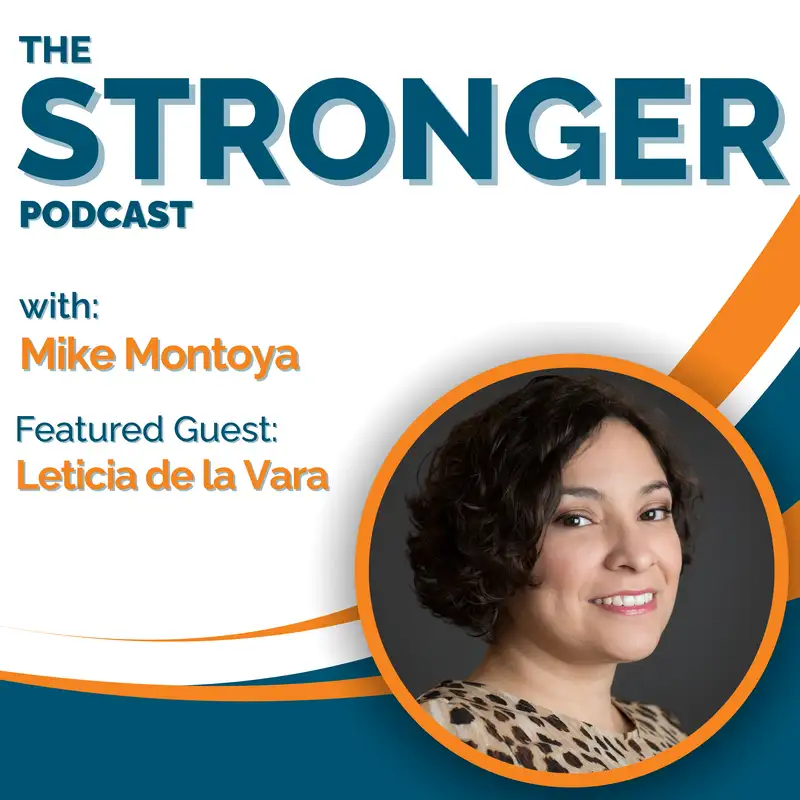
Mike Montoya:Let's jump in, and let's get stronger together. Welcome back to the Stronger Podcast. I'm Mike Montoya. My guest today is Leticia de la Vara, chief impact and operating officer at New Politics. Leticia grew up in Phoenix, raised by a single mom who organized in the Chicano movement while raising four kids.
Mike Montoya:She'd tell you that education she got while knocking on doors for a congressional campaign shaped everything that came after her. We talk about the kids in the middle, the ones nobody writes about reports about, and we'll talk about what a loving home is actually worth. Let's get into it. Good morning. Good afternoon, everybody in the Stronger Podcast land.
Mike Montoya:Today is my guest, Leticia de la Vara, who is the chief impact and operating officer at New Politics, where they give everyday servant leaders, including educators, step into public life with to govern with courage, integrity, and empathy. And I you know, I just told Leticia that I'm like not an expert what do you call it? Radio guy. I did not grow up learning how to do this. And so we're practicing in podcast land always to be authentic in ourselves.
Mike Montoya:And Leticia, thank you for being a guest today. Thank you for joining us.
Leticia de la Vara:Absolutely. Thanks for the invite. Is fun. I'm looking forward to it.
Mike Montoya:Right before we started, we discovered that we have family in both of the cities where we live. And so, if you're willing, share with the audience, where are you currently located in the world? Jump back into, like, where did you start your, I call it, life on the planet?
Leticia de la Vara:Yes. So I born and raised in Phoenix, Arizona, and have lived here most of my life. I've yeah, like lived in Tucson for a little bit, I lived in Seaside California for a little bit. But I've been in Phoenix, Arizona for most of my life. My mom raised four kids here, including myself, as a single parent here in Phoenix.
Leticia de la Vara:But our families are from the border area. So I'm very closely connected to Summerton, which is a small border town down south of Yuma, Arizona. My father still lives in Summerton and a couple of my younger brothers, But very closely connected to, a very close affinity I would say to the rural Arizona experience, even though I can't say I was rural raised. I'm from Phoenix, Arizona, but we spent a lot of time down there with our family and cousins. And Somerton in particular holds a very special place in my heart.
Leticia de la Vara:For anybody who knows me in Phoenix, they know that because anytime I hear someone is from Somerton, you know, my next level is like, oh, tell me more. What are they doing? What do they need? Like, I just love that community because it just represents family to me. The Phoenix is home.
Leticia de la Vara:I love the desert. I consider myself, one of those true people who just loves the heat, loves cactus. I love the desert beauty. So, yeah, I'm I'm that is me.
Mike Montoya:Yeah. I I call it that. You have the ability to, like, absorb heat and love the fact that you're doing that. Right? It's like a
Leticia de la Vara:Yes. Yes.
Mike Montoya:You're like, I don't know how people don't wanna do that. Right? That's kinda like the
Leticia de la Vara:Yeah. I think the there's just so much beauty in the desert. I think cactus are gorgeous. The animals, the the flora, the fauna, all of it. Like, am a true come to Phoenix.
Leticia de la Vara:The desert's beautiful. I won't encourage that now. It's a 115, so I get why people don't wanna come here. But other than that, it's beautiful.
Mike Montoya:Coming October, it's incredible in the region at that time. And I shared that my sister has been in the region for a long time, like down ten or fifteen years. My family my family grew up in South Colorado, so we would travel in and through in Phoenix. I think some of my cousins and aunts and things like that have lived in there. So I I have a a version of what you say about family, right, that that parallels some of that.
Mike Montoya:And I always appreciated the fact that you're like, people can actually live and have an incredible life in these beautiful spaces that people haven't been to yet. Like a lot of people know the Grand Canyon, right?
Leticia de la Vara:Yes.
Mike Montoya:Right? Things like that. But like there's a whole state that has a lot of real interesting features and values. I think the assuming that town that you mentioned is small, Is it like a little community? Like where people
Leticia de la Vara:Small would is relative. It was smaller when I was young. When I was a child, this was a town that had a stop sign. Now they've got a stoplight, they've got a couple of fast food restaurants. So I think the people in Summerton, like my cousins would be like, don't call our town small.
Leticia de la Vara:It is a small town. It's a small agri town.
Mike Montoya:Yeah, sure. So if anybody in the planet that lives in agricultural space, right, would know what that feels like a little bit, There's more of that, right? Yeah, like people drive trucks And that's a normal thing. And that's kind of what we expect, right? So Yeah.
Mike Montoya:Did you have So you had Well, you mentioned that you were a family. Brothers and sisters. Or is that true? So tell us about And what was Phoenix like as a young person? And what was your school experience like?
Mike Montoya:Were you in public schools, etcetera?
Leticia de la Vara:Yes. Yeah. Yeah. So like I said, I was raised very happily by a single mother who gave us a lot of love. And we went through like times of growth and times of lean times, right?
Leticia de la Vara:So actually went to quite a few different schools growing up here in Phoenix. And I think that's part of what both drew me in and actually early on kind of pushed me away from education. So as a kid going and being the new kid every couple of years, for me at least, kind of like, my approach was like, stay out of the way. They would ask questions. Like, hopefully, you make some friends so you're not sitting by yourself at the lunch table.
Leticia de la Vara:And for a lot of times, especially when I was in in a new school, that meant that the teacher didn't really engage with me. If the classroom was crowded or if I was doing fine enough and they had other things going on, I don't really have like, I worked at TNTP for ten years. I have a lot of colleagues there who can point to this teacher was amazing, this teacher saw me. I didn't have that experience in my K-twelve. Didn't have that experience until I went to community college.
Leticia de la Vara:So I just remember just kind of like not really feeling like I had a connection. Like school was fine. It wasn't bad. It just wasn't a place where I'm like, I feel seen here. I can thrive here.
Leticia de la Vara:It was just a place I went to. And part of that is being a shy kid. I think a lot there's a lot of shy kids in school campuses across the country who don't care if they don't get noticed because they don't know what to do with it. And I was one of those. And I think that comes into when I think about education, we talk a lot about those most disenfranchised and those high performing kids, but we don't talk a lot about the middle.
Leticia de la Vara:And that's been my passion because that middle is huge and it's a lot of us. A lot of us could say, yeah, you know, school's okay. And really getting that right evens the boat for both sides, those who are doing really well and those who aren't because that middle is so big, it naturally will bring up others. And that's kind of how I see education now is like, I know there are a lot of hard things. I'm really focused though on like, what should be true for the majority of folks?
Leticia de la Vara:Because if it's not, you kind of get pushed to the side. I went through new schools where I was in honors programs and new schools where I was in remedial programs. I was still the same kid, but it was just honestly, looking at it as an adult now, to me it was how adults in that room at that moment decided to view me and whether they viewed me based off paper, based off demographics, or based off talking to me. And I think you can have all three and get very different answers. And I lived pretty much every one of those answers.
Mike Montoya:Well, that's super interesting to hear, right? And I think I kinda aligned with you with regards to the middle, right? There's a huge number of kids in that space that are like, school's like, okay, it's not terrible, it's not great, it's just kinda like and it wasn't like a place that was super affirming in many ways, right, for them and for various reasons. But like, the part that I think you're pointing to is a little bit about like how adults can interpret and or shape the experience of a child based upon the way the way that the adult shows up in the space, right? Like the adult comes in with this picture of like, this is how kids should be and what kids look like.
Mike Montoya:A kid is taller short or has dark hair or light hair, like they just start to treat you differently. Maybe that's kind of a human, but it has a lot of impact on a child and their experience, right? Especially when you're getting mixed signals from different adults, right? You're like, Who am I? How this person treat me different than this person?
Mike Montoya:Right? It starts to become a place where kids raise a lot of questions about themselves, right? And then you're like, I navigate this thing, right? And if we're not talking about it, then it Yeah. Makes it Kids interpreting their own emotions and experiences without some frameworks can be risky.
Mike Montoya:Right? Because then we make up stuff as a kid in particular. Right? So do you do you feel like you've built, like, I mean, obviously, you turned into a, like, what I call a well adjusted human at a distance in your life. But, like, what would you like, when when you were young, did you did you kinda have to find your way through some of that stuff?
Mike Montoya:I mean, you it sounds like you're you didn't have strong guides at at the school level. Right? So how was that how was that?
Leticia de la Vara:I don't know that I found my way or I just moved on year to year. Right? And I'm not to say that I don't wanna give an impression that I had horrible teachers. I had pretty average teachers. Like, they they cared about their classroom, you know, we're balancing a lot.
Leticia de la Vara:But I do feel like I had to navigate a lot. And I will tell you, I don't need to pretend that I'm younger than I am. This is before the internet, this is before like, so it wasn't like I could get online and find my community. Was really navigating pen and paper, right? And not even know, I think I'm also kind of leery of how much a student should have to navigate, right?
Leticia de la Vara:Brains are still being developed up until early 20s. So I was moving through classrooms and making friends, but I don't know that I really saw school as a place that I can try new things or I can do things just because it was just a place that I had to go to during the whole day. And my mom, you know, was great. She brought a lot of love and a leader in her own right, like brought a lot of love and community support for me, but not from a K-twelve perspective, from a, this is how we show up in community, this is how we show up for others. And honestly, think back then just school just felt like what we did during the daytime and not like a connection to who I needed to become.
Mike Montoya:Got it. Got it. So it was like an element of your life, but not like an an anchor and driving centerpiece of things. It's
Leticia de la Vara:a Yeah.
Mike Montoya:Okay. So this is interesting. So I'm a huge fan of this conversation about like, hey, kids grow up in communities and including things like, I'm gonna use my terms, like churches and community centers and parks and family, right? In particular, right? That's a lot of that.
Mike Montoya:So like, what were kind of grounding features for you besides school wasn't a huge one? Like, what were the other things that were important?
Leticia de la Vara:No, I am so fortunate in that I was raised in the Latino movement, the Chicano movement here in Phoenix, Arizona. My mother worked at an organization that was focused on issues impacting Latino and Chicano communities, issues like immigration, education, healthcare. And I was going to school in the 80s and the 90s. So at that time, what I didn't see in the classroom, I saw in my community. So I saw Latino attorneys, I saw Latino community organizers, I saw the leadership that I needed that I say to this day fundamentally shaped how I show up in a room.
Leticia de la Vara:Not just whether do I belong there, but like when you're there, here's who you bring with you, here's how you show up for others, here's how you make sure that door stays open. Like I feel so blessed to have had the education that I had from my mother's community organizing groups and the ways in which she led in our communities here. So I never had to while I may not have connected at school, I got so much education in that space. And to me that really helped me understand when I started putting together connections of like, oh, why don't kids like me get this? Or why don't kids like me have these opportunities?
Leticia de la Vara:Or why do I have to take three buses to get to this school? It clicked, not because of what I learned in the classroom, but because what I was seeing and living and participating in as a young kid in the community. And I actually really, to this day, like will tell my mom, if not for her in the way that she showed how to lead. And this is a woman who was leading in the '80s when even being a Latino woman meant doors were closed to you, even in our own communities, right? Showing that was fundamental to who I became and how I became, right?
Leticia de la Vara:Like how I showed up and how I internalized both opportunities and obstacles in my lifetime.
Mike Montoya:Sure. Well, and so I wanna explore this a little further if you're willing just to talk a little bit about like, I I don't want people to have too many assumptions about what it means to be part of the Latino Chicano movement, right, in the 80s and 90s. So, if your help and I know it's a lot to try to condense this stuff into like, you know, small pieces, because it's quite complex. But like, can you give us some sense of, like, what was the movement and or struggle about, right, during that era, right, in in the in the city and state that you were part of Peng Shing?
Leticia de la Vara:Yeah. So I will speak specifically, and thank you for that clarifier because it is not something you can categorize as it was this one. Phoenix specifically, we were looking at was, well, what predates me is like student walkouts that happened in the seventies. So those students became the adults that were like part of my mother's group, right? Advocating for basic things, books, clean buildings like functional buildings, teachers, having walkouts.
Leticia de la Vara:So in the 80s and the 90s, that shift had become, we are a growing force in Phoenix. We are a demographic that is shaping who Phoenix is, how Phoenix runs. We are very close to a border and understanding the needs of our community. And at that time, it was like in South Phoenix kind of housing conditions, infrastructure issues like the way the roads were, like really advocating for pretty basic infrastructure support and awareness of racial divides that existed that had been kind of written into law and putting light to that and making sure that our communities understood the power that we had and the ways in which we could organize for better opportunity. We worked on, I remember as a kid working on getting the Latinos elected for office.
Leticia de la Vara:So Congressman Pastor, who passed away a few years ago, I remember knocking on doors when he was a first time congressman.
Mike Montoya:Oh wow, interesting, okay.
Leticia de la Vara:Making phone calls. And as a kid and knowing that that this was not just about let's get someone elected, but about let's make sure our community has a representation that they deserve at the table. And it was really you don't know it in the moment, you just know, my mom made me come here, I gotta do these phone calls, knock on these doors. But it really helped me see the power of just connecting with like minded folks and advocating for something bigger than yourself. And the ways in which you can change institutions to not just see you as something to fix, but as a critical stakeholder in identifying solutions that better a community.
Mike Montoya:Well, and so and I think that at the essence of this thing is that there's something about strength in numbers, power dynamics that exist in the let's just call it the American, isolated to just The US political system because if we start to talk about pan Pan America, right? It's like, it's the way outside of my field with like knowledge to like really be passed out with this. But like to say that like, living conditions for folks, right, are are kind of basic needs are always a struggle for folks who don't have the power in the economy yet. Right? And that they don't have representation in the political environment yet.
Mike Montoya:Right? And like those are I'm sure it's like like hell are almost always hard won by populations that aren't on the top, right, of that that chain. And so that takes effort, time, energy, organizing act political action, lots of political action. So does this feel like I mean, I don't know. It sounds like your mom brought you along, right, in one intentionally or not when she was trying to shape you in this way, right?
Mike Montoya:But like, I don't know if they are still alive, right? But like
Leticia de la Vara:Yeah.
Mike Montoya:This something that you have ever talked about? Like, hey, like, mom, look how I turned out. What am I doing? Right? Like, because you're doing some of this work professionally now too.
Mike Montoya:Right? So like did you ever have that discussion with her about that?
Leticia de la Vara:I wouldn't say, hey, look how I turned out because but we have had that conversation honestly. And I'm sure for some of the folks listening to your podcast, when you're a parent, you focus on you internalize what you weren't able to give. And when I shared with my mom, and I've shared multiple times, we're very close. And like, I very much respect who she is and the leader that she is in our community. So it is not a new conversation, but I do notice that when I talk about that, my mom goes to, well, couldn't give you this, I couldn't give you that.
Leticia de la Vara:We were fighting for this and we too have issues with paying the light bill and like having food deal. It's interesting to hear, I say this because I am a single parent, as well my daughter is 24, I raised her as a single parent. And when she and I have talked, I noticed I do the same thing. And I say this because if anyone's listening as a single parent, I think you tend to hone in on what you couldn't provide. But if you provide love, the people that you loved will always focus on what you gave them.
Leticia de la Vara:And for me, there's no master's or graduate degree that I could have gotten that would have given me the learning that my mom gave. And I make sure to tell her that because it matters. She didn't get a college degree. She raised four of us. She put her school to the side when she when she was pregnant with my my oldest sister and her and my dad got married.
Leticia de la Vara:But she never put her she never shrank herself. So she had these jobs where she could see this is what we're doing, but also here's an issue that we could take on. And I saw that modeled from an early age and just even if it wasn't in her day to day job, in her community work, just saying, this is an issue that we need to make better for people. And when we have the conversation and she says like, oh, I couldn't give you this, but you gave me so much more. Like, I don't care if I got the Barbie doll or not at the end the day.
Leticia de la Vara:Like that didn't make me better at the work that or even able to find the work that I love. But knowing and seeing someone navigate systems that weren't meant for them and still come out thriving and still come out not just thriving for themselves, but figuring out how to make things better for others. Like, that that is that is just such a richness that I hope more more people experience because it really changed my life. You know?
Mike Montoya:Yeah. Well, and and it's it's affection, right, that you have for that person in your life, right? It's like clear, right? I'm hearing, I'm hearing that. I'm like, oh, like I'm glad that you guys have had that conversation with each other, right?
Mike Montoya:Because it helps me to like recognize it's like, that children, and we, they're kind of like sponges, right? We like pick up so much stuff from the environment in which we're in, and it does shape us intentionally or unintentionally like, know, for the positive and other things. But like the ability to like effectively navigate those things with a family and bring that into your own life experience. Then to be fulfilled, as an adult, doing things that you love, that you care about that are like anchored in some of the history with your family can be really, I don't know, from my viewpoint, it's like a lovely way to like, Yes. It's kind of aligned.
Mike Montoya:And sometimes, I mean, my own story is that like, well, I went in a different direction from what my family was doing. Right? Like, because they kind of pushed me that way. Right? But like, in your case, you're talking about like integrating some of this stuff, right, that happened as a young person with your wholeness now.
Mike Montoya:Right? So, that's I mean, it's like a lovely story. Maybe this is like we talked about it. How is this gonna go, Mike? Where might this conversation lead?
Mike Montoya:I'm like, don't know where it's gonna go. Let's just have it. Let's see how it goes. You so can you can we kind of shift into that? Like, I think I remember that you kind of went to to sort of formal education college type stuff a little later in your in your, you know, the traditional quote unquote student, right?
Mike Montoya:So like, end did up in that? Then you chose to do degree programming in like nonprofit, like good do gooder stuff, right? I'm gonna use that, right? So like, how did you choose that as formal pathway?
Leticia de la Vara:Yeah. I did not go straight from high school to college. Went for like ten minutes and then decided, no, it's not for me. So I I worked. Right?
Leticia de la Vara:I I worked for quite a while. I just was, like, exploring young adulthood. And then I started seeing myself go into spaces. Like, I won't say, like, now that, oh, my mom was great and I always knew. And when you're 18, you're like, I wanna just like you just said, right, I wanna do what my mom does.
Leticia de la Vara:I wanna do something else. I'm gonna do this. Like, I did a lot of, like, you know, art. I I had a t shirt company. I had like, I would, you know, haul things out to the swap meet and sell stuff that I made.
Leticia de la Vara:Like, I was exploring my artistic side, which I still do. But then I got pregnant and realized like, I gotta pay some bills. I gotta make sure that this one that's on the way is able to eat every day. And nothing like taking care of someone else to push you to like, okay, let's get it together, let's figure out what we're doing. So, you know, I got a more, like quote unquote mainstream job, and was answering phones and kinda doing that.
Leticia de la Vara:But also realizing at that time, it wasn't just about work. It was like, I am raising this person. I am still living in communities where I'm seeing things that should not be the way they are. It pushed me to be more into community organizing and more into like just being aware of what is going on in my local neighborhood. So like that was kind of like, I would say unequivocally having a child put that, it was less about meaning and more about what does this mean for someone I am responsible for?
Leticia de la Vara:That being able to volunteer and being able to, the type of person who's willing to work and roll up their sleeves, like actually put me in front of job opportunities I would have never known about, right? So that led me to like working for different companies and then just working, I would say, little rambling, but I would say the luckiest thing I had when I was in that space I think my daughter was probably about four or five is the former CEO of National Council of Varaja, they're called Unidos US now, retired. And when he retired, he opened up a center, Arizona State University, the Center for Community Development and Civil Rights. I knew it was coming. I knew who he was, what he'd done in the community nationally, the ways in which he'd advocated for Latinos across the country.
Leticia de la Vara:And I just watched that center to see when are they hiring? What's gonna happen? And there weren't a lot of postings like, but one did open to answer the phones. So I applied for that. And when I look back on what shifted, like that was such a lucky moment for me to see that, to apply and to get the job to answer phones.
Leticia de la Vara:Because it wasn't about the phones for me, it was about now I am in this space with someone I know is a know, later on he became he got a presidential medal of honor from, I believe, president Biden, like for just for his impact. So to be in the room with someone who was such a visionary, who was so focused on how do we improve opportunities for Latinos. And that room at the time, because he was establishing a new center, had three people. So I was in every conversation about what are we gonna do new? What are we gonna do different?
Leticia de la Vara:That led to me being able to be the staff member who launched the American Dream Academy, launched out of his center. It's still an existing parent educator program at ASU twenty years later. What we were focused on at that time was bringing in parents, predominantly Spanish speaking parents, to understand The US school system and how to be advocates for it. You know, a practice that happens across the country every day. But back then we were really, we were focused on parents who most folks were saying, they don't know, they don't care, they don't have the time.
Leticia de la Vara:And we were bringing in hundreds of parents in our first offerings, two fifty graduates in the first offering. Parents who are coming off of construction sites, parents who you know did not grow up in The US school system, did not speak the language, but knew one thing to be true. They had kids they loved and they wanted a better opportunity for them. We knew that going in, but we had heard so many times trying to launch this program, don't focus on that. Those parents like don't worry about it.
Leticia de la Vara:We'll focus on these parents show up to PTA meetings. And when we had, we were filling rooms with 200 plus parents to learn more about how to advocate for using interpreters and them saying, I will do whatever it takes. I will sit in the hallway and have them read to me if I don't know how to read in English, just so I can help do whatever I can to make sure that they have what they need to thrive in a classroom. So being a part of that to me said like, I couldn't actually, like I didn't see them as parents who were different or they were parents like me, like parents just trying to figure out how to have a better opportunity for their kids. So I really resonated with that.
Leticia de la Vara:I was at ASU, that actually allowed me to go to school for free. So I was working full time and going to school, long way to answer your question, Mike. But it was such a turning point for me. I feel so thankful when I look back at my career that I applied for a job to answer phones, because without it, I would not be where I am today. And I would not have been able to be a part of some of programs that I'm really proud of.
Leticia de la Vara:American Dream Academy being one of them because I think it is a transformationally different way that the university was looking at what types of kids belonged in their campuses. And I was just really proud of it. I graduated from ASU the age of 33 with my daughter and the crowd yelling for me. So that was really awesome.
Mike Montoya:So responsibility comes to life through your daughter, right? Yeah. So you choose to embrace that, wrap your hands around that and go. And then, but you also found this pathway, Which has like really been fruitful for you in terms of like, I don't know if you felt like fulfilled and happy with all of the, I mean, we all like, sometimes that job was great, sometimes it was different. This one in particular was like a key, almost like a launch pathway for some of what the work that you've done in years to come.
Mike Montoya:I mean, community organizing work is at its heart a passion, right? And we've had, you know, some great presidents, right, who have done, started that career in those areas. Those are far and few between, I think, in terms of people who really are grounded at the experience of people and a place, and do it with passion as opposed to just having a job type of thing. American Dream Academy sounds like that experience where, like, hey. Like, we've decided purposely that, like, all voices matter or more voices matter that would be normal or what's normal at the time.
Mike Montoya:And so you have almost like I always call these, like, opportunity windows where, like, somebody has to open that door and then run through it, right, with as many people as you can so that you
Leticia de la Vara:Right.
Mike Montoya:You know, make sure that you're in the room in the long term. Right? And I feel like that's like the visual light that's coming from my head. Right. So.
Leticia de la Vara:Yeah, no, actually, I think that's part of the way I've My lived experience and the way I've approached my work is that I think there's a lot of I've been lucky to have been in like education sector, nonprofit sector for many years. And I know there's a lot of reports about the types of people who need supports, the types of people who fit demographics of concern, whether that's like socioeconomic. But oftentimes we keep thinking about them as numbers. And it's really important that we stop looking at just data and start looking at people as people, as humans. And that's been the way I've always thought, I've been exposed to and thought about community organizing and even just broader education work I've done.
Leticia de la Vara:It's like I have sat in a lot of rooms. We've probably sat in the same where we like wring our hands about the kids of low income communities and all the things they have against them. They come in hungry, they go home to homes that are in bad neighborhoods. And we always talk about what's wrong with them rather than saying, these kids are in this community, this is what we need to provide to them. And these are the folks in their lives who care about them.
Leticia de la Vara:So how are we bringing them into this conversation so we can stop thinking about what deficits they have and start realizing what assets they come in with every day. If you looked at me as a kid, my demographics of single parent, moved around a lot, they didn't say amazing parent who is a community leader. It didn't say home filled with love and safety. It didn't say this is a child who knows how to navigate new spaces. It just would say, you know, speaks English and Spanish at home.
Leticia de la Vara:This is your socioeconomic group. And it just tells you nothing about that.
Mike Montoya:Put you in the at risk category by
Leticia de la Vara:Yeah, exactly. You're at risk, but I always never felt at risk. I never felt that.
Mike Montoya:Yeah. Well, I think we underplay the value of a loving home, right? To the extent that that's possible. Not all children are in that environment, but like, that's a small percentage, right, of homes. And I would say like a loving home is like an anchor piece, right, to everything else, because children learn how to be secure and ability to build relationships, and feel attached to things, right, in those home environments, way before they go to school, right?
Mike Montoya:School becomes a socializing experience and things like that. But sometimes we think that the school institutions of schools, right, become like, are the thing that shapes our society, but they're not the only thing, right? They're like a piece of the whole puzzle, right? And I think loving homes are underrated, right? I think in this regard, right?
Mike Montoya:Like, you know, I can imagine that, and I think that you sort of made the point, I glossed over it, which is to say like, you know, most parents, again, vast majority, like want their children to be happy and healthy, right? And they'll do sacrifice so many things, and do so many things on behalf of their children, right? And that's just natural, and that's how parenting is about, right? That's what it's about. At least initially when the kids are especially young, in particular, parents.
Mike Montoya:Sometimes they're quite young when they have children and they have lots of things that are not working in their favour, but they still can love their children, right? And it's still like a very natural thing to do, right? And so, we're like, hey, that kid must be in trouble because they're from a single family home. And that's not necessarily true, right? Know, your mom has to work harder.
Mike Montoya:You probably are all doing stuff to contribute as a family, right? But like, it doesn't make you like a lesser human because you happen to not have two parents living in household, the right? So, I love that. Love that. And I think about this because this happens a lot in like my space around same sex family households, etc.
Mike Montoya:And it's like a thing where they're like, Hey, if you grew up with two loving dads or something like that, you must be a deficit child. And I'm like, like, I guess I just don't agree with you. So, you know, you know, two loving humans is perfect, you know, towards one. That'd be great. So, okay, so this is really useful and I appreciate you having fun with this.
Mike Montoya:So like, if you're willing, can you talk to us a little bit like how this translated into like your career? And I think in particular, you're doing, you're almost like you came back to political action work in recent years because you spent a fair amount of time at TNTP. And lots of folks will know who that is. So happy to hear about that too. But I really wanna hear about this work that you're doing at New Politics Academy.
Mike Montoya:Like just tell us a little bit about the framework and the work that that worked.
Leticia de la Vara:Yeah, so New Politics Leadership Academy is a program focused on servant leadership. So we really believe that folks with a servant leader background, whether that's military, healthcare, educators, community leaders, community organizers, that sense of putting others first, that servant leadership mentality is exactly one, what's missing in politics right now and two, what's needed for the country to thrive. So we offer a lot of different programs and opportunities to learn what it means to run for office, how to know about setting your platform and understanding how what it takes to actually run a campaign. And we offer that, you know, for folks across the country. We are really focused on whether you wanna run for school board or run for senate.
Leticia de la Vara:We wanna be there with you. And we wanna understand if you have a servant leadership mentality, like, wanna make sure we we walk with you. We really believe that that is what people are hungry for. Folks who will put their communities first and think and legislate and act in that way. So we focus on building those leaders across the country.
Leticia de la Vara:We have leadership programs that happen virtually and in person all over the country just to understand what it means to run for office and how to kind of understand you're passionate about, what your platform is. And I've been doing that for I joined fairly new. I joined in May, so they've been at a lot longer. I believe about fourteen years that New Politics has been identifying and helping great leaders answer their next call and run for office. Call
Mike Montoya:it I call it I call it like, it sounds like the I call it, like, the magic lasso of sorts, right, which is, like, capture people's superpowers, right, and bring them into the work.
Leticia de la Vara:Yes. Yes. I think that's great.
Mike Montoya:I'm like I'm like, I'm good on the visuals in my head. At least I'm not sure they make sense to other people. But but well, okay. So this is really important work. Right?
Mike Montoya:In our society I mean, American politics is crazy. We're plant too much time banging our heads against that wall in a moment. But to say that more representation still is important, right? Again, people who are the unsuspecting, unlikely folks join the work in that way. Because it's not for the faint of heart, right?
Mike Montoya:So, they can they build skills that help them be competent to be
Leticia de la Vara:Oh, yes. Yes. So the Leadership Academy, obviously we are nonpartisan. We wanna make sure folks understand the process. And that is what it's about, understanding what it means to run for office.
Leticia de la Vara:Understanding both like, what is your platform? What are you advocating for? Why do you wanna run for office? What are the issues that matter to you? And how does it impact your community?
Leticia de la Vara:But also kind of very tactical. What does it mean to have a campaign and what type of campaign do you have? If you say, oh, I wanna run for school board, what does that mean? Like kind of demystifying that so that the, I think a lot of times when people say, oh politics isn't for me, it's because they think it's the system that other people know. Almost like college, right?
Leticia de la Vara:It's the system that other people know, maybe it's not for me. I think politics is the same way as like, how could someone like me who doesn't know politicians, who doesn't run-in that space, ever know what it means to run for office. So we actually wanna break that down because we don't think we need more of the same. I think you talk to anybody, as soon as the bus stop, they're gonna say, we don't need more of the same. So what we want is community members to say, I can do this, I can run for office.
Leticia de la Vara:And what we can do then say is like, well, here's the process, let's take all the mystery off of it. Here's the basic nuts and bolts of what it means to run for office, here's what you should keep in mind to think about your platform, to think about the issues that you care about, here's what it means to file. And just kind of take the mystery out so all of us can say they can see themselves in that role versus that's only for those people. I really think, for me, what compelled me to make the transition to new politics is I do think we need a shift in how leaders are. And I do think that this is an organization that is not gonna make it 27 hoops you need to jump through to prove you're worthy, and more like, here's the system, here's what you need to do to enter it.
Mike Montoya:Yeah. And sometimes like the knowledge gatekeeper effect, right, can be really significant, like quite a barrier. And there's plenty of that that's happened. I think I'm a huge like, don't know, I'm mixed about social media but I'm a huge fan of like the internet, the socialization, democratization of knowledge about like access and information that like used to be held by a discreet group of people. Right, like the people that know how to navigate this thing are the ones that are going to make it through.
Mike Montoya:So now we're making it more widely available to folks, right? And they don't have to go, I call it literally digging around in the middle of nowhere. Before, it was just like, the only elite individuals had access or you went to school for this thing to become a political potential guy or something like that, right? And that's not the same anymore. Right?
Mike Montoya:And and so that's incredible. I'm super excited about this because I feel like I mean, I look at the people who are representing me where I live, and I'm like, where do you people come from? And I'm like, you you know, whatever. I have my own opinions about my own my own political representation too. To say that, like, and I appreciate that the organization is sort of like, as you said, it's not partisan, right?
Mike Montoya:It's not, maybe you're not totally agnostic as you as a person, but the organization itself is like trying to advocate for the fact that like, more people involved in meaningful ways can be really powerful over time. Right? So that's
Leticia de la Vara:kind of Absolutely. Absolutely. If you are from the community, you know the community. I think that's important. To me, it's about, let's let's stop with the secret handshakes and the secret gloves.
Leticia de la Vara:Like, let's just make it, you know, a true democracy that people can participate in.
Mike Montoya:I know. It's like a dream and like, my goodness, we have so much work to do. And I feel like, I don't know, I feel like overly deactivated sometimes by political, the world that we live in, in some cases. Because some of the politics seem like they're so far away, right? But I think maybe the argument is like a lot of politics are local, right?
Mike Montoya:The things that matter to us most are the things that are happening in our cities, towns, school boards, local communities. And those politics affect us as well, right, in a really significant way. Right? So, like, all politics is, like, national or global. Right?
Mike Montoya:Like, we all get caught up in that sort of stuff too.
Leticia de la Vara:And I would actually say most politics is not far away. I think we are kind of conditioned to believe, oh, it's something that happens in DC. And I think, again, because our audience, like our servant leader model is veterans, it's educators, it's healthcare workers, those folks are on the front line, whether that's through deployment, be it in a classroom or be it in a clinic or a hospital, it is not far away to think about what is it, how are we thinking about healthcare? How are we thinking about education? How are we thinking about our natural resources and things like that?
Leticia de la Vara:It is actually a very local conversation and even more local when you're like, well, what do the roads look like when I get to work? What are the how many bus stops are available and I'm trying to to get to work on time and I don't have a car? Like, those things are actually what politics is about. And it's easy to say, oh, it's congress and stuff, but most of the politics that impact you, you have direct control of because they're your city council member, they're your school board, they're your county regulator. There's just a lot of different things that hit so close to home.
Leticia de la Vara:And I think for us, it's important as voters to remember that it is not something that happens in DC. It's something that happens whether you're in Portland or Phoenix or Sarasota, Florida. It happens in your backyard every day.
Mike Montoya:Yeah. For every day. Yeah. For sure. We all like and we all need to find that things are complaining about when it doesn't go well.
Mike Montoya:Like, who's responsible for these things? You're like, oh, that's right. I voted or I didn't vote or whatever. Like, those are the I'm responsible. Right?
Mike Montoya:Those are the problems that we have. Right? Like more people, I guess I'm a huge fan. Like more people should be voting all the time. Right?
Mike Montoya:Basically. Right? Because they feel like people in The US have gotten so I call it, like, complacent about voting or, you know, disenfranchised maybe is another word. But like, like, there's more more involvement means better results. So I want to kind of steer it.
Mike Montoya:And thank you for sharing about that. So we'll share some information about anewpoliticsacademy.org on our as part of the podcast show notes and stuff like that so people can check it out. It sounds like it that sounds like lots of people can get involved. Right? There's a way to do it.
Mike Montoya:It's not like a giant, like, hoop to jump through to become qualified or magical or something like that, right?
Leticia de la Vara:Is there a website set up?
Mike Montoya:Just be brave enough to start to click the internet. That's amazing. I'm sure that they're lucky to have you. Can you, now that, you said you were a little, you said it earlier about like, work for the internet or something, maybe get there in that regard. So I'm going to take that opportunity to talk, have you share with folks, because you've had a career, right?
Mike Montoya:And you have lots of experiences. And if you're willing to share some, I call it advice to almost maybe younger self, right? Or to, I call it, a younger human, right, that's starting out in their career life. Like some of things that you're like, hey, like, lean into this piece of advice. Maybe it's not advice, but it's sort of like lessons that you would like to sort of appreciate for that nature.
Leticia de la Vara:Yeah. I I would say if I'm thinking about someone younger or, you know, someone's talking to me about that, The advice that I would give particularly for the Ed sector is don't wait for the title or the degree to prove that you need to be there. Like that doesn't prove anything. Really showing up, understanding what's at stake, and working to make things better is all the proof you need. And I think a lot of times folks wait for permission.
Leticia de la Vara:Don't wait for permission. Do what you need to do. Do it from heart. Yeah.
Mike Montoya:Yeah. I mean, so, yeah, that's amazing. Back to like, you chose to answer phones, right, at this place that you were inspired by the leadership, right, and experience. And so like, almost like jumping in, right, is like the message. Don't be afraid to jump in.
Mike Montoya:A passionate person could add a lot of value.
Leticia de la Vara:Exactly. Yeah. And, you know, I think the other thing that is on the flip side of that, like, don't worry about the titles. Don't assume your title means you can't do the hard work either. Like, you don't absolve yourself because you've moved up in ranks and, like, now you lead.
Leticia de la Vara:Like, you still gotta open those folding chairs and get the the meetings set up for the community members. Like, that that doesn't go away. And if you do look at it as as the further up I go, the farth the further away I get, like, should should reflect on why that is because I think that takes you further away from being focused on solutions than more focused on titles. Right. So the book that I am reading right now, I'm only two chapters in, so do not close me on what it's about.
Leticia de la Vara:But it's called Unreasonable Hospitality by Will Guidara. I think it's how you pronounce his last name or Guidara. It just started, like I said, so ask me in a month what it's about. But it's really interesting. On its surface, it's a book about running a restaurant.
Leticia de la Vara:He has this approach to running a restaurant that I think is, I haven't gotten too far into it, but I think is what the bear is focused on. I'm like exceptional experience, right? And what I had, the takeaway for me is like, what happens when you give people more than they expect? Right? That's the big thing that drew me to the book.
Leticia de la Vara:And when you focus not just on what you're doing, but on how you make them feel and on genuinely making them feel seen. So when I saw it, that's what compelled me to be, it's like on the surface, sure, run a restaurant, whatever. But when you take any everyday interaction that you could have, sure you could put out a good food menu and you could have happy waiters and people have a good time. But when you shift to what is the experience you want them to have, like that shifts everything. And for me, it called to me because like that's how leadership should be.
Leticia de la Vara:It's not just, I'm really good at this or I can analyze data or I can lead people. It's like, what happens when you shift to this work is about how I see people, what I'm internalizing and how I'm making them feel. It's not about what I can do and what my pedigree says about the accolades I have, how do I make others feel? And for me, that's why the book compels me because I think as I've looked and I'm, you know, closer to the other side of my career than the entry of my career, right? I'm Gen X, I know what's coming.
Leticia de la Vara:But I wanna make sure as I reflect on my career that I didn't just leave the door open for others, I showed people where the door handle was, I say, hey, let's make it wider, let's make it a full garage door that everybody can walk through. Because if all I leave is like, as soon as I've done something, Leticia was there, they did a great job and now they moved on to something else. And what I did collapses, it wasn't worth it. Like, but if I can say I did something and the people I worked with who stayed on after I left made it even better, like that to me is amazing. That's the type of leadership legacy I hope I can live.
Leticia de la Vara:That's why that book called to me because like, it's not just about what they're doing, it's how they make people see that and take it to the next level. So it's a long winded way of saying what I'm reading. Like I said, it's
Mike Montoya:I'll let you know. And so I'm gonna come back to you and say, okay, was that what you thought it was? Back to your, almost like your, it's a little bit of your ethos, About like inclusion and awareness and acceptance and invitation and servanthood, right? Which is like this whole thing that your current job is helping to live out in certain ways. But I'm almost like that book landed in your space, right, for some reason.
Mike Montoya:So we'll see if it is truly aligned. And of course, great food and great experiences matter, right? Everybody can have them eat, experience life, enjoy it, right? All that stuff is amazing. So, Leticia, thank you for being my guest, and thanks for being a friend of of the of the company and for my work, and we look forward to spending more time with you.
Mike Montoya:Okay?
Leticia de la Vara:Absolutely. Thank you so much. This was fun. Thank you.
Mike Montoya:My thanks to Leticia for a generous conversation. She said something near the end that I keep coming back to. It isn't enough to leave the door open. You show people where the handle is, and then you make the door wider. That's the difference between the work that ends when you leave and the work that gets better after you go.
Mike Montoya:You wanna see what that looks like in practice, visit newpoliticsacademy.org. I'm Mike Montoya. We'll see you next time. Thanks for listening to the Stronger Podcast. If this conversation inspired you, we invite you to follow the show and share it with someone who's on a journey to become a happier and healthier version of themselves.
Mike Montoya:Links and resources are in the show notes. See you next Thursday, 9AM eastern time. Have a great day, and stay strong. Podcasts that matter.org.
Listen to The Stronger Podcast using one of many popular podcasting apps or directories.