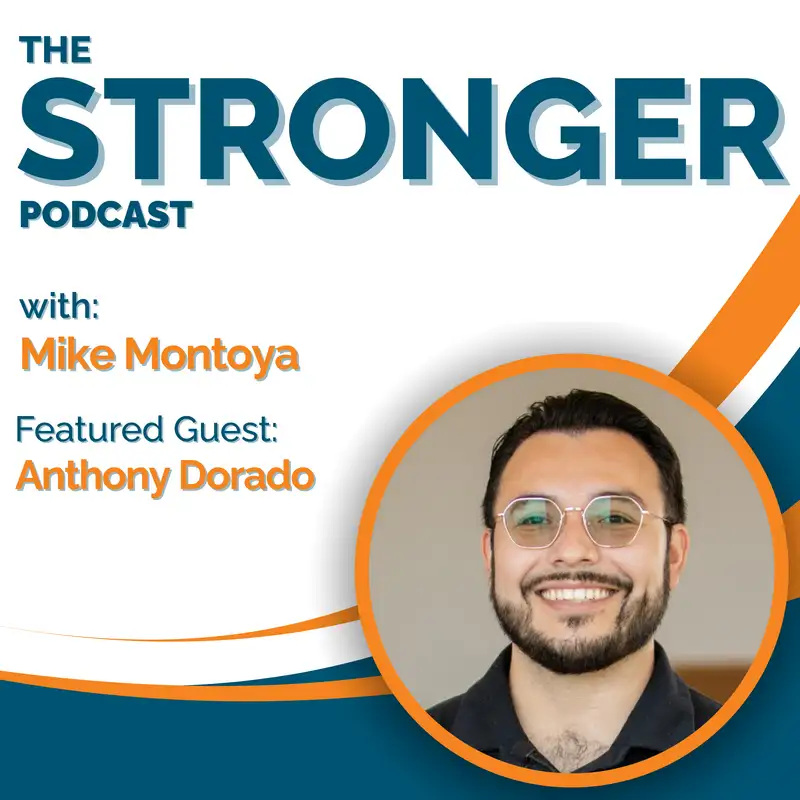
Lead With Empathy and Assume Best Intent: How a Former Private Banker Builds Teacher Pathways in Greater DC (with Anthony Dorado)
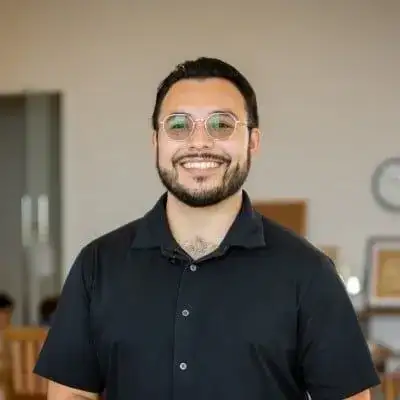
Mike Montoya: Welcome to The Stronger Podcast. Each week, we have honest conversations with education and social impact leaders about their leadership and career journeys. We talk about their origins, inflection points, and the work that they're doing today. The conversations are honest, human, and practical. If you're here for real stories and real takeaways, you're in the right place. Let's jump in, and let's get Stronger together. Welcome back to the Stronger Podcast. Today, I'm with Anthony Dorado, who leads City Teaching Alliance in DC. Anthony started out in private banking, then a friend asked him to teach math, and he fell in love with teaching. Let's get into it. Good morning. Good afternoon, everybody out in The Stronger Podcast land. I'm here today with Anthony Dorado, who is the executive director of City Teaching Alliance in the DC Metro Region in Washington DC. And, Anthony, thanks for being here. Appreciate it.
Anthony Dorado: Thank you for inviting me. We had a time to chat, like, before this, and so I feel honored to be a part of the Stronger Consulting fan base out there, so subscribe.
Mike Montoya: We love that. That's awesome. Well... And Stronger Together, we talk about that a lot with our clients because some... One of our clients, like, named us as, hey. We're much Stronger Together. I like... So we kinda, like, love that little tagline, but I do feel like this work is so... Work that we're all involved in is so much about, like, people cooperating and collectively trying to achieve stuff that is hard to do work and to do it independently. And so when you have a coalition of people trying to do stuff, it's more fun, also more achievable, think, in that regard. So you and I hit it off and had a great conversation a few weeks ago to get warmed up. And so tell me, just to jump in, tell tell us a little bit about where you're at physically now in the world because some people are all over the place in different places with this work. But also, then we're gonna go to, like, where where is quote unquote home, cultural home, family home? Where did you grow up? That kind of stuff. Let's start there.
Anthony Dorado: Yeah. Of course. So right now, I'm in DC. As you mentioned, I'm the executive director of City Teaching Alliance, DC Metro. And home for me is definitely Los Angeles, California. I grew up in Koreatown, first gen, with a household of 20 people in a small apartment, I would say. No. Just kidding.
Mike Montoya: Not really,
Anthony Dorado: but, like,
Mike Montoya: not 24.
Anthony Dorado: Definitely a lie. Like, we had a lot. We had, like, my aunts and uncles. So it was a very tight knit family, I guess you could say. We all lived together and, you know, it was a great experience, but it also made me less of a hoarder in life. Feel now I'm
Mike Montoya: a very...
Anthony Dorado: I'm a minimalist now because of that. But definitely shared a room with, like, my my uncles, all of them. So it's been a great experience overall. I love my family. Every time I get a chance to go visit them, I get to see my siblings, my aunts and uncles. And just really just get some great Mexican food made as well. I'm Mexican, so first gen. And to see my grandparents cook for me is, like, a blessing sometimes. And so I'm like, I'm I'm the baby, I will say. I am the baby. And so, you know, I get spoiled in that way, and everyone gets jealous. And it's the funniest thing.
Mike Montoya: Is it... They... They're like, they they still treat you like you're the littlest one even though you're probably taller than all of them and now as an adult.
Anthony Dorado: It's exactly that. Yeah. They're like, oh,
Mike Montoya: what were were you what were you eating?
Anthony Dorado: And I'll be like, you know, spinach and broccoli and all that.
Mike Montoya: The Popeye the Popeye diet. Yeah. Well... And... Well, you just mentioned your grandparents. So they were a part of your childhood as well, or were they just more extended family in in the
Anthony Dorado: Yeah. I will say with LA, it comes a culture of Chicano and gang. I would say my family is probably second... I would have been third generation gang member. And so my mom and dad were teenage parents when they had me. They were both 16. And, obviously, kids can't raise a kid, and so my grandparents took the mantle in that space and really lived with them. And that's why I say, like, I lived in my household with my aunts and uncles because they were just maybe three, four years older than I was. And so it was such a unique experience growing up with them. I see them like older brothers and sisters to me. I do have... I'm the oldest of my siblings out of six, but with them, I'm, like, the youngest in a way. And so that's why I grew up with them, and that was kind of, like, my upbringing a little bit. And I grew up... And I'm close with my grandparents in that capacity, I would say. Well, they were
Mike Montoya: clearly an important part of your childhood and, I mean, that that environment. I mean, it sounds it sounds fun in some ways, right, and and interesting and exciting, but also maybe there were some, yeah, I call it conflicts and challenges, right, with, like, being in a small space with lots of folks. But it's also pretty common. Like, Los Angeles Los Angeles is kinda like that in some ways, right, with families where, like, you you have to live in small spaces because it... It's not cheap to begin with anywhere in the city anymore, probably. But, like, it it also is conducive to people being out in the neighborhoods, and you can spend a lot of time, I call it owning the the space in the streets is kinda what it is. Right. How in LA functions. Right? You can be outside a lot. Do you... Did you go to public schools as a as a kiddo there?
Anthony Dorado: Yeah. I was in public school system my entire life. It was such a cool experience overall.
Mike Montoya: K.
Anthony Dorado: I had the unique experience of moving away from The US and moving back as a child. K. So I grew up again with my grandparents. And so I lived with them part time in Mexico for a few years. And until kindergartens when I went into public school, and I did not speak English. And so that was just Not
Mike Montoya: at all. Okay.
Anthony Dorado: Not at all. And so I would look at people, and they're talking to me, and I'm like, I have no idea what you're saying. But... See? Oh, and so there was that. And so it really was fun. But that also put me in in, what is it called, the English second language classroom most of my life. And so that was also a unique experience overall and going through that public school system until maybe high school is when I got out, when they believed I was proficient enough to just be outside of that space. It was interesting.
Mike Montoya: Yeah. I mean... And that's like a... Not every state has a kind of sheltered classroom experience. Like, there's lots of debates about the qualities of those things. Right? And lots of people talk about, like, values and, know, that. But from your... I mean, you clearly learned to speak English. Otherwise, we wouldn't be having this particular conversation. You you learn... So it is possible. Right? And and you're and you're, you know, successful in life in many ways. Right? So, your your public school education, like, gave you at least a start in that direction. What was it... Did you notice... I mean, did you notice differences in your readiness to go to university when you went to... When you finally got there? How did that... How was it... How was that for you?
Anthony Dorado: Oh, man. I will be honest. Yes. It was definitely interesting. In high school, I think I went I went to a charter school. I actually was going to one of the biggest high schools in LA, which was LA High. Mhmm. And my mom was just like, you know, I think you're better off. And this is when charter school started up and coming in the early two thousands. She's like, we're gonna put you in College Ready number four. So shout out to Dr. Olga Mohan High School in Los Angeles. Dr. Emilio Pack was the founding principal of that and a mentor of mine as well. And they really got me prepared. I didn't think of college. I'm a be very transparent until I went to high school and that school. Thought it was getting you college ready, but I still felt that even going into college, I still wasn't fully prepared. I still felt being first gen, I had to navigate this space more uniquely than most. And, yeah, I think overall, it was just a little tough, I would say. I think I didn't know how to navigate that space independently when I first went. And, obviously, the bumps on the road, you know, understanding the resources kind of navigating myself and really made me successful just independently figuring it out in a way.
Mike Montoya: Anthony, we were talking about, like, there's not like a structured set of, like, scaffolding, right, that you that you get from either institutions or schools or something like that. Right? That's like one piece. But, like, lots of times parents and families are doing this for their kids, that's what the first generation challenge, right? There's a... Like parents don't know if they haven't done it sometimes, right? And so that's where the question marker, in your case, right, it was not a big thing. So you you did get through it and you got into university, and it sounds like you had some mentorship and support from the charter school you were going to. But you did... That you ended up becoming a, I think, a teacher, right, as as an early as an early career, given your choice at... Or what was the what was the first thing you did after you finished university?
Anthony Dorado: Yeah. So the first thing I did was just go into private banking. I had a great financial mentor. He... He's always been a guiding light for me my entire life. So I'll shout him out. His name is George Leece. He's always been super impactful in my life, father figure, sort of say. And I was in prime... I was a private associate getting getting trained and developed to become a private banker. And eventually, a year in, year and a half, almost two years, I would say, I really did not wanna do it. I did not wanna do this career. I just felt like it wasn't aligned to my convict... Convictions as a person. And I just felt like it wasn't really rewarding what I was doing. And so that's when I did the intentional pivot to just leave the workforce of private banking and eventually just... Serendipitously, my best friend was a teacher, and he asked me, do you wanna be a math teacher? And I said, said, why not? Let me try it out. And let me try it out. He's like, you know, you worked in finance, it transfers well. And I'm like, sure, let's do it, man. And so I had the opportunity and fortunate enough, it was also Dr. Emilio Pack's charter schools, believe it or not. And so he interviewed me, and he's just like, I just can't pay you as a private banker in this space, man. And I said, don't worry. I just wanna try it out and see if this is something fulfilling and if this is something I wanna do for the rest of my life. And I think he appreciated the honesty of that and got into that space, and I fell in love with it. Like, I fell in love with teaching. I was a STEM teacher teaching mathematics. And, eventually, that's when I realized, like, my skill set is in teaching, and I needed to further it. And I had to pursue either a master's or some type of doctorate in education, and that's when I found Urban Teachers where, at the time, it was called Urban Teachers, now City Teaching Alliance.
Mike Montoya: It
Anthony Dorado: the opportunity to do both, to get your master's and do a teaching fellowship. And that's when I made the transition to the East Coast. I had to move from LA to Washington DC where I do my... Where I'm the ED and I did my fellowship, which was such a cool experience on its own. And did STEM. I did mathematics for pre k. I taught middle school kids, and now I'm teaching the babies. And that was such a unique experience and eye opening opportunity. And so that's where I saw what a highly effective prepared teacher looks like and what is required of them to be successful and be the highest caliber educator for students. And I give a huge thank... Thanks to City Teaching Alliance for that, my coaches who are now my colleagues now. It's just been such a full circle moment for me in general, but also understanding that the impact this organization and development has to be a successful teacher.
Mike Montoya: So... Well, this is kind of an amazing story, right? You circle back to the school where you had had your K-twelve experience, right? And then you ended up teaching in that environment that led to then the transfer to the to the East Coast and and some deepening of your skills and practice. Right? Because like an experimental teacher is like a interesting experience. Right? And like, so you said something that was... I wanted to follow-up on, which is like, you fell in love with it. Right? And so do you... Can you tell us more about like, what was that... What was going on? Like, what was the... I mean, I can guess about, like, private banking versus teaching kids, like, why it's different and why it feels different, but I want you to kinda share with us what that was really... What was going on emotionally for you in that experience. So...
Anthony Dorado: Yeah. I think for me, it's I was in my environment helping my community, and that's really the forefront because even growing up, I had a lot of male Latino teachers. Lot lot of people have that experience, but I was just very fortunate that every year I had a male Latino educator. And, you know, that representation matters so much to me as a kid. I'll still... I could recall you. Every teacher I had, mister Mendoza, mister Herrera, and mister Gonzalez. Like, there's just so many that I was just like... I I think even just talking about it was such a a blessing and a fortunate experience for me that to be standing in front of my community, my students that are are a reflection of them. You know? I was in your seat ten years ago. I know what it feels like. I understand the environment you live in and really teach them and say, hey. You could go to college. You could do education. You could be a private banker. You could be a lawyer. You could do whatever you want. You just gotta put in the word, but also know that your environment is tough, but it's not a representation of you. You could get yourself out of that. You could persevere if you put the time, the effort, the work to really get that opportunity you want. And so to be that exemplar for my students, who still probably will see this podcast and just be like, mister Dorado, you are phenomenal. And now to getting see them now, like, in college, and I'm just like, I am getting
Mike Montoya: old. Yeah. Seasoned. Seasoned.
Anthony Dorado: Seasoned. And... But just that impact for them to just share pictures of them being graduating from undergrad, and I'm just like, oh my gosh. They'll send me messages on Facebook or on LinkedIn. They're like, hey, mister Dorado. I graduated. Here's a picture of me. And I'm like, oh my gosh. Like, I showed my wife last time, and it was just I... To get that now is so... I... It's speechless. Like, I... That is, like, I won the lotto for me... For myself in a way. It's such a rewarding experience to hear that.
Mike Montoya: Yeah. Like like kids that you know being successful. Right? That's like a gift right on top of it. So I appreciate you sharing more about that. Like, what the... Like, just kind of what the transformation essentially was in in your case. And, you know, I do hear this from other guests. Right? Like, people who are first gen immigrants, or families, right? And that they want to give back because they had such selves, right? Like they kind of made it through, I call it the gauntlet, right, of getting through private and learning to build a life, etcetera. Like, and then you like find the the motivation to go back and contribute and help other people to do the same. So that's... Heard that before and... But I'm always... It's very specific to individuals like why it matters to you and that's super interesting to hear like the stories of your kids, you know, through like even like knowing who you are and deciding to come back and tell you the story about their journey, right? It's like super powerful because there's something about relationship in there, right? Like you're not, you weren't the jerk teacher, which we all had some of those folks sometime in the picture, right? Or the mad teacher, whatever. But like you were a guy that encouraged and supported them because they think you might have that experience maybe yourself. And so did your work, what was then was Urban Teachers Fellows, now it's City Teaching Alliance and did that work that was essentially like it was a fellowship, you went to graduate school at the same time and then you then had mentorship and kinda coaching and push in kind of stuff where people came into their classrooms and stuff like that. Like, is that how that works? Like, tell me about how the program worked, basically.
Anthony Dorado: Yeah. So your first year, it's a four year program. K. Your first year, you're a teaching fellow with a master teacher. So you are partnered with an exceptional teacher in the school that you're serving your placement at. And you are to be there for maybe all four years, three years. If you're fortunate, of course, you know, certain circumstances people need to shift. But for majority of the part, all our fellows stay in their site, what we call the placement, for three to four years. So your first year, you're learning from the best of the best teacher of that school. And then your following year, you become a lead teacher at that subject that you're studying. So I had the opportunity to learn. ECE elementary was my specialty... With special education. So eventually, I became the lead special education teacher for early childhood education. So from pre k to second. And that was my second year, and then third year, of course. And the coaching get... Gets less, but it's because you're becoming a lead and you're developing so quickly and and you're just a highly effective teacher that you could see the progression, like, even with the coaching model that we have. Like, we're we're with you first and second year, your third year. We kind of lay off the gas, and now you're more independent being a lead teacher, and you have already established your grounds. You have a lot of more, like, experience under your belt, and you're able to do things by yourself. And by your fourth year, you become an alumni. That's when you either wanna pursue more of a leadership role. And now that's what we're doing now is developing you to become a leader in your school placement if you're still there. How do you become a coach? How do you develop to become a principal or an assistant principal? What's the pathway look like? The other is... What was it? Oh my gosh. If you take another fellow as well. You could take a fellow at this point, be a mentor teacher and coach them through the organization as well. And so I've been fortunate. I grew such a great network of my colleagues that I'm still in touch with here in DC that I've reached out to them. Do you wanna be a mentor teacher next year? And they're like, yeah. They're like, would love to. Yeah. They're like, hey. You wanna give And they're like, yeah. Of course. This program is amazing. I'm like, great. Here's your fellow. Getting that opportunity to work with them again is, one, they're friends, but also two, colleagues now. So it's pretty cool.
Mike Montoya: Sure. Yeah. That's awesome. Well, yeah, that's super interesting. As I say, it's part of your... Maybe your your secret sauce, right, is that you rally people around because of the community that you're managing to build. Right? And these... Again, these Mhmm. Relationships, right, are important in the career arc, right, of people. I had a conversation just earlier today with somebody else about mentorship and the value of like that, right, with regards to workforce development. Specifically with regards to like teachers and educators, right, of Especially teachers of color or people who have first gen experiences like they let, like, the systems aren't really built with these things in mind. Right? And so like it takes external partners or programs, right, to make these things more successful because of... Like, there's lots of reasons here, but like, it's it's more challenging in some cases to get people to get into the profession and stick with it and be successful and do a great job. Right? We're not just trying to fill seats, right, with like anybody to be a teacher. Right? They should be, you know, people who are... Because the challenge with kids, right? And we all know about the achievement gap, right? But like there's a big gap, right? And what we are, what we're trying to do is like close the gap in urban settings, right? And that's like largely what this is about. So you need really high quality folks doing this work for a long period of time. Right? So, so, okay, so you got into this work. You gave up private banking, which almost sounds like it could be soulless in some ways, probably in some cases. Right? But without disparaging the whole industry, which we all rely on in some way, right? In some ways, we're all part of the financial system. But this part about choosing a pathway that is about your own journey out, is it like, are you conscious about doing this? Like, when you like decided to come back into like leadership work, City Teaching Alliance, you're like, hey, This is like me circling back again on this thing that was really important to me as a as a mentor, as a as a young person. Is it... Like, were you intentional about making that decision?
Anthony Dorado: I would say I owe the program everything. I think for me, even when I made the transition to move to Florida due to family circumstances, I ended up becoming consultant for this private equity firm, worked internationally, eventually became their CEO of education and running their educational division. And being an alumni still kept me close to City Teaching Alliance, and that's when I met Dr. Amon, huge shout out to her. My first interaction with her was me being a part of the National Alumni Board, but two, building that pipeline internationally and I needing highly effective coaches and teachers to come internationally. And so that's how I got to meet with her and eventually how this opportunity arose when I actually reached out to her because I got married and eventually I had to come back and I needed to go like transition to something more domestic. And I reached out to Dr. Amon, and I said, hey. What are you looking for for an executive director as this opportunity was open? And, you know, she still gave me the time as the CEO. Like, I didn't expect her to reach out and say, oh, yeah. Let's connect. You know? Sometimes CEOs are busy, and I get it. But one thing that always... And I give her thanks and something I'm trying to do myself is give people fifteen minutes of your time if they reach out. And I think that always stuck to me, even from her learning from her leadership. That piece has always, like, resonated because no one ever... No one is ever busy not to give up fifteen minutes. You know? And so with that, that's how I was able to connect with her about the ED role and, you know, being close to the work, you know, being an alumni, seeing what we needed, just the full circle again, in some capacity, going back to DC to really do similar work that I was doing internationally, but more domestically. And it's because I did the programming, I wanted to be a part of this. And again, if I was a teacher in a classroom, I see all my fellows as students, and you have the capacity and opportunity to do this yourself as well. That's been my mantra for a lot of our incoming fellows and our pre... And our previous fellows as well, that you could be in this role. And that way I could retire.
Mike Montoya: I'm so sorry. Well, now you... I I feel like... Well, it is a good workforce system, right, where you build these connections and these people that you start to trust that are, like, aligned with regards to their focus and their their commitment to to this kind of work. And then they just... Because everybody's perspective that's... You you can't... It's hard to be a teacher forever. Right? It says it... But it can be a life. But in many cases, it's more like a... Can be a ten year thing for a lot of folks, which then they move on to other other roles and things in the world. But they are also, I think, as you said, sometimes they get called back, right, to serve in the ranks of other leadership roles, that becomes like a great pipeline for the whole system, so to speak. I think that some... I mean, I feel like teaching prepares you for a lot of life and a lot of complexity of any any work environment. Like, can you... I mean, do you believe... Do you share that belief that, like, teaching that, like, is a great proving ground for a lot of skill development, etcetera, things like that?
Anthony Dorado: I mean, my background came from, like, retail. I worked at RadioShack early career as a college student. Yeah.
Mike Montoya: Working with...
Anthony Dorado: And then eventually, like, moved up and, like, learning to analyze data, like p and l's, and then looking at student growth data. And classroom management is managing a team. You know? I I realized that attitudes remain the same even with children when they become adults. Like, I've seen it. It's the funniest thing. Like, adults are a reflection of who they were as children. And so when they say it's a lot of people management, you manage the behaviors and you manage your team. And it's very similar. And I think when people say, you know, what you just said, it it really resonates because it's true. You have to, one, be like a program manager, understanding your domain, like, what needs priority. The classroom management is team management of your class. How do you motivate? How do you hold them accountable when things go sour? The other piece is time management. I think that's the biggest piece for every educator out there. You know, your work doesn't stop at eight to five. It continues after that when you're lesson planning and preparing for the next day and being able to pivot. I think one thing is the unforgotten and unspoken word, I think, in education is how quickly things change and you have to pivot. I think that's the the greatest skill an educator brings to any workforce field out there is the the pressure and being able to pivot quickly in that time frame. And, you know, you have little Johnny screaming, and then you have little Susie just screaming on the other corner. You're just like, okay. How do... What's going on? What do I need to do? And then you figure it out.
Mike Montoya: Well, I mean, yeah, I think they're teaching... Like, to show up every day, like... Or whatever, two hundred and eighty... A hundred and eighty day, two hundred days a year, right, for a whole crew of... And many times, multiple classrooms of kids throughout the day if you're
Anthony Dorado: in Right.
Mike Montoya: In some kind of environment. Like, if you're a high school teacher, you're a middle school teacher, you have, like, 10 groups of kids coming through every day or whatever. It's like a whole thing. And so, like, the number of things you have to be prepared for as a teacher that can happen and give it just a single day or hour, is enormous, right? It's like a tremendous amount of things flowing through. Kids are pretty forgiving. The older they get, they become more, you know, they become their personalities like merge, etc. But I think you're right. I laughed about what you just said about like, hey, Like, it's like you're kinda managing the the child like behaviors and sometimes in teams. And not that that that our adults are our children, but they... Like, we all are manifestations of some of those things as we get older. We're like, yeah. I still believe in all these these, like, the ways our personalities show up, etcetera. Those are very fun. Do you... Devin, you're... Hopefully, team won't be like, we're a bunch of kids, and they can rebel. Sometimes that they they take up with a classic miracle. But there's a lot of emotional regulation going on with kids or dysregulation going on with especially young kids. And think you have probably one of the most interesting things that you said to me was like about being an early childhood special education lead teacher, right? And as you got experience doing that, like, this is one of the hardest jobs in the space, right? It's learning how to educate kids with special needs in an effective way, right? And in a human way, right? Like, how, I mean, you know about this more than I do, so I'll let you talk about it because I wanna hear how you think about, like, how America's special education work is going in some of the context that you're familiar with. And you don't have to know the whole universal system, but I'm curious. Do you see us doing a good job in space in some ways now, or is it still... I call it... You know, it just feels like it's always been rife with challenges. Right? It just seems like a lot of complexity to it.
Anthony Dorado: Yeah. I I think I will say based on my experience with the charter schools I've worked with and seen, I feel they've done a great job with preparing educators and getting those proper resources for students. I think for me, that's what I've seen. I it's hard for me to say that, but it's also a testament of what's going on, really. Like, it might be hit or miss per school or per site, per charter school. Not every school gets the proper funding or not every public school gets the proper funding. And so even that capacity was just like... I've been just really fortunate here in DC to see it in almost every classroom I've walked into, but I know that's not the circumstance nationally or even statewide. We could be having an exceptional system here in DC, and then we just go a few 20, 30 miles down to Prince George's and they don't have that opportunity themselves. You know, they're undercut with the budget sometimes and, you know, they don't have the the resource teacher they need or the bilingual programming. It's just a lot of key pieces that I think is missing. And so I really wish we could do universally. Everyone has that opportunity. That's something I hope... I'm hopeful for.
Mike Montoya: Yeah. Well, I mean, I appreciate where you're headed here. Like, this is... And it wasn't... Like, this is not a trick question, but it's just to say, like, that there's still the gap, right, in what we're able to do from what's what's necessary for for all kids and what's possible for all kids right now with their current kind of some of the funny strengths and capabilities. And I was talking with people in Virginia recently about, like, how they managed to, like, you know, quadruple basically or maybe six fold, the amount of special education early childhood funding in the state budget. From 75,000,000 to 600,000,000. That's hugely different, but it's still a billion dollars short. So, there's still lots of work that's still necessary right in the space in order to meet the like, call it legal demands that are out there, etc. And I think it's something that like we all society still need to wrestle with, right? It's like how do we fund our schools appropriately? And if I look across the country, see like California funds at like $12 a kid, and like New York funds at like $18 a kid. That's, you know, and cost things cost more in New York sometimes, right? But it's also just like such a wildly different commitment to outcomes, Right? That that's happening in parts of the country and other places like, I won't name them, but like, you know, they're like so funny that $7 a kid and it's like a really big disparity. Right? That's still happening in our in our relationship in that regard. So we all have some work to do in that area. Curious about, I mean, your journey into leadership out of private banking and through the various levels of the education system that you've been a part of, is there... We talked a little bit about, like, managing personalities and all that stuff. But, like, is there, like, a philosophy that you... Most, tenants of your leadership that you like to rely on now that you're in in executive role and responsible for, like, a whole, call it shop and operation? Right? Like, what are some of the things that you rely on, like, most consistently, right, as a leader now?
Anthony Dorado: Now? Yeah. That's a really good question. I think leading with empathy has been my biggest forefront and mantra with these spaces. And assuming best intent every single time, that's been the biggest factor as well. Because, you know, we will always have system errors or we'll always have, like, little hiccups here and there. Like, understanding that when it does happen, can you listen? And can you identify and work with that department when it does fail rather than reacting and understanding, like, was it your fault? Like, most people will immediately just say if this was a big factor, they'll just go into getting upset or something. I've been just leading with, like, let's listen together what happened and how can we prepare ourselves for a system pickup that happens again. Or why did you feel that this wasn't... You weren't prepared for this type of error? Like, what what was it internally that we could have built on to prevent you from feeling this way? And I really look at the system internally a lot. And so assuming best intent and leading with empathy and listening to what actually happened rather than me reacting and flipping a desk and saying, why did this happen? And why why did we, like, why did we lose this budget or something crazy. You know? But it's really... I think it's a lack of preparedness and now being responsible to make sure that this doesn't happen again.
Mike Montoya: Yeah. Well, I appreciate that. Leading with empathy and and the, like, seeking to understand. I think leading with best intent. Right? I think as I look across our space that we've been a part of, people show up with good intention. Sometimes they don't have the skills or experiences yet, to really activate. Right. Right. And the system, my view is that it's super stressed about the ability to develop humans effectively in their professional lives. But there's just not enough capacities and focus, right, or the ability to pay attention to it for multiple years, right, to like really develop great leaders. And so it's a real challenge for people to grow the skills that are necessary to be effective over time, right? It's... There's just not like... And I think about like, when I look at like corporations and banks and like Procter and Gamble and those places, they have like- incredible leadership development capacities, right? And they just invest tons and tons of energy into their teams and their staff because they see that pay off on the bottom line. In our case, we just don't have enough money to get some of it done consistently, right? Even if we have great ideas, it's super hard to apply in a large fashion. I think we do a better job with teachers, right, than we do in some cases with leaders that are not in the classroom. So I think we have more work to do, and this is like kind of shining a spotlight on some of the things that you're super familiar with. Right? But workforce development is a hard, hard job. Right? And so, note to the funders out there. We're coming for you to come give us some more money to work on more workforce work because there's plenty of work to be done. Right? So I think I need to get some of my clients and my funding clients in the same room together to have this Because I feel like we're in two different, like people are like, we're not lined up yet. I'm like, let's grease the wheels and make it more easily aligned, that makes sense. So thank you for sharing about your, kind of like a little bit of your philosophy there. I think one thing I want people to walk away with, right, from our conversation is like the ways that you specifically lead, right? Because other people can see themselves in some of your personality or profile, right? And I want them to kind of hear, right, like, you know, empathy and trusting people, right, as I get at the core of some of what you're doing. And that's important to carry forward. If you think about like, switch gears, I'm going ask about like, what's ahead in the next year for you that you're excited about? And then we're going to reflect back, right, to say like, okay, what some lessons and things to share back with, I call it your peer or yourself, your younger self. But before we go there, let's talk about like what's ahead in the next six to twelve months that you're excited about on the personal front. Twist here on the personal front. And then also on the on the the front of like your professional life, like what are some things that you're looking forward to in the next six to twelve months?
Anthony Dorado: Yeah. I think personally, I will say being a husband. I've been very international traveling and being away from my wife for a very long time. It made me like a... What I like to say, a part time husband, which she wasn't a big fan of, and being able to be with her and family plan now. I think we're looking forward to starting a family, you know, as newlyweds and being young. That's something I'm really personal about as well as potentially buying a home. I think that's something I am looking forward to, putting roots down here in the d... DC DMV area, guess you could call it, and calling this my home now. You know? Los Angeles will always be my home, but I think for my my wife and I, I think we're finally setting some roots somewhere. And professionally, I would say in City Teaching Alliance, DC, we're expanding. We're getting larger. We're creating newer pathways. We are now a workforce development organization rather than a EPP, quote, unquote. And we're really trying to get the appropriate licenses and, what is it called, the permissions, I would say, to be compliant and expand those pathways. And so within the next year, we're looking to expand more of an accelerated pathway, the paraprofessional pathway, and even expand soon to be Virginia as well.
Mike Montoya: There you go.
Anthony Dorado: And so that's that's that's the next direction in the next year. And it's looking promising, I will say, being able to talk to awesome leaders out there already and working with Alexandria potentially or even any other counties in Virginia. That's something I'm really looking forward to. I like to scale. That's been my expertise, scaling organizations, scaling schools, and being able to use that skill set to, at this capacity at City Teaching Alliance, is also a blessing and a great opportunity that Dr. Amon trusts me to do that and spearhead that initiative for her here.
Mike Montoya: So I'm super excited. That's such a... Well, that's super... I'm super excited. Well, first of all, congratulations on listening to your wife and remembering, like, you know, like at the core of this, that family unit is really important, right, for consideration and to focus on that. And the opportunity, right, of expansion into Virginia and other places, right, is more like more kids will get more supports, which is all exactly what we're trying to achieve. Right? Exactly. There's a lot of hoops to jump through, right, as you move towards the workforce development, certifications and all the magic stuff that is required for that stuff. But then there's resources focused on those things, From the city, local, state governments, federal government, stuff like that. This is cool. And my last question before we wrap is to really think about for a moment about this advice to your younger self, a sense, which is like, if you were looking back and sharing part of what you're doing with, you know, a young man in Los Angeles who is sort of just entering the space as a as a person. Right? Like, what what are some things that you would share back or towards with them?
Anthony Dorado: Yeah. I think the first thing is quit skateboarding. Do not do not do that. It's gonna hurt your body now that I'm seeing it from my lens. But the second piece is continue to be dedicated in your craft. Just continue. It's... The hard work pays off. Like, even right now, I don't think I would have seen myself in this capacity and my journey career wise if it wasn't for my dedication and really just grounding myself all the time and really having great mentors and understanding that, you know, it will pay off and trust the people that are close to you. That... That's something I would say. And don't go off doing a kickflip off of 12 stairs. Don't do that, please.
Mike Montoya: They were like, wear a helmet. Wear a helmet. I know. Like, these are the things that we do as young, pliable people. Then you're older, you're like, what the hell did I do? So fair enough. Those are good advice. So I hear their mentorship come up again, right? So I'm gonna read, like, double down on that, right? And for our audience to remember, like, there's so much about having people around you that you trust that can support you as you go through this journey of life and career. And at the same time, in making that fifteen minutes available to people. Right? Like, being available to people, you know, that Mhmm. You can, like, call it, bring people along as well. Like, those... That's how we build momentum, right, as a society, as people that have connections to other humans, it makes it more real. And then eventually, we all get really busy, but at the same time, like there's always space, right, Mark, to do that. So that's great advice, and we appreciate you sharing about that. So Anthony, I want to say congratulations on making it through the summer into the fall. I mean, you survived the elections that are forthcoming. And then also that the work that you're doing in the DC Metro Region, like really takes off and continues. And so thank you for your work. Thank you for being the man that you are and good luck with the family starting. And we'll see you in the New Year. Okay?
Anthony Dorado: Yeah. Thank you for having me.
Mike Montoya: That was Anthony Dorado. His big lesson, lead with empathy and assume the best in people. If someone reaches out, give them fifteen minutes. Thanks for listening, everybody. Thanks for listening to The Stronger Podcast. If this conversation inspired you, we invite you to follow the show and share it with someone who's on a journey to become a happier and healthier version of themselves. Links and resources are in the show notes. See you next Thursday, 9AM eastern time. Have a great day, and stay strong. Podcaststhatmatter.org.