 Episode 39
· 53:50
Welcome to the Stronger Podcast. Each week, we have honest conversations with education and social impact leaders about their leadership and career journeys. We talk about their origins, inflection points, and the work that they're doing today. The conversations are honest, human, and practical. If you're here for real stories and real takeaways, you're in the right place.
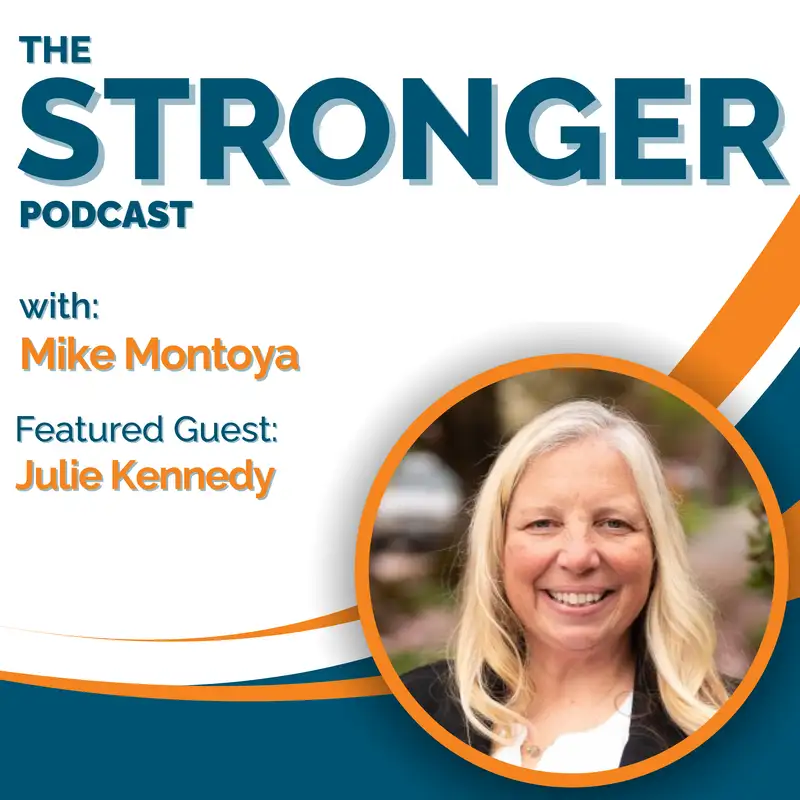
Mike Montoya:Let's jump in, and let's get stronger together. In this episode of the Stronger Podcast, I sit down with Julie Kenedy, executive director of Excellent Schools Washington, to talk about what it takes to build great schools and great leaders over the long arc of change. From her early days at North Star Academy and Uncommon Schools to her work now supporting educational opportunities across Washington State, Julie reflects on the power of feedback and high expectations and why optimism still matters in educational leadership. Good afternoon. Good morning to everybody on the podcast world.
Mike Montoya:It's great to spend time with my, friend and colleague for many years, Julie Kenedy. And Julie is the executive director, of excellent schools Washington, which is Washington state in case anybody wonders about that. And, Julie, it's like great to see you. Thanks for being here.
Julie Kennedy:Thanks so much, Mike. I'm glad to be here.
Mike Montoya:And I just asked Julie if she's ever done a podcast in all of her years of experience. She says, not yet. And so here we are. It's exciting. So, Julie, tell us tell us basically, like, where in the country you are.
Mike Montoya:Right? And and I always would like to hear from folks, like, where did they where did they start their early years? Like like K. Did you go to, like, school as a kid? Like, let's talk about
Julie Kennedy:that a little bit. So Perfect. Okay. So I live in Seattle, Washington now, and it's, like, the perfect Seattle overcast weather right now that everyone anticipates having, like, raining off and on. And I actually grew up just north of here in Bellingham, Washington, which is just about an hour north near the Canadian border and went to schools, actually, to the same elementary and middle schools and high schools that my parents and my grandparents went to.
Mike Montoya:So we
Julie Kennedy:were multi generation Bellinghamsters.
Mike Montoya:Awesome. And so that means it must be a pretty good place to live if if you if people started and stuck around and then you stayed. Right? So what was what was school like when you were when you were a young kiddo? Like, what was would you remember?
Mike Montoya:Do you have, like, memories of that experience? Good, bad, indifferent, all those things, whatever?
Julie Kennedy:Yeah. I I thought about it a lot, actually. And so I I moved back to Washington just a little bit over ten years ago. And it's, you know, I feel like I have almost like a distinct life when I was on the East Coast. And now that I'm back, I spend more time reflecting about what school was for me, kind of being back in my home state.
Julie Kennedy:And, you know, I think I for me, school was an incredibly powerful place. And it was a place where I felt seen by my teachers and I feel felt challenged. And I felt really, like, every day I was given the opportunity to try something new and dream big. I I was thinking about my elementary school librarian, mister Pittis, who ran Mathletes back in the day. And so I was I was a fourth grade Mathlete, and I was just remembering, actually, last night when I was in the car that he had taught us this, like, super he let us do really advanced math in the time.
Julie Kennedy:So I I learned he had to specialize. I learned how to convert from base 10 to, like, base seven and base six. I don't even know what that means now. Like, I have no idea what the use case for that would be. But I would do it, and I could do it, and I loved it, and I would do it in my head before I went to sleep.
Julie Kennedy:And it was just that an example of like educators at that point, like just really like igniting a fire for me that made me hungry to learn. So that was my experience. Like I said, I had tons of family in town as well. And so I had, you know, 20 cousins and brothers who all went to the same schools as I did. And so while I was kind of getting that experience and being really challenged, I also saw just the power on the flip side of when a school or a teacher kind of implicitly says you're not worth investing in or you shouldn't dream big.
Julie Kennedy:And it was really tangible. You know, by my middle school years, like, we were going in separate entrances to school and having such different experiences. So it was it was really a stark thing for me as a young person to see just the power that schools and teachers have. Again, like, me, like, really lighting a fire, and for many of my family members, of causing them to to wonder what their value was in our town.
Mike Montoya:Right. Like, they're, like, what like, you don't matter, or, like, you're just, like, sometimes kids think they start thinking that they're dumb or something. Right? Like, things that are
Julie Kennedy:Yes.
Mike Montoya:True because not inherently the kids are not well, the kids are kinda ignorant because they're kids. Right? Because they don't know very much about learning. Right? But, like, they're not, like, broken.
Mike Montoya:Right? And sometimes that's Right. As as that can be coming across. Yeah. Well and I appreciate you sharing the story.
Mike Montoya:Mean, math math, base ten and six. Right? Like, I'm like, I think I basically know what that means, but I'm like it sounds like counting counting to 10 and counting to six, but, like, in the the way everything else is complicated. It's like kilogram or kilograms and and and pounds. Right?
Mike Montoya:It's all
Julie Kennedy:Right.
Mike Montoya:Part of the the translation that happens. But I think that that sounds like a teacher who I call it is just loves loves thinking and, like like, sort of conveyed that to you as a as a as a kid, right, to, like, be like, hey. Learning can be fun. Right?
Julie Kennedy:Yeah.
Mike Montoya:And learning can be powerful. Right? And you can, like, do hard things, right, type of thing.
Julie Kennedy:Yes. Yeah. That last piece, I think, is the one where it was, like, never underestimating what, you know, nine year olds could do and really giving you the keys to the kingdom, it felt like, to do to go as far as you wanted to go and really challenge yourself. And not just kind of, like, opening the door and letting you, like, send for yourself, but really thinking about the structure so that you you tackled this and you did it and you had the right amount of support along the way.
Mike Montoya:Yeah. No. Well, so that's great. So that's, like, that's the that's sometimes people call that the spark, right, or the light bulb, right, that happens, like, when when it turns on for a kid. And, like, lots of teachers, I think, reflect on that as, like, the thing the reason they do it is, like, they could help turn that on for kids.
Mike Montoya:And so but you have a you have a career that you you you kinda, like, teaching. Right? Did you start after graduate school or during before graduate school? Or how did that work?
Julie Kennedy:No. Yeah. So I was a I was a chemistry major in in college, and I was I think my adviser called me the the friendly, happy chemistry major, which was, like, a really lovely way of talking about my presence, but also not, like and making it, like, asset based because I was also not a very good chemistry student, and I wasn't precise. And if I were to become a pharmacist like many of my peers were, I probably would have killed someone at this point. And so she gently steered me towards teaching.
Julie Kennedy:And I got to do this really cool program in college where they took female STEM majors from each of the areas, and we went and taught lessons from our field in one of the local elementary schools. And that was just, like, so dreamy, right, of, like, you pull the most compelling and exciting material and get to, like, teach this sample lesson to third graders who are just blown away. And that was, for me, what hooked me. So my senior year, I applied for TFA. And my my humbling moment was I got rejected.
Julie Kennedy:And I don't even think I made it, like, past the second round. Like, I got rejected early, and I freaked out because I had no I was I was like, I'm gonna be a teacher. I'm a chemistry major. Like, they're rejecting STEM people. That's how bad I must have been.
Julie Kennedy:And so I went for my fallback plan, which is I joined the Jesuit Volunteer Corps and actually got placed at North Star Academy in New York, New Jersey, which was one of the original uncommon schools. And so I was placed there as a long term sub and homework helper and recess duty. So I was basically just an extra pair of hands at this school, and that was my my intro into the, you know, the
Mike Montoya:profession. Profession. Well, Well, okay. So the I appreciate you being so like, I call it forthcoming, right, about, like, these, like, these things. And so maybe there's a lesson here maybe about, like, what early early experience in, like, school and and career can look like.
Mike Montoya:It doesn't it's not always, like, I call it super planned, and it doesn't always go the way you think. No. I think for most people, it doesn't go the way we think it might, right, when we're that age. And so, but you're sharing, like, with with, quite, you know, a matter of modesty, right, about, pathway was, like, different than you planned. Right?
Mike Montoya:So so thankfully, for the Jesuit Volunteer Corps, they got you into the place that you needed to be. Right? So
Julie Kennedy:Exactly. I mean, it was I think the great thing was it was so humbling because, you know, you're, like, arrogant when you're 22, and you're like, gosh. What school is gonna be lucky enough to have me in their ranks? And then you're like, actually, that's no school. And so to put you back in and be like, oh, I'm gonna be humble and recognize that I am not ready to step into that role yet, and I have a lot to learn.
Julie Kennedy:And then, you know, thankfully, I think there were because it was late in the year. I think there were only, like, three positions left with the Jesuit Volunteer Corps. So I'm just so thankful that, you know, one of them happened to be somewhat related to education, which was my only goal. And then, of course, to get placed at North Star Academy was just a huge gift and a huge stroke of luck because that really put me on the pace for the rest of my professional career.
Mike Montoya:Well, right. So North Star was one of the original Uncommon schools. And so just for our audience to know, like, Uncommon is, like, one of the, I call it, flagship charter, like, high performing charter, like, almost like one of the early stage networks, that happened in the Northeast that has, maintained really high quality outcomes for many, many years. Right? And and a lot of the practice that has come out of the uncommon practice, right, has been, I call it, permeating, like, the space of Ed space for for decades now.
Mike Montoya:Right? And so great some of the great outcomes that are getting achieved are because people learned how to do it the uncommon way. Sometimes they call it that. Right? And so so you got some clear exposure at North Star at the practice.
Mike Montoya:Right? So then you you had did end up being a teacher and a school leader at some point, right, in that network. Yeah. Right?
Julie Kennedy:Mhmm. So
Mike Montoya:what were some of the muscles that you built, that helped you, I call it, keep building on top of one thing after another, like in those first couple of years?
Julie Kennedy:I mean, I think a hunger to learn was the first one. Right? So I was humbled. I stepped into this space. North Star was in their third year, and they were just these they had accumulated the most incredible lineup of a plus teachers.
Julie Kennedy:And as this kind of, like, random extra body in the building, I got to spend the first two weeks just sitting in classrooms, watching teachers teach, and just learning and soaking up as much as I could. And I think that kind of nugget, you know, then being able to turn that around. I was the in house substitute, so I got to, like, try my, you know, shoes on, whatever, with those techniques anytime someone was out. But that chance to really sit there and see a different person lead and teach and do their work and just soak up anything I could from that and then try it out immediately was just that's something that has stayed with me, I think, until this you know, up until now of just the eagerness and the what you can learn from seeing someone else do this work. And when you bring humility and an open mind, there's just it's a never ending learning curve.
Mike Montoya:Well, and you get to practice it. It sounds like almost immediately. Right? In your case, you're like, oh, I could do this today or tomorrow, right, in my next lesson or my next thing, because you're picking up techniques that could be which is a great way to learn in general. Right?
Mike Montoya:Like the whole Yeah. Like, the whole, like, learn it for four years and then go try to apply it in a totally different context is, like, a big distance. Right? But when you can, like, learn it, practice it, get feedback, try it again, like, that whole learning cycle, right, is much more call it effective. Right?
Mike Montoya:You say you pick
Julie Kennedy:Yes.
Mike Montoya:Much more quickly. Right? So
Julie Kennedy:Yeah. And I think I think the other, like, muscle that we built that I built at my time at Uncommon was just hunger for feedback. And we had a really intense and frequent cycle of feedback where you built that muscle to just hear the hardest things from everyone, whether it was your students, the families in your school, your teachers, your peers, your boss. And so you got a constant set of feedback. There was any at any given point, I could tell you, these are the two things I've been at.
Julie Kennedy:These are the two things I'm working on. And that, like, ability just to to not take it personally. Sometimes it's hard, and you do take it personally. But the ability to see it truly, it's such a cliche that, like, feedback is a gift. But to really see it as that because it it is.
Julie Kennedy:It's someone pouring into you and trying to help you be better. And that is that culture is just something that I'm incredibly grateful for because I think at every move that I made in my time at at Uncommon, the feedback was the the factor that helped me to get better. Yeah.
Mike Montoya:Well, that's super helpful to hear because, like, feedback is not always given with intention for development. Right? Sometimes it's can be weaponized or something like that. Right? Let's just I'm gonna use that word.
Mike Montoya:But, like, it it can be hard and harsh, and it's maybe not even, like, people aren't really good at giving feedback. We're not well trained as society to do that. Like, you you can learn how to do that, but it also comes with, like, how do you give it and take it in a way with generosity and intentionality of helping someone grow and develop into a more effective operator or a better human or something like that. And we get feedback from our parents. Sometimes that's not the best either.
Julie Kennedy:It's I would say.
Mike Montoya:But maybe we're kinda built for that. Right? You, like, learn Well, I
Julie Kennedy:think you like you listen for it. Right? And you have to, like, get the get to the place where you can say, okay. I'm gonna hear a 100% of this feedback. And I even in the in the worst, meanest feedback, there's a shred in there of, like, what can I learn from this?
Julie Kennedy:And I think when you take it with the idea of, like, I just wanna learn, you can start to figure out, like, what to do with all of that and and how to pull meaning from every single piece of it, and how to there's feedback I've gotten every single round of feedback for twenty five years. Right? And I'm like, I I know that's there, and I'm working on it. Yeah. And I, like, expect to hear that now in some way or another because it is, like it's it's what makes me me.
Mike Montoya:Yeah. I think that that's that's I mean, it's such a positive attitude about it, and I love that because I feel like my lessons are things like you keep learning the lesson until you learn the lesson. And, like, the like, it'll keep showing up as a thing to either work on or to develop or a skill. So, like, I call even even building the muscles, right, inside of your psyche and your body to, like, get better at a thing that is scary sometimes. It will just keep showing up until you're like, oh, I got this.
Mike Montoya:Now I have the mastery of it. Then you're like, oh, now it's no longer a thing. It just stops being part of your life. Now it's the next problem or the next learning or the last lesson. So it feels like we have an endless set of lessons available to us as we get older.
Mike Montoya:We're like,
Julie Kennedy:the less
Mike Montoya:we already get, the less we actually know. We're like, oh, more learning lessons, etcetera. So, okay. So, rich rich culture feedback, really high quality, experiences in front of other educators. Right?
Mike Montoya:They helped you kind of build, like, some of your craft and your skill. Right? And then you went on to, like, be, like, leader of leaders, right, for for almost, I don't know, ten or ten or twelve years, right, in uncommon. Right? So, like, that was, like, a big chunk of your career.
Mike Montoya:What did that how did that help you for the the next moment? Right? What did you do next? And, like, essentially, like, did you leverage that skill
Julie Kennedy:Yes.
Mike Montoya:As you planned?
Julie Kennedy:Yeah. That's a great question. I don't think I've thought that much about so transparently, when I I I was a regional superintendent and managed and hired and helped grow. We went from being oh gosh, I think we were like four middle schools, and then we were 15 middle schools and high schools by the time I left. And at that same time, New York City adopted the Common Core.
Julie Kennedy:New York State adopted the Common Core. It So was just massive change. And in that period of time, I had two kids. And so honestly, when I left Uncommon was twenty fifteen, and I was just so tired that it was just we'd been running a marathon for so long. And it was there was so much work, and it was incredible that we built and scaled this incredible network of schools.
Julie Kennedy:And I think I was ready ready for a change of pace. And I remember I was trying to think about what I was going to do next, and someone was like, you won't be happy sitting and looking at a computer and just, you know, checking your boxes. And I was like, actually, I think you're wrong because at this point, nothing sounds better than sitting at a computer checking boxes because I'm so tired. Yeah. And and so I, you know, I think what we took from that time was, like, one, just the the need for talented educators who are ready for that next step.
Julie Kennedy:Right? And so, you know, I went from Uncommon to Relay Graduate School of Education, and that was like first in my head was just, wow, we urgently need educators who are ready and excited for leadership because we have an endless chance to grow, like kids, there's more demand for schools, and we just we need more folks who are ready to step into that. So I think that just a beginning knowledge of what it might take to be ready for year one of being a principal or year one of being a superintendent, that's really what I took from it was having seen that on the ground over and over and over again and seeing where you could where you could make bets on folks and where you really just needed to already have this skill built before you step in front of kids and teachers.
Mike Montoya:Yeah. For sure. Yeah. Like, you try to get a mixed almost like the sense of, like, what it needs. Like, I call it, like, the how fertile the ground is inside of a human to, like, then cultivate it or not.
Mike Montoya:Right? How much Sometimes when we get too experienced, then it's harder to teach and learn and grow. So when they're eager, young, and pliable, then you can invest more and it takes root more quickly. So you have a sense of that stuff, once you've done it a while. And well and so did it I mean, you so being at Relay, which is, like, for our listeners, like, like, know, Relay kinda created a a graduate school of education that kind of there's an alternative pathway to, like, the university just the large traditional universities.
Mike Montoya:Let's just call it that. Right? There's a bunch of higher ed that does at schools, etcetera, things like that. And Relay was, like, a a new version of this with a much more I'm gonna use the word progressive, but, like, much more intentional agenda, right, of bringing indicators that are ready for that kind of I call it bold and rigorous leadership. Right?
Mike Montoya:It's like Yeah. It's like the challenge around what kids in urban settings are experiencing in terms of quality is enormous, and we have a long ways to go, although we're making dents, every single kid matters, right, clearly. The scale of the challenge in The United States is still substantial, right? And so we're still working on it. So you took you did you got to work with educators in that setting, and then you moved to the growth fund, right, which is, and some people in our audience will know what the charter school growth fund is, but the growth fund has a very, I guess, point of view about how to invest and help it grow high quality networks.
Mike Montoya:And some of this comes from the uncommon case study, basically. Uncommon is the map about how to grow and scale a high quality charter experience. Then you get to bring that to the growth fund. Were you working with portfolio there, or were you working across multiple jurisdictions? How was that looking like?
Julie Kennedy:Yeah. So I was on the impact team, and so our work was really you know, once the a network had been identified as ready to grow and and scale, We were I don't know what the equivalent is in any other world, but we were kind of just a set of resources for that school to leverage, to make sure, you know, they are making different mistakes than other folks, and to get kind of caught up to speed on best practices of other networks who are a couple years ahead of them. And then we also work to connect leaders to kind of solve common challenges. And so I worked with academic leaders and character and culture leaders across all of these schools. And I mean, it was an unbelievable experience because you just, you get to be on the front row of great schools as they move from one to five, as they move from 10 to 20.
Julie Kennedy:I mean and you just get to be there as their thought partner, and it was just an incredible gift to be able to be in that seat and learn about what is happening and what are the common pitfalls for all of these folks as they kind of make those steady stages of growth?
Mike Montoya:Yeah. Like, the amount of things that people need to learn to grow a network, it's enormous. Right? Like, it's a list of things that you may not know when we're doing this. Right?
Mike Montoya:And it's, like, enormous. And that's why you need partners and thought partners and people who have done something like it before even if it's
Julie Kennedy:not
Mike Montoya:exactly the same context, exactly the same moment, like, things do shift and change. But, like, the I call it the safe space with a leader, but it's, like, in a coaching and developmental experience. Right? It's, like, really powerful. Right?
Mike Montoya:And this is the essence of, like, leadership development, which we were maybe that's part of this thread, right, which is the whole point of this conversation, which is, like, great leaders need other great leaders to, like, learn to be great leaders.
Julie Kennedy:Yes. Yeah. And I think that the idea CSGF is really in a pattern matching. Right? And and you can get that when you have a portfolio their size, and you can start to say, oh, I see some of these these pieces, like, I'm gonna predict, I'm gonna tell you this is probably where you end up.
Julie Kennedy:And that was like one of my favorite, like, you do it humbly and be like, you know, I think like we've seen this before and here's the challenge you're gonna face. And one of those examples I can think of was a school that was replicating from one to two, like opening their second campus. And when you'd say, Okay, how are you going to scale the culture of your school? You have this amazing school that kids and teachers love to be at. What's your plan for how you really intentionally build that at second school?
Julie Kennedy:And nine times out of 10, leaders would say, oh, well, we're gonna take staff from our current school, and we're gonna put them over in the new school, and that's how we're gonna scale it. And it was so fun because we could be like, okay, that is, like, 25% of the equation. We're gonna tell you every single person who has said that has also named you need to, you know, do x, y, and z in addition to that. And almost every time a leader would be like, that's not gonna happen here. Like, we have these amazing staff, and they're gonna do it.
Julie Kennedy:And be like, okay. Great. And like, when you're ready, just we've got these other resources for you to think about. And almost every time, so we'll come back and be like, you were right. And it's not about being right, but it's just that, like, nothing is so niche.
Julie Kennedy:Right? Like, these are we're talking about a business of of humans that are somewhat predictable and building structures around them. It just was it was almost reassuring to think that, like, there was almost no problem that had never been solved before. So the ability to learn from folks who are doing work in other spaces and apply those just means that you get to, you know, spend your energy in problem solving on new challenges and not have to replicate those old ones.
Mike Montoya:Well, right. Yeah. You can, like, move more quickly or more judiciously through a through a set of things that were already solved a few times
Julie Kennedy:Yeah.
Mike Montoya:Before. And, again, nothing is exactly cookie cutter stamp it through. Right? But, like, the the, like, unpacking it in a lesson and then applying it in your context in a thoughtful way with some coaching and support, like, makes it more likely that you're, like there's because gonna be another thing, and I think we've learned this every couple years in the ed space. Right?
Mike Montoya:It's like, oh, this year's next challenge is a thing that none of us have dealt with. That way, we gotta freaking spend time on that. Right?
Julie Kennedy:And Yes.
Mike Montoya:You heard some version of it, but, like, know, there's, like, accountability challenges, and there's, like, financial challenges, and there's, you know, whatever. Immigration is the is this year's moment. Right? And so it's always, like, another piece of society that we're having to accept and deal with, right, in our Yeah. In our school set set in because there's, like, such big public institutions, and there's so much of American life that starts and happens in the school community.
Mike Montoya:Right? Like, we're all subject to it in some ways or another. Right? Yeah. Okay.
Mike Montoya:So I appreciate the growth fund conversation because I want people to, like, kinda see the arc of where we're going here because now right now, for the last couple of years, you've not I I always in my head, like, you moved back to Washington, but you kinda came back for your practice to Washington state where you
Julie Kennedy:grew up.
Mike Montoya:Right? And now you're working on, like, the development of an ecosystem, right, of sorts, right, around school opportunities and choice right inside the greater Seattle area. So I may be mischaracterizing it. So how about you tell us what that is so we understand it? And then let's talk about, like, why after
Julie Kennedy:that. Yeah. Yeah. Yeah. So we Excellent Schools Washington is a new nonprofit.
Julie Kennedy:We're almost two years old, and our work is to ensure that every kid in Washington state has access to a great education that sets them up to thrive. And so we really operate as an investor. So our work is energizing and pooling philanthropic funds and kind of building investment theses that get people excited and then turning around and making investments in excellent schools that can grow, in strong entrepreneurs who can launch great schools, and then really trying to build capacity of leaders so that they can continue to get better and grow what they're doing. So we humbly call ourselves, we're like a mini charter school growth fund here. And really, is just that there for us in Washington State, we have some incredible schools, and we have schools that are really delivering for their students and families.
Julie Kennedy:And so what we want to do is help them to grow, right, and reduce some of the headwinds that they're facing. And we know that there's opportunity and need for more schools. So the role we can play in preparing entrepreneurs to grow schools, to grow existing different opportunities here.
Mike Montoya:Yeah. Well and they appreciate the well, it's almost like you're taking a model that we know works, right, in terms of, like, helping if you if if intentional people focus intentional energy in a location, right, you can then start to build more more momentum. Right? And as you said, there's, like, excellent stuff going on. And I think that's true about a lot of places in The United States is that there's there's spots of excellence, right, all over the place, but the scale of them can sometimes be, like, short of the challenge that exists.
Mike Montoya:Right? And so
Julie Kennedy:Yeah.
Mike Montoya:The goal is to close the gap between, like, lots of excellence and lots of opportunity and putting that stuff together, right, inside of a
Julie Kennedy:Exactly.
Mike Montoya:A a neighborhood or something. Right? So but Washington has this, like, history with love hate with charter schools, etcetera. I've been that's I'm characterizing that, but, like, I'll own that as, like like, it's not it's not been a clear consistent set of school choice opportunities in Washington. I mean, can you tell us, like, like, your under version of understanding, like like, what's behind that?
Mike Montoya:Like, and what what how would you characterize it now?
Julie Kennedy:Yeah. So charter schools have only been around for a little bit more than a decade in Washington. And I can probably mark that almost exactly because I told my parents I wouldn't move back until we got charter schools approved. And not that I didn't ever want to move back, but I didn't really ever know that that would happen. And so but yeah, so they've been around for about a decade, and it's been a rocky start.
Julie Kennedy:And a couple of things have fed into that. One is, I think as a sector, we positioned ourselves as being different and unique in Washington State. So that idea of pattern matching and learning from our peers nationally just didn't happen here. We were like, Washington's different. You know, but every every city and every state says that about themselves.
Julie Kennedy:But we said, like, Washington's different, so you can't pull lessons from Texas
Mike Montoya:Mhmm.
Julie Kennedy:Or from Massachusetts, or from New York. And so they really tried to kind of blaze a new path here. But what happened were the sectors and the leaders hit all of the same headwinds that those other states have learned from. So there's been a need to kind of pull back and say, all right, let's, like, let's turn to all of our peers and have them help us see around the corner so we can tackle the next challenge that we see. And then the second thing is that, you know, Washingtonians are really nice.
Julie Kennedy:And we are also I I think some people describe it like the passive aggressiveness of the Pacific Northwest, like, drives all of my now, like, colleagues and peers who are from the East Coast. They're like, what is going on? No one is talking about the real thing. And there's this kind of air of like, well, you know, it's fine. It's fine.
Julie Kennedy:This is good enough. And I think to the detriment of decades of generations of students, we've said that about our schools, and that the schools are fine and they're good enough. But from my own story and from those of colleagues I have now or families that I'm talking to now, they're not good enough. And we have a huge way we have a huge path to go in order to help all of our students realize their full potential and really, you know, accomplish what they're dreaming of.
Mike Montoya:Well and so you're talking about and are you talking about kind of culture that it kind of becomes part of, like, almost the atmosphere in which, like, cities are are are positioned. Right? And I live in Portland, Oregon. I'll own this. Right?
Mike Montoya:But I'm not from the Northwest. Right? But I I can relate to what you're talking about in terms of, like, people are nice and but and, like, accountability is kinda soft and rigor is kinda weak, and people are like, oh, it's good enough. And but, like, when you look at the data, it's, like, pretty abysmal, frankly. Right?
Mike Montoya:And if I look at, like, Portland's region's data or the state of Oregon's data, it's, like, it's quite low, right, in comparison to other parts of the country. And then I think about, like, how many days of school kids have in the state.
Julie Kennedy:Yeah.
Mike Montoya:And I'm like, what is going on here? Right? And I'm like, like, well, they should be in school more probably, and they should have better school experiences while they're there. And so like, that's a whole piece of the practice, right. That we need to keep thinking about how do we strengthen the opportunity here.
Mike Montoya:So I feel like you're talking about something that's prevalent in Seattle as well. And then Yeah. And then you're starting to sort of I tried to find some momentum in this area. Right? So
Julie Kennedy:Yeah. And and it and you have to be a little bit fearless. You know, I when I was taking this job, one of my colleagues was like, okay. Like, you're not gonna be anonymous anymore. Like, no one none of my neighbors or friends really knew what I did.
Julie Kennedy:And, you know, charters are seen disruptors and as, like, infiltrators here. And so I, like, had to kind of recognize, I was like, okay, someone described this as like, you're gonna get invited to less holiday parties, and you're gonna get it's it's, like, less easy to make small talk at PTA events. Right? And all of that is true, but it it's absolutely necessary for us to kind of move the conversation forward towards all the things you're talking about.
Mike Montoya:Yeah. I mean, that's true. And I think it takes people with I call it, like, I call it enough skin in the game, but not so much that you're, like, I call it afraid to take some actions. Right? That, like Yeah.
Mike Montoya:Other people like, you know, like, when you have to go to the grocery store and, like, see these folks and, like like, it's the thing. Right? It changes, like, the way that you operate inside your neighborhood or your home or your community, and that can that can feel not great to a lot of people that don't wanna kinda tackle that thing. And but when you think about I my view is when you think about kids and, like, the job of the adults in society is to, like, provide for the next generation of kids to have the same at least opportunity that we had, right, and, like, frankly be better. Right?
Mike Montoya:Because, like, ours were okay or great, some of us, but, like, not consistently great. And I feel like we owe it, right, to society to, like, be doing better every time because, you know, society gets more complicated every generation. Right? Cost of living gets more complicated. And, like, you have the challenges that face us as a like, we need frankly, these kids, they had to grow up to take care of all of us eventually.
Mike Montoya:Right? So, like, we
Julie Kennedy:It's worth the investment.
Mike Montoya:We're we're really in trouble if we don't prepare them. Right? So so there's there's there's a little selfishness to there too, but, like, I think it's really the onus is on the adults. And, John and W. Carter used to call them responsible.
Mike Montoya:Right? These are responsible people that are responsible for the well-being of society. Like, we need to take those actions and galvanize people around that. So, alright. So you're a disruptor.
Mike Montoya:Let's call you that for a moment. Right? Are you okay with that title for a minute?
Julie Kennedy:Oh, I love it.
Mike Montoya:And you come with, like, bonafide credentials and experiences, right, that really make you I call it some people like like to cause trouble for causing trouble, but, like, you you bring a set of, like, experiences that really are valuable to this work. Do you feel like, there is, I guess, do you feel optimistic about the potential? Or maybe there's another word that you would use to think about the next, like, three to five years ahead. So
Julie Kennedy:I mean, I am a probably to a fault, I am, like, the most extreme optionist you're ever gonna meet. I'm it drives my husband nuts because, you know, Google Maps will tell me that either this trip is gonna take twenty five minutes, and I'm immediately like, I'm pretty sure I can do it in twenty. Right? And so that's like how I approach life is very much a like, we can do anything we set our minds to. And I again, for better for worse, like, it has proven to be true that if you get a talented set of people who care deeply and are willing to get into the muck, you can do anything.
Julie Kennedy:And so I incredibly optimistic about this work. And I, you know, I see in the horizon the chance for us to really revitalize what's happening. And I think some of what gives me optimism is there is kind of a sentiment. Whenever I tell people that I'm at Excellent Schools Washington nationally, they're like, oh, Washington. That's tough.
Julie Kennedy:And I'm like, yeah. And we're trying to change that narrative because when I'm talking to people here, they're on fire about, you know, what kids can do. They are committed to doing the hard work. They are, you know, waking up every day excited about this, and we're building a coalition of these folks. We're finding them.
Julie Kennedy:Some of them have been maybe in hiding for a couple of years, but we're pulling them together. So I see the movement on the ground growing here in a in an exciting way that makes me feel like, you know, this is this is the best possible work I could be doing right now, and I feel so lucky to get to do it.
Mike Montoya:Well, I I appreciate your optimism. It's clearly coming across and, like, just your attitude and your, like, your affect right now is, like, very, like, joyful. Right? Because it is, like, if we don't believe that it's possible, then it really becomes impossible. Right?
Mike Montoya:And it's it's hard to move move forward. And I think that, you know, this is in the atmosphere right now. I mean, in part because, like like, society in America right now is, like, really juxtaposed. Right? There's, like, this tension, right, between two sides or multiple sides, and most of us kinda wanna be probably in the middle of this, happy stream of like, let's make progress and have a healthy and happy life.
Mike Montoya:But we're kind of got people are kind of in their corners. It's hard. So I feel like what I'm hearing from our Ed colleagues, and many of which all know, but there there was an era of Ed reformers, like the '20 02/2020 crowd. Right? There was a group and effort and lots of energy.
Mike Montoya:I think, some of those people got tired, right, because it became a lot of hard work, there wasn't another wave of next stage folks in
Julie Kennedy:this. But
Mike Montoya:as I talked to them in the last couple of months, right, people were like, it's time. We need to reactivate. Right? And so, like, part of me is like, let's reactivate. It's almost like we've been in dormancy in some ways.
Mike Montoya:Like, we're, like, we were kinda waiting for the moment, but, like, now we're kinda getting I think there's more energy around this in the last I I say because in some ways, a response, right, to, like, the Yeah. The push that we've been getting back. And I feel like education is kinda one of those issues that can be everybody's baby if we can just
Julie Kennedy:Yeah.
Mike Montoya:Agree that, like, great stuff is better for all kids and great stuff is better for society. But right now, I think we're right on the cusp of, oh, can we make this happen again? And get some another big leap would be amazing. So would you I mean, I'm just I'm this is a this is an opinion show. Right?
Mike Montoya:So it's like, you're allowed to express your opinions. I'm just you're kinda cheering mine. So
Julie Kennedy:I feel the same way. You know, uncommon is is having its thirtieth anniversary now, I think, maybe in the next year. And so I I got to go back and join a huge group of their current principals and operations leaders for a retreat. And one of the things I mean, I have I have not been more fired up leaving that retreat since I was, like, in 2005. But one of the things that I think was so exciting is I think they have a 152 alums from the schools who are now working at the organization.
Julie Kennedy:Some in, like, regional leadership roles, as principals, as teachers. And to me, I was like, how can you not be energized by that? Like, we know who the next generation is gonna be, and it's the students that we've been with this whole time. Right? So it's just it's getting to, like, move into a new seat in some ways and let leaders step into these roles.
Julie Kennedy:And and again, like, what keeps me excited in Washington is we're ten years in. We've got twenty more years until we're gonna be able to get that part, but then it becomes almost like it's not that the movement won't be hard, but right? But, yeah, you get the flywheel going of, like, this is the thing that's gonna last for hundreds of years and not just or, you know, professional lifetime.
Mike Montoya:Well, and that the the we didn't get here quickly, right, as a study. Right? Took some time, you know, four hundred years, right, or something like that, right, to get here. And, you know, I I of course, I'm spending time thinking about the the, February I don't know what that's called, this two fifty year anniversary. It's something, there's probably a magical term for that.
Julie Kennedy:It says quincentennial or something.
Mike Montoya:It's a special moment in America's history, right? But we're we are kind of building for the next two hundred fifty years by doing these investments in these things as a as a group of people right now. And it makes me I guess I call it exciting. I I love that you reflected on these graduates of the uncommon experience, right, that have come back after presumably going to college or something like that and acting to work for the system. Like, that feels like almost it's almost like that was the whole intention, not so much that they should come back and be educators, but that that they would move on into life and then come back and give back, right, to to the communities in which they live.
Mike Montoya:And so
Julie Kennedy:A 100%.
Mike Montoya:If we could do more of that, that sounds promising. Right?
Julie Kennedy:Yeah. Exactly.
Mike Montoya:So so it's gonna take some time. Thirty, so thirty years at uncommon. TFA, it's gonna be thirty five years this year. Right? So, like, there's I mean, these are these are things, and that's almost like career life, but not quite.
Mike Montoya:Yeah. It's a little more time. But, you know, that those are big chunks. What do you think that, like, leaders that are I call it seasoned, right? That have been around for a couple of decades.
Mike Montoya:Right? What do you think that we should be thinking about doing now that makes space for that new group that you mentioned for returns that are Yeah.
Julie Kennedy:How do
Mike Montoya:we make space for that kind of space?
Julie Kennedy:That's a great question. And I I don't know that it's something new and different. In many ways, I think it's it's doing for the next generation what was done for us. So when I when I left North Star, I finished my Jesuit volunteer year, and I moved to Boston because a bunch of my friends were moving up there. And I interviewed at a bunch of charter schools there.
Julie Kennedy:And I remember I was 22 years old, and I was, like, in the hallway interviewing at Boston Collegiate, which was South Boston Harbor Academy. And Brett Piser, who was my boss at uncommon, was the principal. And he we toured classes and we're talking, and I think I taught a sample lesson. And a and a challenge came up. One of the operations people, like, came up and said, Bret, and I don't remember what the challenge was, but they told him.
Julie Kennedy:And he turned to me, and he goes, what do you think we should do, Julie? And a, I'm 22 years old, and b, I'm a candidate. I'm not even like your staff member. But I was like, oh my god. Like, I don't care what they offer me in salary.
Julie Kennedy:Like, this is the place I'm working because I just wanna be in a place where someone cares about what I have to think, where they're going slow enough, that they're seeking other opinions, and that they've created space for new ideas. And I I think that's always been a part of our DNA as a movement, and it's just remembering that and then continuing to be humble and remember what was done for us so we create space for others to do those three things.
Mike Montoya:Yeah. Well, that's great. Brett's a great example of that. Like, he, like, he almost, like, is curious and inquisitive in, like, so many aspects of his leadership. Right?
Mike Montoya:And that Yeah. And that, like like, clearly, that was showing up for you at the time as a as a a new almost onboard person. Right? So that's, like, a great reflection because, yeah, and I appreciate it. I kind of put you on the spot there a little bit.
Mike Montoya:What is it that we need to be doing? But the intention was to really just evoke what comes to mind. And it's almost like the way of and I'll nail this, and someone will probably get pissed about me saying belonging matters and making space for people to be themselves is part of how we get the genius to show up. And in some ways, again, there's so much resistance right now to, like, making space for people to be themselves. Right?
Mike Montoya:That, like but we can give that up. Right? Because I feel like that's part of how we, I call it, evolve Yeah. As as as society. Right?
Mike Montoya:It's like we, like, we get we get bigger, we expand. Right, and we become better, right, at I call it just living with each other ways that are not just tolerant, but we celebrate all the stuff that is a genius. And I think about all the things that then times that, like, you know, I've shut people down as a leader because I'm, like, I'm impatient or I lost track of things or I'm, like, you know, tired, for example. Right? Like, plenty of that going around.
Mike Montoya:And then I also think about the times that I've been shut down as a as a young person or when I was younger. I was like, that just was not very it felt terrible. Right? It feels terrible. Right?
Mike Montoya:So okay. So I appreciate those things. That we're gonna call those out in the show notes, these, like, little tips because, I think Julie hit on a really important spot here, right, for us to, like, reflect on. If you think about what you, want from your peers, colleagues, or the sector, in the in the one to two years ahead when you think about Washington, like, what what's an ask, right, that you might come up with that you're like, hey. I want for example, this is not necessarily the ask that you need, but it's like, I need talented people to move to Seattle and join the movement, for example.
Mike Montoya:Right? You can make the call out. But, like, those are kinds of things that, like, I'm happy to share that forward, but it may be something simpler than that. But it's I'm curious if there's something.
Julie Kennedy:No. You hit the nail on the head is we just we do. It is we need talented people who believe in what is possible and have a high bar for what students are capable of achieving. And so, you know, we it's July is a great month to spend time in Washington, so come out and see it. But, yeah, getting more talented folks is exactly our our kind of request.
Julie Kennedy:That and and continue to be curious about what's happening here. You know, we're navigating some a little bit of a tough political environment and trying to be smart about it. We'll always take feedback on how we can get better and just yeah. Don't write us off yet, I guess, is the
Mike Montoya:other part. Well, it's almost like yours are just getting momentum, right, and growing and starting. And, like, ten years is not that long in terms of the charter movement. But as you said, you can move more quickly because you can model off of other places perhaps. Right?
Mike Montoya:The resistance on the political side, also seems like ebbs and flows. And I think about, like, the California context, right, where, like, you know, it's glory days for a while, and then it gets, you know, trounced for a while, and then it will I'm confident it will spring back because, like, things will change. I think that will also happen in Washington. Right? But the call out to the community, right, it's like, if you haven't been to Washington State, it's like so incredibly beautiful, from one of those states, they call it the desert states, Texas, anywhere in the South where it's, I call it drier than not.
Mike Montoya:Like, Washington has so much greenery. It's really crazy. It's really impressive. And it rains, but that's why it's so green. So it's like the trade off is really but it never really is cold.
Mike Montoya:It's not like freezing in Washington State ever. Right? It's close to Canada, but it's like, you know, the coastal part of Canada itself.
Julie Kennedy:And we have, like, orca whales and, like, otters. I mean, it's like a magical dreamland here.
Mike Montoya:So And there's so few people that live on the West Upper West Coast. Right? I mean, Seattle's pretty populated. Right? But, like, but, like, Greater Washington State and, like, Oregon, etcetera, like, very few people compared to, like, the Northeast.
Mike Montoya:Right? So, like Yeah. You want some space to breathe and have an opportunity to, like, really make a contribution, like, this is a chance for you to check it out. Okay. So, Julie, after we have our conversation, I'm gonna see if you can get share a list of, like, I call it operators and places that are, like, I call it bright spots for Yeah.
Mike Montoya:For our listeners that we'll put them in the show notes because I think probably would be good if they could check out the different Yeah. You know, places that are doing stuff that's great because they feel like Yeah. Just don't know. It's like it's, you know, it's just not a story that's been told yet, so I'm really glad that we're able to tell it right now. So
Julie Kennedy:Yeah. Absolutely.
Mike Montoya:Okay. Okay. So parting words, maybe I mentioned this at the top, is the idea of sharing your, I'm going to call it wisdom with the generation that's newer to this work. Right? And I'm gonna I'm I wanna put them in a box, but it's sort of like the people that haven't been in it for, like, more than a couple years.
Mike Montoya:Right? Like, have you is there something that you would tell your younger self or that you would, you know, maybe you would mentor somebody to think about, right, as they're starting their career in this work?
Julie Kennedy:Yes. This the thing I'm thinking about is the tension between strategy and urgency. And I think I would tell young Julie that, like, there's not a magical formula and that you're you're likely never going to hit that balance just right. Like, think of most of most of my biggest regrets are from either moving too fast and not having enough strategy or moving too slow and missing the needs of the moment because I was trying to develop the best strategy. And I think just like I would tell myself to give yourself grace that you're gonna get it right sometimes and you're not gonna get it right sometimes and that what you're aiming for is just probably most of the time getting it right.
Julie Kennedy:But really thinking through giving yourself space to be as urgent as the moment calls for and build enough strategy.
Mike Montoya:Yeah. I mean, like, move forward with intentionality, but don't don't
Julie Kennedy:Don't be paralyzed and don't rush it
Mike Montoya:Yeah.
Julie Kennedy:Which is well, I'm like, that's a meaningless advice right now. Because it's just every single time it feels different. And I just I think maybe it is just like, don't beat yourself up because you're gonna get it right sometimes and you're not gonna get it right. And just learn and make new mistakes every time and and see if you can make maybe when I'm maybe in the next twenty years, I'll feel like I found the exact right formula. But at this point, I haven't yet.
Mike Montoya:Yeah. We haven't found it yet. Well, I think it's, like, from my viewpoint, I agree with you. Like like, it's on average, right, over the course of time that you get it mostly right most of the time. But, like, given how averages work, like, there's highs and lows, and, like, sometimes you can be more more strike right on it, other times you're not.
Mike Montoya:And the I call it the the self defeating conversation can be like, oh, I didn't do it well well enough, exactly right, or I didn't do it perfectly. And that can make that can, like, kinda undermine your leadership qualities, right, if you start to, like like, absorb that, like, I don't really know what I'm doing type of conversation. And so Mhmm. If you do it with a good intention and you do it with, I call it good counsel and you think about it, like, carefully and judiciously, but, you know, don't we're not higher ed. Right?
Mike Montoya:I guess it's one of the things that all this be critical of higher ed for just one It's like, it's hey. We we don't all have the luxury of being in higher ed forever thinking about it. Like, this is not, like, academic scholarship type of Yeah. Of work. Right?
Mike Montoya:It requires us to be intentional and careful, right, but not necessarily spend, you know, a decade figuring out everything perfectly. Right?
Julie Kennedy:That's Yes.
Mike Montoya:Different. Right? Bench science.
Julie Kennedy:Yeah. I have this crazy story. Sorry. We're a little bit late. But from I was in grad school spent was grad school for public policy, and we spent four months working on a paper about how to get universal health care, how you could set that up in a policy environment to win.
Julie Kennedy:Right? And so four months. And and to us, that felt like a forever long strategy. And and the kind of wild card was, like, while we were going through this, I had an uncle who was diagnosed with cancer in the beginning of this, who my uncle had dropped out of school, had a kind of dead end job, did not have universal health care, and it was a preventable cancer that had he actually been going to the doctor throughout the whole thing. And so there was this, like, wild moment where, like, I'm sitting in two worlds, one which is, like, grieving my uncle, and the other where I'm sitting in this like really privileged setting, talking about this, like, the theoretical and talking about statistics of, you know, how many people could be saved.
Julie Kennedy:And it was just this like wild, I think about that moment all the time. His his funeral was actually on the day we presented the paper. So it really could not be more stark of that tension between, like, there are real people who need us to act now, and we can be sitting in a space theoretically debating this. And it's not it's it's like there is just that tension that's so real of what people need for us to do today and the amount of work it takes to do this in a well meaning and sustained way. Yeah.
Julie Kennedy:So it is I I think about that a lot when I'm, like, in a space talking about, well, what what's the strategy for the next five years? And then you remember there's second graders in their classroom right now who have one chance to be in second grade. And so it's that combination of what can we do now to serve the kids who are in our spaces.
Mike Montoya:Yeah. In our spaces now. And thank you for caring about your family in that way. Like, it's it's I think it's important. Like, I think it is helpful to have other people can reflect on their own moments like that.
Mike Montoya:But, like like, we, like, we need to show up for each other now, right, in the moment, you know, and, like, do it in a way that, like, keeps gets the flywheel spinning and can keep it going. Right? And so Yeah. It's a good it's a good reminder of, like, yeah, this stuff matters, right, for real life and real people. Right?
Mike Montoya:And that's the that's the thing. So all right. Julie, thank you for your work, for your leadership, and for all the lessons and learning that you're continuing to bring to kids and families in Washington now. And we're grateful for the the the work that you've done and the work ahead. And in a year from now, we're gonna talk about it and be like, hey.
Mike Montoya:Look at where we've gotten. Right? Let's make sure we have a plan for that in the future. Okay? Julie talked about the tension between urgency and strategy, and I think that's the tension every leader in education feels right now.
Mike Montoya:Kids only get one shot at second grade, one shot at middle school, and one shot at high school. That reality calls us to act with purpose today while still building systems that can last for generations. And if this conversation proves anything, it's that long term change starts when people believe better is possible and are willing to work together to create it. Thanks for listening to The Stronger Podcast. If this conversation inspired you, we invite you to follow the show and share it with someone who's on a journey to become a happier and healthier version of themselves.
Mike Montoya:Links and resources are in the show notes. See you next Thursday, 9AM eastern time. Have a great day, and stay strong. Podcaststhatmatter.org.
Listen to The Stronger Podcast using one of many popular podcasting apps or directories.