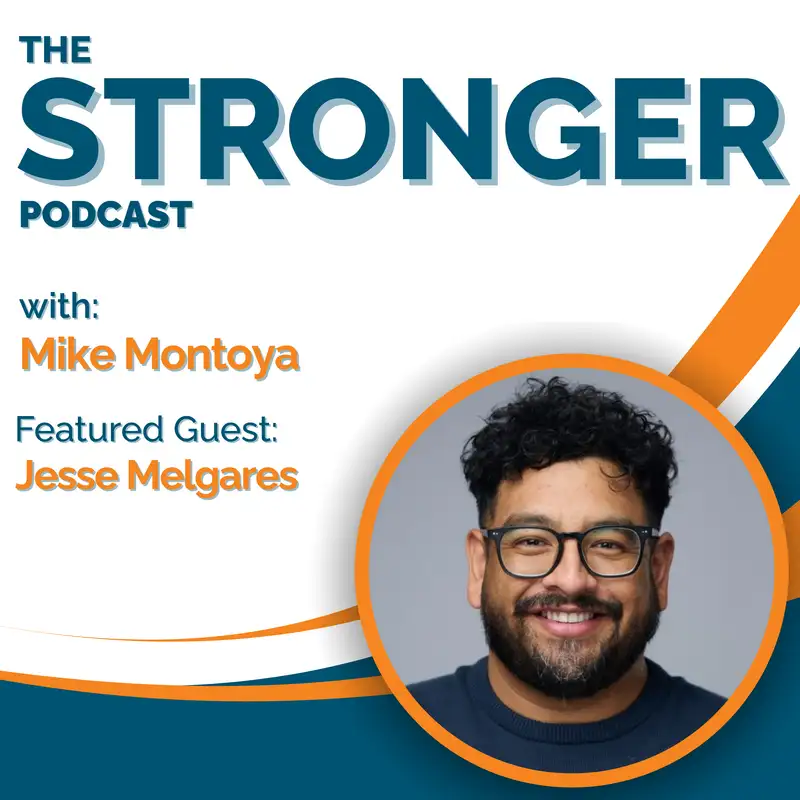
Teacher Retention Is a School Systems Problem: Building the Black and Brown Middle Class in South LA with Jesse Melgares
Welcome to the Stronger Podcast. Each week, we have honest conversations with education and social impact leaders about their leadership and career journeys. We talk about their origins, inflection points, and the work that they're doing today. The conversations are honest, human, and practical. If you're here for real stories and real takeaways, you're in the right place.
Mike Montoya:Let's jump in, and let's get Stronger Together.
Mike Montoya:What does it take to build opportunity in a community where too many students have
Mike Montoya:been
Mike Montoya:underestimated? Jesse Melgares believes it starts with strong systems, exceptional teaching, and an unwavering commitment to ensuring that every student, especially black and brown students, have access to the opportunities that education can unlock. In this conversation, we explore what it
Mike Montoya:really takes to build schools that change lives. Good morning. Good every good afternoon, everybody in Podcast land. Mike Montoya here. I'm with Jesse Melgares, is the CEO of the Accelerated Schools in the Charter Network in South Los Angeles.
Mike Montoya:Jesse, thanks for being here. Thanks for
Jesse Melgares:being here. Thanks for the invite. I'm happy to be here.
Mike Montoya:So I always like people to kind of get a sense of like where are you at physically? Where are you at physically in the in the world now? And then that'll make you go way back to like kind of where did you start in the in the on the planet? And give me the, like, I call it the the origin story if you're willing.
Jesse Melgares:Yeah. I, so the Accelerated Schools is in South LA. I live here in LA. I'm from LA. I'm in my home office right now.
Jesse Melgares:I think you said you wanted the origin story?
Mike Montoya:Yeah. Like, what's the the roots? I know that you aren't, necessarily a a born American, right? So tell me that story. Is that true, or am I making that up?
Jesse Melgares:No. No. I was born here. Yeah. I'm I'm yeah.
Jesse Melgares:I'm from LA. I was born, raised here in East Hollywood. I'm I'm Salvadorian, so my family came here in the early eighties during a, you know, pretty bloody time in in the country where there was a civil war and, like, most immigrants who just come here to try to give their families a better life for the opportunity to work. And, you know, I found myself, in community college after high school and then I went to I transferred to UCLA and I think that's really sort of the first time that I started to think about just what, how to make a difference and what are the educational inequities that were out there. And I joined Teach For America in, god, 2006.
Jesse Melgares:That's twenty years ago. And have been here ever since.
Mike Montoya:The so thank you for the the piece. Right? Like, the eighties was a tough time in central parts of Central America. Right? And and a lot of we had a lot of immigration to The US.
Mike Montoya:So TMT is I call it be volatile in other parts of the of the planet. Right? And people come here just to get started. But when you when you were a young man, did you go to public schools in Los Angeles?
Jesse Melgares:I did. Yeah. So I went to LAUSD schools in East Hollywood and and, you know, when I graduated from high school, I I went to John Marshall High School, go Barristers. But I I got really, you know, it's it's your traditional big public schools of the 90s where, you know, at that time just the bar was very different. And I got a little fortunate that I started off as an English learner and then I reclassified it.
Jesse Melgares:I remember I think in like the third grade. I still remember the test actually, because I didn't pass it the first time. And then the and then I got lucky that I took the gifted and talented, test, which honestly, I didn't know what that meant. All I knew is that on Thursdays, we got to go play Legos, in another classroom.
Mike Montoya:It's been taking you to a different space. Right? They literally came and gathered you together, and brought you to some of the adults in the school. Right?
Jesse Melgares:Yeah.
Mike Montoya:That was that was the that was the solution. And maybe they're doing that in some places too, but that was a solution for, like, you know, kids that needed more stimulation or more engagement, maybe more opportunity because they had sort of bright bright spots on this magical test that they gave kids. I still think they're doing that G and T stuff. Is that true? Or what's your do you have any knowledge?
Jesse Melgares:I don't know too much about it, to be honest. I know that some districts do like there's like magnet programs and gifted and talented, but honestly, I don't know much about it. And I sort of have like a very, I would say complicated relationship with just gait in general because on one hand, you know, it gave me a fighting chance. On the other hand, it's a big part of like, well, you're basically just kind of engineering who has a chance and who doesn't. And you get eight to 10 of kids from a school to go into these classes, and you're basically saying 90% of these other kids.
Jesse Melgares:We're not even we've already given up on you. And that to me is just, you know, unacceptable.
Mike Montoya:Yeah. We're sort of, like, accepting mediocrity, right, which is, like, like, the the let's let's let's carve out the creaming part, the cream of the cream of the crop is the right picture in my head, right? Right. So, okay. We can talk a lot about that probably, but I'm curious about the we spoke with another guest about the community college conversion opportunity into the UC system.
Mike Montoya:So how did did that become really apparent to you? Like, did you know that was your pathway when you went to community college, or was that, like, later on when you were there, you, like, found the opportunity? Became clear.
Jesse Melgares:Yeah, it's a good question. I first heard of it, I had a Spanish teacher in high school named Miss Diaz who I feel like tenth or eleventh grade. And she said that she had gone to like El Camino Community College and that she then transferred. And that I think like I had a pretty decent idea of the community college system or like a rough idea. I knew that I, once I graduated high school and enrolled in community college, I knew from day one, like, I I need to, I need to figure out how to transfer.
Jesse Melgares:And and so I had a decent idea, but it was fortunate that the I went to Glendale Community College, and I was fortunate to meet some people there that really guided me along the process.
Mike Montoya:So it that's I always like the signaling that kids get. Right? It's it's like almost like a luck in some ways. Right? They're like somebody some some adult mentor drops the idea in your head, and then you're like, oh, I wouldn't have and you probably think me or may not have ever found out about it in a different way to make up.
Mike Montoya:I know. Your path, right, with this ideas. I call it, like, the the looking out for each other approach Yeah. Which I'm still a fan of, right, because a lot of it's for first gen college goers, right? Like, I'm obsessed with, like, making sure that kids see opportunities, right?
Mike Montoya:Yeah. Because nobody tells them those things, including their parents, especially if you have parents don't haven't gone through those systems. Right?
Jesse Melgares:Yeah. Yeah. Yeah. Yeah. I I mean, I was also it's it's interesting because I I was also part of an organization called The Fulfillment Fund, which I don't know if you're familiar with it.
Jesse Melgares:But basically, since, like I think I was, like, in seventh grade, seventh or eighth grade when they they accepted me into the program. But, basically, it's it's a you know, they target low income first generation kids and try to provide them with like workshops and college tours and things of that nature. And I had a mentor to Blake who is was and still is an actor. And and I think I probably now thinking back at it, like, also had just some additional knowledge about college because of of that program.
Mike Montoya:Yeah. Sure. So, like, sprinkling it. I mean, it's a little bit of, like, building social capital, right, up in for kids that don't have, like, neighborhoods and and networks that are already prebuilt from previous generations and those things. So grateful to those, like, those who've come before us and choose to do those jobs.
Mike Montoya:Right? Because they're, like, critical jobs for, like, I call it broadening the opportunity space. Do you did you know you were gonna well TFA is special, they showed up on campus and recruited you and how did that, how did you get the TFA itch?
Jesse Melgares:Well, recruitment is, I would characterize it more as stalking. This is what it was. I had never heard of it and to be honest, I never thought I wanted to go into education and I just kept getting these emails and I just kept ignoring them my senior year. And eventually a friend of mine said like, Hey, like it's a legit program. I think you should look into it.
Jesse Melgares:I think you would like it. And then so I met with the recruiter and I was hooked that first meeting at a coffee shop at UCLA. And, you know, it it I mean, twenty years later, I'm still here. So
Mike Montoya:who's that that friend is a special person, right? They gave me the nudge. Yeah. And do you remember recruiter who they were? Maybe you don't remember.
Mike Montoya:Yeah. Yeah. There's an image of that copy time in the moment, and it got you hooked. And so you where did you do your TFA service time?
Jesse Melgares:Yeah. Here in in LA.
Mike Montoya:Okay. Yeah. Okay. So that became your anchor. It was your home.
Mike Montoya:It's also where you started your career. And well, as you said, you didn't think you were gonna do that. Did you have another path that you had pondered at that stage in your life?
Jesse Melgares:Never remember what I was thinking at 21, but I think at the time I was interested in law school and thank God I didn't do that. Would have probably been very unhappy. Things in like public policy or government, but I was pretty, you know, unsure I think at that time as well.
Mike Montoya:Yeah, well and that's like a not surprising moment, right? Most people have ideas but don't have exposure to opportunities. Was the couple years? I mean teaching is challenging in all circumstances because it's just that's so demanding on a young person's, like, skill set and things. Like, did you find that you got a good, like, call it a good basis or foundation in the ed space?
Jesse Melgares:Mean, I think it was very difficult, to be honest. It was very challenging, and I think anyone that goes into it, know, I got humbled at how difficult it is and all the skills that it requires and all the work that it requires and all the planning that it requires. So I think I was fortunate to work at a place where there were some pretty incredible teachers at a community level and and to be able to see just some really talented and experienced teachers. You know, I was very fortunate to to be a part of that. And really just, like, also kind of unveiled just like, this is a really complex profession.
Jesse Melgares:This is not something that a 22 year old can just walk in and, you know, figure out what people have been trying to do for careers and for generations. I think it also kind of unearthed for me the beginnings of like this is a systemic issue. This is this issue where there are if we had stronger systems at the school district level or at the school level to put people in a position to succeed, then it doesn't have to be something where we just burn out teachers in the first five years, and then whoever's left. It's just kind of like this like process of elimination, you burn out like with like half the teachers or more than half in the first five years. Like it doesn't have to be that, And then you're starting with a new first year teacher every couple of years.
Jesse Melgares:So yeah, I think I learned a lot and I think more than anything I learned was just like, this is a really complex profession, and we need to respect it, as a complex profession, and respect our professionals in in that sense as well.
Mike Montoya:Well, and I appreciate you kind of, like, using the word complex to be descriptive, like a myriad of of, skills and experiences that are necessary for them to be effective at, classroom management, content delivery, content planning, and and all the things that all the And then the social emotional environment, right, that teachers have to maintain, like they have like a lot of responsibility. And then it's not just like responsibility for themselves, but or one child, it's like dozens or hundreds of children throughout the course of the day, and then they just keep coming, right? Like the children keep coming every year. And so it's like you do get a lot of practice, right? But it also gives you a chance to make a lot of mistakes and get better and be out of support and they call it training, etc.
Mike Montoya:Do you feel like there are and you said this, like, it is a systemic issue where school districts and school systems can do a better job in this area. But do you feel like some of that knowledge base that you started with has helped you shape your practice as an educational leader now? Like, are you be able to, like, actually build some of those things that you think are necessary and important for teachers?
Jesse Melgares:Yeah. Yeah, absolutely. And I think what it also did was just reveal to me like how much more I had to learn. Like it really fueled the fire in me to just read as much as possible, read all the research, visit the the talk to the people who were some of the best educators and pick their brains. And, you know, eventually, was an assistant principal and and then a director of math for for Alliance College, ready public schools, and and a vice president of teaching and learning, then you're able to see all this, like, theoretical stuff that you've read about and that you've researched, but then really be able to see does this translate into the systems that we are building?
Jesse Melgares:And ultimately, is it leading to student growth and student achievement? And are we training and supporting our educators in a way that puts them in a position to succeed to do both things well without also just burning them out in the person. And yeah, and I think like the more than anything, there's a lot, you know, you learn from teaching and in the classroom and how difficult it is. And also I think I learned how much I didn't know and that I needed to spend a lot more intentional time, like really understanding the science behind good instruction and how a child learns and then grappling with how do you systematize those things and manage everything that happens when you try to unroll something in a new system. And a large system alliance was like 28 schools at the time of, like the change management, the level of clarity needed, the roles and responsibilities, the progress monitoring, just like everything that goes into systematizing things and bringing something new.
Jesse Melgares:And then assessing like each year, here's a bunch of data. Let's take a look at all that data and try to figure out like, okay, what's effective? What worked? What didn't work? Is the stuff that we're reading about that's all in this like theoretical lab, is it actually translating to our kids, to our communities, to our schools, to our teachers?
Jesse Melgares:And how do we then bring in their voice as well throughout this process to continue to iterate to make these things better? But I think all those things started with really just kind of getting my rear end kicked as a teacher.
Mike Montoya:Well, mean, and maybe there's like a little bit of math that like you're to save other people the pain, right? But also that you want to see things work better for kids. And I don't know if you as a first gen college goer, like kind of I don't know. I feel like there's a fire kind of inside of me about those things because, you know, I got lucky. I kind of feel like I just got lucky, right?
Mike Montoya:Like enough things lined up and I just happened to you know, run the gauntlet effectively. But there was a lot of my peers who did not. And they're probably okay in life, right? But are they you know, achieving that the potential? Are they enjoying their life in the way that they want to?
Mike Montoya:Like, those things are not necessarily promised. Right? Yeah. I mean, it feels like we could do if everybody had the opportunity to achieve the promise of, like, hey. You can make your life choices and things.
Mike Montoya:But, like, that for me is, like, a motivation to kind of, like, do my job well and, you know, that kind thing.
Jesse Melgares:So I mean, I I think for me, it's very personal. It's a very personal mission because it's not just these are other people's kids. This is like my community. These are the communities. You know, these are kids that I grew up with.
Jesse Melgares:And and, like, having now seeing, you know, what what opportunities like, I got lucky, and then not everyone else got those same opportunities. And we live in a very expensive city and it's really hard to make ends meet when you're not even allowed to apply for higher paying jobs because you don't have a college degree because a college degree is the minimum. Just to even submit an application, you need a college, you need a college degree. And that's really to me like I don't know, like at the end of the day for me, it's it's like my mission is pretty simple. It's like we're trying to build the black and brown middle class in South LA.
Jesse Melgares:And like, we have to make sure that we're providing the educational opportunities so that they at least have access to apply and hopefully be competitive and successful in those higher paying jobs.
Mike Montoya:Yeah. And I appreciate, like, the way that you sort of just framed it. Right? Like, the education for, like, scholarships reasons, right, is not the point necessarily. Right?
Mike Montoya:We're not just trying to make, I call it, you know, bright minded children. Right? But we're also basically trying to equip them with the opportunities, right, to navigate the world and the context in which we live, which keeps getting more complicated, it felt like, to me. Right? Like Yeah.
Mike Montoya:Every time every time we get pretty good at it, the the I think it expands and the bar moves and the and the pathway to it gets, you know, more complex as we said. So we're training people for our future, and we start with them at, you know, say, one, two, three years old. We're training them for a future that is thirty or forty years down the road. Right? And we don't really know.
Mike Montoya:Right? We're all We're all kind of guessing a little bit about that. But we also know it's worked in the past, right? We've known that like if we do most of these things well, then those children who have opportunities, right? Do you feel like that I mean, this is like I know the answer to this.
Mike Montoya:Like, do you feel like there are enough opportunities for black and brown kids, period, right, in in, like, high quality ones in in the neighborhoods in which you're working? Or is it still, like, we still have a lot of work to do?
Jesse Melgares:We still have a lot of work to do, clearly. And and, you know, I I think to your point of we're preparing kids for a world that doesn't exist, it's gonna be drastically different. And I would say that about our high school kids too. Our high school kids, you know, when they're 22 years old, the world's gonna be very different with AI and and everything that's that's, just how much the economy will shift and and the types of jobs that will be available that are the higher paying jobs that are gonna shift as a result as well. But I I think I think no.
Jesse Melgares:I don't I don't think we have enough opportunities for black and brown kids, and and that's that's a big part of our mission.
Mike Montoya:Yeah. For sure. Well, it takes a lot to build all the infrastructure and and pieces. It's enormously time consuming, right, and time intensive. Let's call it that.
Mike Montoya:Right? Now now that you're the the CEO, you've been at an accelerated school, like, two years? A little more than two years?
Jesse Melgares:This wrapped up my second year.
Mike Montoya:Yeah. Right. Okay. So how does it feel now that you're two years in? Like, do you feel like you have your feet under you and or maybe when how long did it take before you felt like you're like, hey, I got my foundation now in this role because it's a it's a different job than the previous roles you're doing, right?
Jesse Melgares:Yeah. Well, I didn't have any of these white hairs before, two years ago when I started. But no, I do think, first of all, I'll say this is the best job I've ever had. It's my favorite job. I feel incredibly blessed and fortunate to wake up every morning and be able to do this kind of work.
Jesse Melgares:And there's also an immense responsibility that I place on myself because you kind of spent your whole career, you know, in in in these flawed systems and and trying to make them better and be and bunch of other people trying to improve things. And, you know, I always kinda ask myself, like, man, who made this decision? Or, like, man, who set this up this way? Like, why? This is not kind of dumb.
Jesse Melgares:And then now it's like, well, now you're Jesse or you you have the power to change anything in this role really or most things, most systems and decision making. And so there's like a certain, you know, just weight that comes with that of wanting to do it right and making difficult decisions. And also knowing that you're not gonna make people happy. Like you're always gonna upset. And like that's actually part of my job is to push, is to, you know, set a vision of where we're trying to go in the path of how we're gonna get there and trying to allocate the resources to folks be able to do their job well, and also like break down silos because, you know, you've worked in education and education especially, I would say, people tend to work in silos and not collaborate.
Jesse Melgares:And it's a lot of duplicative work And everyone's working really hard. Everyone is working as hard as they possibly can within the context of the system that they are a part of. And a big part of my job is honestly a lot of like the kind of boring stuff that I don't well, I find exciting, but I don't think most people would find them exciting is it is like systems and processes, really almost like an engineer. Like, you're trying to take a look at everything of how things work, why they don't work, how they need to be improved, how, you know, clear roles and responsibilities, clear data systems, very structured, like, one on one meetings and cabinet meetings and etcetera, etcetera, and a lot of progress monitoring. You know, I love that stuff.
Jesse Melgares:And and also not everybody does, but it it is an important part of trying to break silos to have a cohesive system where everyone's sort of rowing in the same direction. And we're working with human beings and we're working with little kids all the way from four years old to 18 years old and adults. So it's very kind of complex, but I love, I don't know, I love the challenge. I love the messiness. I love trying to figure out how do we improve things to make it better for all of us in the long run, even if in the short term it causes some discomforts and pain, for for people across the system.
Mike Montoya:Yeah. Well, and I appreciate you kind of, like, pulling on the emphasizing the systematic approach. Right? Like, there's there are lots of pathways to an outcome, right, or a result, but, like, that you could find out. If you find the secret sauce that works for your kids, your communities, your environment, right, and you can repeat that, right, in a call it predictable way.
Mike Montoya:The predictability. Not like, hey. If we do these things mostly, right, 80% of the time, right, it's gonna, like, turn out with a really great result. And that part is the that's where and you rely on just humans to be I think we talked about this, seminars we talked about, AE players and like rock stars and people that like, you yep. It's great to have some of those folks, right, but you don't necessarily need only those folks, right, but being kind of like follow the follow the systematic way of achieving these things, and we can do a pretty good job.
Mike Montoya:Right? And that part is then it's hard to find and maintain those systems. Right? So you have to find people that, like, they call it, the glue throughout the engineering process. Right?
Mike Montoya:People who are listening to this are like, what the hell are these guys talking about? But If you've seen dysfunction, you know what that looks like. You can tell when it doesn't feel right. But when Yeah. Someone's like when when the trains are running really smooth, you're like, oh, you don't even notice it.
Mike Montoya:You're like, this is a very cluttered experience. Right? And when they're running, like, you know, cramped, it's crazy. You're like, why did I even get into this mess?
Jesse Melgares:Yeah. Yeah. Yeah. Yeah.
Mike Montoya:So and I always have to say, like, hey. It's almost a fail humans create their own problems. It's like, we you know, we're the engineers of our own success as well as our own challenges. Right? Like, that's where we overcomplicate things in some cases.
Mike Montoya:Right? I'm still thinking about, like, little kids and, like, you know, the kindergarten teachers, like, you know, with the ABC things. Like like, it's it's it's a science about how to teach kids how to read and write. Mhmm. We've been doing it for a few thousand years.
Mike Montoya:Right? We should be able to do it pretty predictably now. Yeah. But then you throw in English language learners as you said yourself. Right?
Mike Montoya:Then you're like, oh, wait. That system doesn't work for all kids with a different dialect or something like that. So do you guys have special ELA kind of work that's going on with with your kids? Like, I'm assuming you have a bunch of English language learners in your in your school system. Right?
Jesse Melgares:Yeah. So so we have, three schools. So we are t k 12. We have, one elementary school, ACES. It's a bilingual school, and they they feed to the other schools.
Jesse Melgares:Our other school TAS is TK-eight, so that when the kids finish at ASIS, they join the TAS kids at the middle school. And then Wahs at the high school, the Wahsandenberg High School. And, you know, there's a number of things that are happening. First of all, we have to have strong tier one instruction in ELA classes and actually in every class because the knowledge, the background knowledge, and the vocabulary that you're learning from your history classes and your art classes and just every other class, like those are critical to reading comprehension for all students in MBE. So that's the responsibility of all of us in our organization, not just the English teacher.
Jesse Melgares:For English learners in particular, there's sort of two things that we've seen that when we do well, accelerate student learning for English learners. And so those are the aside from strong tier one instruction, it's also identifying like, okay, who are English learners? What are their levels? What are their needs? And how are we building supports for them in that strong tier one instruction.
Jesse Melgares:And so it could be sentence frames, it could be just a number of different things or quick vocabulary, It's like definitions to vocabulary words that they might encounter that prevents them from getting access to the text. And then also the second thing is having a really strong and integrated ELD designated ELD class for them. And that means, you know, it's a lot of like, again, you have to roster, like it starts with rostering. This is one of the things that we're doing at the accelerated schools is we are creating our rosters for next year with first our sped kids and our English learners because a lot of this stuff that gets in the way of us being able to provide the proper supports for our students, our English learners, our students with disabilities, it's actually scheduling because it's a nightmare to try to puzzle all the, like put all these pieces together so that they can have their ELD classes or if they have an IEP, that they're being pushed in to support, that the RSD teacher is pushing in to support at the appropriate times, that the teachers, the RSC teacher and the Gen Ed teacher, have time together to actually plan and do that together.
Jesse Melgares:Like a lot of this stuff is actually sort of, well, solvable or a condition for success, is with rostering with those students first and then building your master schedule from there. And then like, that's how then you like sort of impose a strategy, to support English learners from there. But I would say this year, I mean, had a lot of success with our English learners at the middle school in particular. And if you've ever worked with middle school, know, school's a very unique and very special age for all human beings, for all of us. We were all twelve months.
Jesse Melgares:And so I'm very proud of our teachers at the middle school who were able to bring such success in their English language development. And then at the high school, we saw it as well with the high school did a lot of things to improve the rigor of the tier one instruction, and using curriculum and intellectual prep and looking at data more consistently. And we saw that the gains in both ELA and math for all of our students were actually matched by our English learners and our students with disabilities, that same level of gain. And it's like one grade level, it was across the board. And, you know, that's not something you typically see.
Jesse Melgares:I've been studying this type of data for years and a bunch of different schools. And usually what you see is if you even see gains for your entire school, you don't the subgroups lag severely behind in the amount of gains that they take, they don't have the same amount of gains. And so there's some really exciting stuff going on that we're learning from our teachers and our school leaders that's informing our strategy as an organization for the years to come.
Mike Montoya:Well, I feel like I think if anybody questions whether or not Jesse knows this stuff about English language development, right? Like you're basically describing, like, specific tactics that your school system is taking, right, to, like, ensure that that these things are elevated, right, not, like, secondary or tertiary, right, in terms of the student experience. Right. This is, like like it feels to me like a principled approach, is, like we're gonna do great with all of our kids, and we know historically that that English language access, right, really prevents the learning over time, right, and so you can shore that up sooner and faster, right, so that kids have better access immediately, right? And then they continue with it, so they don't then they go to fifth grade with third grade English, right?
Mike Montoya:Then they end up in a better spot over time with their outcomes. Those are tensionalities, right? So like, did your did your did accelerating schools have this, approach in place, previously, or are you kind of building things that like, you know, were like pipe creams essentially?
Jesse Melgares:Yeah. It was it was never a systematic approach. So, you would see pockets of success because, you know, it was a classroom here or a teacher there or a grade level there. And typically that was because of their own research and their own, like, trying to find solutions to things. But it was never a systematic approach of like, hey, these are the things that we know work really well or that we are making a bet that they're gonna work really well, and these are the things that we are all gonna commit to.
Jesse Melgares:And being clear about, here's what you're doing, here's what we're doing as if you're a school administrator or at the home office, like, here's our responsibility. So it's, like, a shared responsibility. It's not just and I feel like a lot of school systems do this. It's just like, teacher, you do all of this and and and and then come down on the teacher when then it doesn't work. It was like, well, you didn't systematize it.
Jesse Melgares:Didn't delineate clear roles or responsibilities. You didn't provide any, like, ongoing support in real training. And when I say real training, I don't mean like, oh, we adopted a curriculum and the curriculum company came and like did PD for them. Like, doesn't work. It it it it it's it's too complex.
Jesse Melgares:Teaching is too complex for for us to have, you know, half ass the systematization and and the level of support that teachers need in order for it to
Mike Montoya:be successful.
Jesse Melgares:And then what happens is it doesn't work at the end of the year. The school system blames the teachers, and then they throw it out, and then it's a new flavor of the week of, okay, now this is the new magic. Let's give everybody iPads, and then that doesn't work. And so, you know, like I think education in general, that's one of our biggest flaws is that we don't have strong systems and strong like system leaders to be able to do these things well.
Mike Montoya:Well, and it's leaders who can execute against it over time, measuring those things, as you said, with progress over time, right, and then adapting and adjusting. There's always fine tuning, it's also sticking with a strategy that's got evidence that it functions. And when it's functioning at scale, it starts to become, you can see the results and not abandoning stuff too soon, right, because there's a lot of pressure to be like, hey, fix it now or fix it quick. Right? And sometimes that and that school leader as a as the assistant leader, you have the opportunity to kind of, like, slow that pace and that sometimes those pressures, right, from public, right, or from parents, fix it faster.
Mike Montoya:It just takes some time, and and consistency, right, is a key feature. Let's talk a little bit about consistency, and and I don't know what you're you don't have to quote me teacher retention chart or things like that, but I'm, like, curious, like, what what are some of the things that you guys are doing now that helps, I call it, helps people to stick in the role and the job longer, the teaching role and maybe the school leadership role in particular? Because, like, we know the
Jesse Melgares:both Yeah.
Mike Montoya:It's a great question.
Jesse Melgares:I mean, there's a number of things. And and there was this great I can't remember what it's called. It was a TNTP report that came out a while back around, like, teacher retention and, like, high performing teachers and why they're leaving. And there's a there's a number of things that we've implemented this past year to try to like really do this well around teacher retention and teacher support. And so on the like teacher experience side, we've invested a lot in having high quality coaches.
Jesse Melgares:So our administrators are coaches, and so they coach the teachers. And if we're asking teachers for more and we're having a higher bar and asking them to do more intellectual prep and things of that nature, our support have to match the what we're asking them to do. So we don't have great coaches or it's inconsistent or it's just not helpful to a teacher, a teacher's not really developing. That's really unfair to the teacher, and that is part of the thing, one of the things that leads to burnout and why teachers leave the profession. I think there's a bunch of other things too around, like organizational culture, a lot around like teacher voice and decision making.
Jesse Melgares:And when I say teacher voice and decision making, I don't mean like, we're just gonna have a vote, and whatever you all vote, that's the way that we go. Like, you have to be very clear as a systems leader around, okay, where do they have, like, what decisions do they have voice in and like what level of voice do they have? Is it input? Is it true? And like, and not hiding that, like not telling people like we're hearing you and then they tell you some, a bunch of stuff and you're like, well, already made the decision anyway.
Jesse Melgares:So like, I was just, so now it's just like insulting to the teacher and to the staff and like, why did you waste my time? And so I, it's important to be really clear on where they have choice, where they have voice, sorry, and you know, a lot of the other things are things that are newer to me now in this role, but I think are critically important. We live in Los Angeles, Los Angeles is very expensive and compensation is, tends to be, and as we've heard from our teachers, and I think this matches the nationwide trends, like compensation is one of the biggest factors. And we live in an, or we operate in an education system that if you're a teacher and you're a really good teacher and like you're sort of capped at what you can make, unless you go the admin route. But the admin route, know, sure it pays necessarily for everybody and you only have a few per school.
Jesse Melgares:So we spent a lot of time, our HR department did a huge study, this past year to try to benchmark, our compensation system across our whole organization to the other school systems in Los Angeles and to benchmark ourselves around the top quartile paying organization, which is what we're trying to become. And we've committed to them doing that every like couple years to visit that again, so that we can also like confidently tell our folks like, here's the methodology of how we got to these numbers. And this all stems from a belief that we believe teachers are the most important people in the society, and that they should be well compensated. And within the constraints that we have, because we're a publicly funded school, and we are, you know, at the whims of the state and the federal government, that we believe you should be paid well, within the constraints of our budget. And so there's a number of things that I think are leading to our retention rates are starting to are increasing, and I think those are some of the some of the things.
Jesse Melgares:And I think the other things are, you know, there's all these other things that happen in the teacher's day that just like cause unnecessary stress that we can like take off. Like we can take care of this for you. So our operations department, for instance, like previously, if you're a teacher in our system and you're trying to like, oh shoot my, I need this fixed in my classroom or computers or I don't have enough chargers or I don't have these materials. Before, you you there were there were seven different email addresses that you would so there was like, if it was a facilities issue, you emailed this email. If it was a tech issue, it was this email.
Jesse Melgares:And then like, and then there was no real system of like, when can I as a teacher expect a response? Or is it twenty four hours? Is it forty eight hours? Did you get my email? I haven't heard from you in a month.
Jesse Melgares:And so one of the things that we did is just like created just a brand new system. It's a help desk ticket system, pretty basic. And there's certain commitments that we make to the teachers. Like, you can expect to hear back from us within forty eight hours. And then I look at those numbers every week with the director of operations, and we look at our closure rate.
Jesse Melgares:Like this year, we finished it at 96% help desk ticket closure rate within that forty eight hour window. And even then, the ops teams are looking at, okay, how do we make this better? Like, how do we get that extra four percentage point? But I think it's those are the types of things in that level of like, almost like customer obsession, like like, you know, the the the the looking at that data and trying to figure out what their experience is like. Those are the types of things that lead to teachers feeling supported.
Jesse Melgares:A little less stress is still a stressful job, and then hopefully they stay over time, instead of just burning out.
Mike Montoya:Yeah. It's the devil's in the details type of thing, right? And if you can execute on the details, then the whole picture gets healthier over time if you're focusing on right, details. Off stuff is great. That's a great example because there the number of teachers who have, like, probably lost their minds, right, over the fact that they can't get a sound thing done.
Mike Montoya:Like, the light bulb was dead or whatever the hell it is, right, on the overhead projector, and it's like an impossible solution. Right? And, like, nothing happens in my classroom that day because that that thing is missing or whatever. Right? Yeah.
Mike Montoya:It's like, you slots seven thousand instructional minutes. What happened? Right? And yeah. I I
Jesse Melgares:had a teacher in high school, mister Leahy, and and Marshall had a, and still has this like really great broadcast journalism program. Like I was very lucky to be a part of it. And we had these brand new Sony VX 2,000 cameras. I just I still remember it. Like It's state of the art at that time.
Jesse Melgares:They were very expensive. We were so lucky that we had them at our school. And then one of them broke, and I remember my teacher just saying like, you know, it's gonna we don't know when we'll get a new camera. I was like, because like we're like, you just go to Best Buy and get another one? Is that not like, no.
Jesse Melgares:It's sitting on someone in, you know, some bureaucrat's desk on a piece of paper in the central office where all they have to do is move this paper from this band to that band, but they haven't done it in months. And that's why we don't have a camera. And like, I I think about that constantly of just like those little things that like with Stronger Systems, we can make the experience better for the teacher and the kids.
Mike Montoya:Yeah, that makes makes sense. I think we asked and we polled educators every day. They all have a few stories like that, right? It's motivating, right? It's motivating to not let that become that because the cost of replacing a teacher or training up a new one, training up a new teacher to be highly effective is, like, tens of thousands of dollars, if not hundreds of dollars, right, to, like, replace a human that's already been really great at their craft and is effective and burn them out or kill them as a result of, like, the the needles under their feet.
Mike Montoya:Right? You just can't get there. Right? And so Yeah.
Jesse Melgares:Yeah. And it's inhumane for them. Like, it's like You'll
Mike Montoya:be fine. Suffer some more. Right? Yeah. I get it.
Mike Montoya:Well, and I'm gonna put I'm gonna double click on the on the compensation thing because so we'll it more is to say, like, hey. Compensation matters. Right? And, like, and, like, everybody's trying to live in the society and the economy that we're functioning in. Right?
Mike Montoya:And And the onus is on leaders and systems to make the best use of their resources to get the outcomes that they're trying to achieve. And they can't just expect it to happen without treating people as people, as you said, dealing with reality that we have. And so that means lots of choices and hard decisions, right, when you're on the public dollar because there's never enough funds be I would say there's probably enough funds somewhere, but they're not really necessarily all lined up at the same time in the right place. Right? That's my personal, you know, view of.
Mike Montoya:They're like, other people will argue with me, there are not enough funds. So, like, that's probably also true. But, it, because we're trying to do really hard things, right, which is, like, build a society of of great learners, right, and opportunities for them. All the data shows that when they, you know, get out of college, if they graduate with a degree, then their feedback to the economy is, you know, like 20 fold, right, what a non graduate might be, right? And so it's just us kind of undermining our own futures, right, by not doing this stuff upfront.
Mike Montoya:So I'm gonna kind of pull us up and out of this conversation a little bit, and I want you to, if you can, reflect a little bit with me about like, now that you're a couple of years in, leadership skills that you're relying on. And I would say if you're speaking to a future system leader, someone who's maybe in the classroom now and and is looking to the the opportunities for their career long term. Like, what are what are what are two nuggets of wisdom or advice that you would give to an aspiring aspiring leader in this space?
Jesse Melgares:Long and hard about it. No, I think the best systems leaders I know have a really strong vision and understanding of what it takes to get to that vision. And when I say like what it takes to get to that vision, I mean, they also have a strong understanding of the core functions of their organization or their industry. In education for us, there's eight core functions. Academics and they all need to align towards supporting academics.
Jesse Melgares:If you are an aspiring school systems leader and you don't have a strong foundation in academics, it's going to be really hard to be a transformational leader because academics are so complex. I don't mean like you have to be like the expert, but you need to know enough to be dangerous. You need to know enough of like what are the practices inside the classroom that are the most effective? And then what are the systems that it takes to build those practices and build up a teacher to get to that level, which takes years. So you need to understand the next layer up of coaches and administrators.
Jesse Melgares:And then what does that look like at a central office level in order to make all these things happen? Just, know, when you get to this level, you're making decisions with multimillion dollar budgets in people's lives. And those people deserve to have someone in leadership that understands what the hell they're doing, and understands that what it takes to be able to make those things happen, and that has strong evidence that whatever strategies you're choosing are going to be effective or suggest that it's gonna be effective. And so I think like number one, like you have to study and read teaching and learning and have a very clear idea of how do you make that effective or what are the effective practices. Number two is I think you have to have a strong background in like organization and systems to have a really good understanding of like what does a good system look like, How do you design that?
Jesse Melgares:How do you roll something out? How do you lead with the change management? Because you're gonna piss people off. People are gonna be upset, and truthfully rightfully so. And you have to have a strong understanding of like how do you lead human beings, and how do you design systems and manage that change management.
Jesse Melgares:I think those two things are the most important. And I would say like a third one is, you know, in education we have a lot of people who are very confident that they have the answer. And like, that's just not true. Like this is a really complex field. And anyone that says like, I have the answer, this is the one thing that you have to do that'll fix everything, like it's probably not true.
Jesse Melgares:And so you have to understand like, the only way you can really have the proper lens, like, judgment to be able to discern what's bullshit and what isn't is you've got to have a strong background on our bread and butter, which is, teaching learning.
Mike Montoya:Yeah. That's like the snips test that comes from a deep expertise and knowledge from the teach and learning space is really a powerful tool. And for leaders who like don't have that yet, they keep building that. Right? And some and some leaders are not great systems thinkers, but they're great on one piece of this.
Mike Montoya:But you can build a team around yourself that are great at the implementation components. Right? For example, if that's not your I'd call it your your key strength. Right? Because I don't think that it's, based on all leaders want to be all things all the time to all people, but they need to understand what the components are.
Mike Montoya:Right? And whether they hadn't built a team of humans, like your HR team, your comp team have really been critical in this piece of your strategy. Right? Well compensated. Back to the respect for this profession and back to the respect for them as humans, like this is kind of value centered leadership, right, which is not rough.
Mike Montoya:It really has teeth in the sense of like, okay, we want these great people to do their jobs really well for a long time, and we respect them for being the people that they are. And so we're gonna do our best to touch up as leaders to make that stuff happen, right, because they're the ones doing the work on a day to day basis, right? And if we do a good job supporting them, then we don't have to replace them very frequently, right? People will eventually yell at things like that, but we can do a better job in this area. Thank you, A, for your service in this space.
Mike Montoya:Thank you for being, I call it, the man that you are in leading into this work and for joining me here today. And we will we will follow-up and and check-in with the accelerated schools then in the next year and see as your as your things play out, like, what what you're excited about and what's coming in the future. Okay?
Jesse Melgares:Sounds good. Thanks, Mike.
Mike Montoya:Jesse's story is a powerful reminder that one opportunity can change the trajectory of a life by creating these opportunities for every student requires intentional leadership. From supporting English learners and strengthening instruction to retaining great teachers and building coherent systems, the conversation is about doing the hard work that helps communities strive. Thanks for listening, and we'll see you next time on the Stronger Podcast.
Mike Montoya:Thanks for listening to the Stronger Podcast. If this conversation inspired you, we invite you to follow the show and share it with someone who's on a journey to become a happier and healthier version of themselves. Links and resources are in the show notes. See you next Thursday, 9AM eastern time. Have a great day, and stay strong.