Finding Home Through Community: Travel, Identity, and Belonging
Mike Montoya: Welcome to The Stronger Podcast. Each week, we have honest conversations with education and social impact leaders about their leadership and career journeys. We talk about their origins, inflection points, and the work that they're doing today. The conversations are honest, human, and practical. If you're here for real stories and real takeaways, you're in the right place.
Mike Montoya: Let's jump in, and let's get Stronger together.
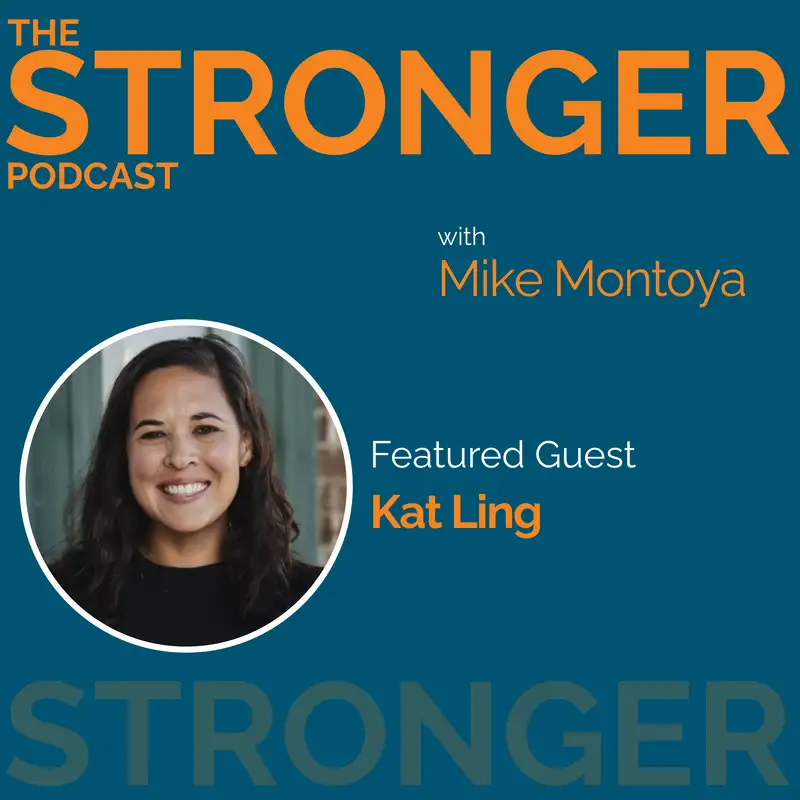
Mike Montoya: Today, we're bringing you back one of our earliest conversations because its lessons about community matter even more now. My guest is Kat Ling, CEO of Moonshot edVentures, a Denver nonprofit. Kat started out in rural classrooms then led alumni work at Teach For America. Moonshot backs more than 100 education leaders building new schools and programs for young people often pushed to the margins. We talk about identity, loss, and how community carried Kat into leadership.
Mike Montoya: If you're looking for a leader who truly reflects your community, that's what the work we do every day at Stronger Consulting. Find us at strongerconsulting.com. Let's jump in, and let's get Stronger together. Good morning, Kat. How are you?
Kat Ling: Good morning. I'm good. How are you?
Mike Montoya: I'm great. It's great to see you. Thanks for taking the time with me today. Okay?
Kat Ling: Yeah. Thank you.
Mike Montoya: So before we got started, I asked you what's ahead, and you you shared a couple of things about potential travel. You wanna share any more about that?
Kat Ling: Yeah. I've got a mix of fun, fun work and personal travel, so I'm heading tomorrow to go to Mexico City for the first time with some of my best friends, which I'm super pumped about. We're going for a few days and then after that I head to South Carolina for a board meeting of a family foundation whose board I just joined. And then after that, I've got... I get to see my new baby niece who was just born on October 1, and so I get to meet her for the first time.
Kat Ling: This is my first niece or nephew at all, so I'm a first time auntie.
Mike Montoya: So you're gonna be the magical aunt? Playing that card. That's super fun.
Kat Ling: Yeah. Exactly. Yeah.
Mike Montoya: Where where where in the country is your niece now?
Kat Ling: Maryland.
Mike Montoya: Maryland. Okay. So you're gonna do a little East Coast loop over there exactly. So I'm curious about the family foundation. I'm I'm guessing where it probably is. I know which one it is potentially, but we'll talk about that afterwards. But I'm super excited about it. So Mexico City, I've heard it's, like, only so amazing things.
Mike Montoya: Right? One of our team members lives in Mexico, and he, like, knows everything about these locations. And so he's always jonesing me to get down there. He's like, get going. Get going. I'm like, so I wanna hear about the trip. You guys have, like, I call it big plans on, like, meals and things like that. They have supposedly have some of the best food in the planet, basically. So
Kat Ling: Yes. That's what I'm most excited about. And I kind of... Whenever I travel, the most important thing to me is where are we gonna eat? So that's kind of where I've been focusing my energy, but I've got a friend who's kind of taken responsibility of planning it, so he's got a whole spreadsheet and lots of activities planned for us.
Mike Montoya: That's awesome. Okay. I wanna know your friends so that they can help me in the future because
Kat Ling: I know. It's such a gift. Such a gift.
Mike Montoya: Okay. Super fun. So you're gonna go to Mexico. You're doing some personal play. This is a little bit of the life of a of a leader. Right? You have to... You fit in the the work and the play. It's kind of all blended together. Is that kind of like your typical...
Mike Montoya: Is that kinda... Are you comfortable with that lifestyle, or do you kinda miss home after you've been gone for a while?
Kat Ling: I definitely miss home after being gone for a while. This year has been a lot... Well, the past few years have been a lot of travel, particularly moving into the CEO role. And then also, feel like now that travel's picked up again, that I've been figuring out how do I make travel feel just as like ritual and just as comfortable as it is with being at home to try to make it balance out a little bit more.
Kat Ling: But I found that right now it's kind of like traveling for a full month, then I'm home for a month, then traveling again. So I've been kind of figuring out how to make it all work.
Mike Montoya: Yeah. The the ritual. I love that that ritual idea because, like, sometimes it can be super stressful with all the moving parts that are involved in in packing and moving and changing locations and sleeping and not sleeping and all that stuff that comes with hotels, etcetera. So
Kat Ling: Yes. And I'm a horrible packer, so I have tried to learn that and become a little bit better by just having a packed bag ready to go versus have to unpack and repack all the time.
Mike Montoya: Yeah. That's true. And you're like, hey. This is the clothes I really like. Why are they in the packed bag? I like to wear them.
Kat Ling: Yeah. Right. Exactly.
Mike Montoya: I know. I try to, like, plan my favorite shirt, the things I want to wear. I'm like, make sure it's not used the days before I go on the trip so I could have them on the trip because I have a pretty basic wardrobe. Right? It's, like, not very exciting, but it's, you know, as long as I have it, I'm like, oh, it'll work out. Most of the time, it works out.
Kat Ling: Same. Same. I'm... After this, we'll be doing lots of laundry to, like, get ready to pack.
Mike Montoya: Yeah. I always have a hard time when I blend the personal and professional travel because then I end up with, like, I call it, like, my fun clothes. I don't, you know, I don't wear as much. And so I end up, like, getting to, you know, pull those out of the out of the closet, and that's more fun for, like, Mexico City. It sounds like I'd be... Clothes. So
Kat Ling: Yeah. Yeah. Exactly. I know there's some, like, queer bars, queer clubs that I'm excited to check out in Mexico City, but I have to remember to pack accordingly.
Mike Montoya: So, yeah. That's good. I know. Because you show up and people are, like, all decked out. Right? You're like, you're like, what? Yeah. You know, people really like... I call it Latin America and and Central and South America. Like, they do... I call it better job of enjoying their life in some ways. Right?
Mike Montoya: And they just do it better, and I'm, like, always feeling like I'm behind the curve on those things.
Kat Ling: Yeah. It's also coming from Colorado where dressed up is, like, Birkenstocks and, like, comfortable pants, I sometimes have to remind myself how different it is when I travel to all these different places.
Mike Montoya: Yeah. That's right. People are... Yeah. People don't just wear flannel or whatever it is all the time. Yeah. I think going in now in, like, flannel. We call it the flannel season. It's like everybody's starting to pull out their plaid, and we all, like, sorta look the same when we go outside.
Kat Ling: Yeah. Right.
Mike Montoya: Right. That's very funny. Well, let's jump back. I like to... I love to hear people's kinda origin stories a little bit, like, in kind of in in some ways, like, sharing about how you got to this place in your... Maybe your career, but also your life. Right? And and the the elements that you're willing to share about, like, you know, back to childhood if you want to and and and kinda, like, what's the journey, and and we can kinda just follow that for a little bit. Does that sound reasonable to talk about that?
Kat Ling: Yeah. That sounds great.
Mike Montoya: Great. So, yeah, tell me, like, where did you... Where where did you grow up? How did you get to Colorado? Things like that.
Kat Ling: Yeah. So I grew up in Connecticut in kind of white suburbia, and I... My family is one of, you know, few few families of color there and really grew up with my... I have two older brothers and grew up close to my aunts and uncle and grandparents and really had a it takes a village kind of upbringing where I saw my family a lot. My mom was diagnosed with breast cancer when I was one years old and battled that for seven years before she passed away, and so had a lot of family helping and a lot of, you know, community collective care throughout my life.
Kat Ling: And I kind of defined very early on what I saw as, you know, our responsibility to one another and felt very lucky to have my mom's parents move in with us and help raise my brothers and I. And I really saw community as one of the most important things growing up and also grew up queer, Asian American, and I mentioned in white suburbia. And so I was always looking for community and belonging as a kid. And I think that really defined a lot of where I am now and what I've kind of been searching for throughout my whole life. And then when I got to college, I started to put words to a lot of the feelings and experiences I've had.
Kat Ling: I took my first feminism 101 class. I, you know, found queer community and found community of people of color and started to think more about what multiracial coalitions look like and felt really like this is what I needed when I was younger. This is the language and the community. And then after college, I was recruited into Teach For America. And, you know, all I knew was that I want a way to live out social justice work in my day to day.
Kat Ling: And at the time, Teach For America kind of presented an opportunity for that. And so I joined the corps and I checked the box back in the day when they had this, but they said, send me anywhere. I was one of those.
Mike Montoya: Great world.
Kat Ling: Yes. And so they sent me to the Mississippi Delta. And so I taught fourth grade in rural Mississippi and then joined staff at Teach For America and worked there for about eight years and in Arkansas and in the Mississippi regions, and then did a lot of work in teacher development, a lot of really focused on how do we support leaders of color to move into positions, school leadership, take on more responsibility, and then was starting to get a little burnt out at the end and found Moonshot. And I met CDL at a coffee shop, Moonshot's founder.
Mike Montoya: And we'll talk about her for sure. Yeah.
Kat Ling: And was, you know, had no connections to Denver, but was really excited to meet this Asian American woman who was helping make people's visions a reality. And so I decided to move and become our chief of staff.
Mike Montoya: Yeah. That's awesome. So you picked up... So I hear a couple of threads there. Like, one's the, well, the community that was necessary to raise you as a as a kid, right, and and the loss of your mom, which I'm... I I don't know exactly what that feels like at that young age, but it probably... I mean, there's there's a gap, right, that your grandparents and other people filled in on.
Mike Montoya: Right? And so you had that unique growing up experience. And and then, I mean, in isolation, I don't... Did you experience the isolation in school? Like like, was it notable that you were, like, the only... I don't know. Maybe you weren't the only, but, like, one of a few non white kids in in your in your school experience?
Kat Ling: Yeah. It was really... I remember in fourth grade when we were taking standardized tests and, you know, if you have to check off the race category. And I remember the teacher was kind of guiding everybody through. Like, Okay, now we're at this section, everybody circle white, and then she kind of caught herself and was like, Oh, wait, Kathryn, you. You don't do that one. You do Asian. And I think that was like the first Yeah, that was the first time where I was like, Oh, wow, this is like, this is the language for why, you know, I'm different in this way from everybody else.
Kat Ling: But I think that was like a pretty representative, like, you know, once I kind of understood what is the difference here, I was just... It was something that I was always trying to put words or meaning to, like, why did I feel so different or so out of it and out of, you know, the mainstream. And I think what later on, especially once I moved into education, learning about, like, mental health outcomes for Asian American girls in particular, I was able to see, oh, wow. This is... It wasn't just me.
Kat Ling: This is, you know, actually, like, a a broader community that I'm a part of, and there are disproportionate, you know, mental health and health outcomes there.
Mike Montoya: Yeah. That's... I I think I know a little bit of that data there, which is basically to say, like, you know, the isolation that can happen with with folks, right, can, like, you know, negatively impact, right, them over time, and it just shows up in women in particular. I think there's a pretty robust study that came out maybe four or five years ago that I think I saw that was, like, basically saying, like, hey. Like, as they get to be adults, they have all these, like, deficit components, right, that have shown up that's a result of, like, that isolation as a kid.
Mike Montoya: Right? Or or the high demand, sometimes the whole performance expectations that were necessary in some cases. Right? So, yeah. That makes sense. Yeah. You know, that that makes me... You know, as you're sharing about that, I'm thinking, like, oh, yeah. I remember feeling like a part of my school community, but also, like, separate from. And I think I had an innate internal peace, and I think... You know, I grew up as a gay kid, but I didn't know it. Right? I didn't know anybody.
Mike Montoya: Yeah. I didn't know I didn't know that nobody else felt like me, right, until I couldn't figure out, like, in middle school in particular, you're like, how come I cannot connect with people in this... In the way that, like, feels like I'm a part of this community. Right? This group of boys or this group of people.
Mike Montoya: And you have the, I call it, the facility around that, and there was no language. Right? This is, like, in the seventies or the eighties, right, the early eighties. And so there was no language that was available to kids to put a number on it, right, or to explain it in particular. Right? So I think I had a little bit of that, like, oh, I'm wandering around without that... Without a guidebook, if that makes sense.
Mike Montoya: Very unfair. But now that I got older, I'm like, that was not very fair. I wish somebody had said, like, this is okay. You're gonna be okay. But nobody knew.
Kat Ling: Yeah. Yeah. Yeah. And I think it's, you know, not having folks who shared my identities in positions of power growing up was such a... Like, I knew one gay person growing up, which was a gay white man. And so I was, you know, I saw we don't feel similar, so I couldn't really understand, like, what my identity was because I didn't really see any adults who shared those identities, so I didn't really have this, like, model of what what does it look like to grow up and have these identities or have these feelings that I don't really see reflected for me yet.
Mike Montoya: Yeah. For sure. And and, like, you don't even know that, like... Maybe I'm not labeling... Saying that this is you, but, like, kids don't know that they can ask questions about that stuff. At least when I was a kid, there was no space for those conversations. Right? That was safe to ask it. Like, basically, I knew that I didn't feel like it was okay or safe to feel weird about it.
Mike Montoya: Like, what... How come I'm... Like, the glove isn't fitting, but I can't tell anybody that it's not fitting? Because if I tell them it's not fitting, then I might get in trouble or something will happen that's bad. Right? So.
Kat Ling: Right. Right. Exactly. And there's such... We're just, like, put in such boxes as kids. And so I didn't even... You know, I'm multiracial, so it was... Growing up in a white town, I was always Asian, but I didn't really understand what it meant to be multiracial growing up because the box was Asian. Then same with like gender too, where it was like, there's girls and there's boys and there's nothing else.
Kat Ling: And it didn't really give any space to be like, well, what if something doesn't feel like it fits exactly? Or I'm not really seeing myself within the box that everyone else is in?
Mike Montoya: Yeah. Yeah. That's... I mean, well, there's a kinship, but I think that's part of why the the queer community, right, exists as a, you know, pan holder, right, as a space for all these things that are, I call it... I I call myself a misfit.
Mike Montoya: Right? I never really fit in the right thing, but the queer community at least gives me a place that I can, like, say, at least I could operate in this experience in this in this much larger, like, bigger box. Right? That made me feel safer, right, to know that, like, oh, I'm not the only... Even if it's a very small percentage of the total population, when you get together, there's a whole bunch of us. Right? And that's super empowering. Right?
Mike Montoya: And I'm like, is this how everybody feels all the time? Well, that's... That's not very fair.
Kat Ling: Yeah. It's like... It's why I found affinity groups in the beginning of my career to be so powerful. And particularly when I was living in Arkansas and Mississippi, to be connected to affinity groups of people across the country was just a game changer of understanding, you know, similar experiences and different experiences and that all... Everything within the spectrum could still fit within this one group.
Mike Montoya: Did you find a community like that? I mean, maybe in college, it sounds like that was likely. Right? Did you find that when you went into Teach For America down in the in the Delta area? Like, did that exist?
Kat Ling: Yeah. So I... When I first moved down to Mississippi, ended up being with a group of women who all of us were kind of the last people to find housing in our small town of 3,000, and it ended up, you know, being kismet for the five of us finding a house together, and it was all women of color with different racial identities, and so it was like this, you know, community of color that was really, really helpful, and then, and I mean, as well as all of us being first year teachers too, which was also, you know, a very shared intense experience.
Mike Montoya: Yeah.
Kat Ling: And then when I worked for Teach For America, I think it was such a I feel really lucky to have worked for an organization at a young point in my career that was national, because even though I was in Arkansas, Mississippi, and I maybe didn't have another Asian American on staff for a while, or, you know, there wasn't a huge queer community, which I later found that there was actually a really robust, you know, queer community in the Deep South, and that was really special. But I got connected to Asian American leaders across the country through the resource group and affinity groups, and some of those folks are still some of my closest friends now because we bonded so much about those shared experiences even while living in really different places.
Mike Montoya: Yeah. Well, yeah, that's kind of amazing. I think that that super national network, right, that TFA has, both because of the teacher bonded first first couple years of your early early career life. Right? Like, that's a huge component. Right? And then the fact that they were... I call it more tuned up about this. Right? And I think the ed space in general has been more tuned up about being aware of it than, like, let's say corporate America, for example, things like that. Right?
Mike Montoya: So, like, it's a it's a beautiful thing to have that experience and opportunity for sure. Did you feel like like now that you've, I call it, grown up more. Right? Now that you're now that you're not the same age and and try... And person as that...
Mike Montoya: As they were when you're in your early twenties, like, do you feel like you're still able to find those spaces and and then create those spaces? Like, I find myself, like, intentionally creating those communities in places where I live, like, trying to, like, find individuals that are maybe just out there on their own. But, intentionally, I'm like, let's get together and, like, let's start to find connections because I feel like if you don't build it, it doesn't just show up for you. Right? That's my experience. Right?
Kat Ling: 100%.
Mike Montoya: Yeah.
Kat Ling: Yeah. Definitely. I... Well, I feel, one, lucky that Moonshot is majority people of color and also has a really strong queer community within our alumni and our fellows. And so sometimes it feels like I live in a different Denver because of it, because I work in and around people of color all the time.
Kat Ling: So it feels super diverse. That's but, know, that's within our little bubble. I think that we also came when I moved to Denver, I wanted to make sure I found queer community and so kind of just did some research and was trying to figure out how do I, you know, find queer community, but that also overlaps with the activist desires that I have and found the LGBTQ Commission, which is a volunteer body of community leaders under the mayor's office that works specifically for LGBTQ equity in the city. And so that's been another way that I, you know, just try to seek out the community that I know I need and that, hopefully, I can contribute to as well.
Mike Montoya: Yeah. Well, it... That's kind of amazing. You you just kinda veered into politics just a tiny bit. Like, Denver is different than... I grew up in Colorado. Right? So I remember having to leave Colorado because it was such a, I call it, oppressive experience as a child.
Mike Montoya: Because of its very, I call it, at the time, very red and right... Right sided Christian kind of value set that was, like, very present in the politics and the people that were there. It was, like, always in the media. It was, like, constantly a blast of, like, negative kind of stuff. And, you know, culture wars have been going on forever, and it was certainly in place then. And now I go to Denver, and I'm like, this is not the same place. There's still people who'll dress like cowboys and wear lots of jeans and cowboy hats and stuff like that too. But, like like, you know, I think the the the governor is... Identifies as gay, maybe, and then And then the... I don't know what else is going on in local politics, but it sounds like there's some institutions that are trying to emerge, right, that are possible in place. Right? So
Kat Ling: Yeah. Definitely. Yeah. And there's just a lot of interesting policies, a lot of progressive policies that have been put in place in the city that I think has been an interesting model for the rest of the state. And, there's... I mean, it's an interesting because, you know, it's similar to a lot of places, liberal urban centers, and then surrounded by, like, rural red areas. But I think that it's...
Kat Ling: It was a a far cry from where the context I was coming from in Arkansas and Mississippi as well.
Mike Montoya: Yeah. The little blue dots that have been emerging across the country, I I call them, you know, oases, right, of sorts, right, where you can find this. And I also feel like people obviously are attracted to that. Otherwise, the cities wouldn't be emerging, growing. Right?
Mike Montoya: And people are looking for, you know, the middle road and the opportunity to be amongst, you know, again, experiences, etcetera. Right? And find that stuff. So, yeah, that's super interesting. Well, I appreciate you sharing about that that piece. And, you know, I was super curious, like, okay, you ran into it. We had a common friend, right? You ran into CDL, Christine DeLeon, who's who's out there probably will listen to this at some point. You know, she... She's a powerhouse.
Mike Montoya: Right? And she's like a icon. Right? She puts her hands on things, and it turns into to cool stuff. So you ran into her in a cafe. Is that what you said? Just randomly?
Kat Ling: Yeah. No. We got connected through a mutual friend. And when she was looking for her chief of staff and I was in Denver at a conference, a DEI conference for Teach For America and he was like, you should go meet her and I was like, well, I'm not really looking for a job. Don't, you know, I'm not thinking about moving to Denver and he's like, just go meet her.
Kat Ling: And so I left the conference, met her at this coffee shop that was like so far from where the conference was, but it was really life changing and getting to hear her experiences and her passion and the idea of working under an Asian American woman and being mentored was, you know, just too compelling to pass up. So
Mike Montoya: Yeah. It's such an interesting time. And I think, you know, this is about 2014-ish or something like that when this was all happening in my head. Maybe it was around that era that you met her, but she and I worked at the Broad Center foundations together for a couple of years. So we knew each other there, but then we were in a Pahara experience together, which was the time when she was figuring out the Moonshot thing.
Mike Montoya: And so, you know, like, to... For us to go through that and then till it literally emerges. Right? And then, like, a few years later, you and I met each other probably because we were working on something together. But that was... You know, it's like these tiny little worlds, right, that keep colliding. And I think in some cases, it's, like, really... I feel super, I call it, blessed, maybe is the word, right, to have, like, these people in my life that are just, like, super committed to the work, very creative, right, and imaginative. Right?
Mike Montoya: And then also I call it collectors of super talented people. Right? They're, like, almost, like, right for that stuff. So I'm glad that you guys met each other.
Kat Ling: Yeah. Me too. It was really... Yeah. I feel like since then, I think I felt a little bit more insulated in the education world working in Arkansas, Mississippi and working for Teach For America, where it was a strong network, but it was within, you know, that very specific organization and meeting CDL and seeing, like learning about Pahara and all these other organizations. EdLoC was really eye opening of like, look at this vast network of people of color, of women and queer folks that I, you know, and CDL is like someone who just opens, you know, when she gets into a room, she'll open the door for somebody else and bring somebody else into it.
Kat Ling: I feel really... I think blessed is a good, good word for it. But yeah, just really lucky that I got to, like, make that connection in the first place.
Mike Montoya: Yeah. That's that's... Again, I'm a universe guy. Like, the stuff just keeps showing up when you're in the right... The right kind of frequency. Right? And think about that. And I think the the valuable things that... And we'll talk about Moonshot a little bit because I'm curious. Like, Moonshot started out kind of starting kind of schools.
Mike Montoya: Right? I mean, some cases. Right? So... But it's evolved. Right? So now you guys are doing lots of things. You wanna share a little bit about, like, kind of, like, the exciting components that are happening now?
Kat Ling: Yeah, yeah, definitely. So we started off as a school incubator, kind of looking at, at the time, in the Metro Denver area that students of color had disparate outcomes compared to white students, and leadership was really white, really male focused and there were lots of it wasn't because there weren't people there who had visions, but just about access to power and advancement. So started off as a school incubator and then over time listening to our fellows really learned that folks were interested in creating environments for youth that wasn't just within the building of a school, but you know folks were interested in creating after school programs, summer school, different nonprofits. So we originally went from schools to schools and nonprofits, and then we started to learn and took a year pause with our fellowship redesign and learned about just how much energy there was to redesign within organizations.
Kat Ling: Obviously, the tight funding landscape made it hard to always be constantly launching new organizations, and so we, our seventh cohort, which just completed this May, expanded so that our focus is kind of threefold. Now, the first is recruit and develop a diverse pipeline of leaders, and that includes folks who are trying to launch new schools, organizations, or redesign with an existing leadership roles. The second is to sustain those leaders and their visions. And that's what we do with our alumni network. We have 115 and growing alumni.
Kat Ling: We take in 15 to 20 new leaders every year in our fellowship program, and then we support them through microgrants, different services to support their sustainability. And then the third, which is our newest bucket, is to create the conditions for those leaders to thrive. And we thought about that as we've been focused a lot on for seven, six cohorts, we've been focused on supporting the leaders to actualize their visions, but we also saw people would go out into the system and still face the same barriers that they had in the beginning.
Kat Ling: And so we thought, how can we soften the ground better for those leaders to actually thrive? And so one of the ways we've done that is to open up a community coworking space. We have a funder who was really interested in kind of the boiler room support, and they helped us launch a coworking space for youth serving nonprofits and with the idea of making it affordable and also creating physical space for people to come together and connect and collaborate. And so we opened that last October and now have about eight tenant organizations and are starting to accept a few more.
Mike Montoya: Awesome. So you're kinda making space and place for people to kind of, like, call it, like, climb the ladder, fight the fight, be in the space. Right? It's like... I always felt like I had to expand, like, my surroundings. Like, in order to operate wherever I've been, I've had to, like, make a balloon and then make it bigger and bigger and bigger so that there was a place for people to be a part of it.
Mike Montoya: Right? And that there was something called, like, a buffer between, like, the space that people needed to be to be creative and the and the place that that basically the world that surrounds us that, like, what I call it, my view is, you know, people... The world would love to just squish all that stuff down in some cases. Right? Not everybody. Right? But that's the standard. Right? Like, the the convention is to stay the way it is.
Mike Montoya: Right? And you you mentioned, like, you know, like, the white guy in Denver running schools and planning things, and that's just that was a convention. And that's, like, part of where it was. But now that's evolved and changed, right, there's more, I guess, like, more diverse sets of needs and kids are showing up in different ways. I I was at...
Mike Montoya: As you were talking, I was like, oh my gosh. I wish that thing had existed when I was a, you know, young man, right, coming out of college. Yeah. Like, I would have been all over that opportunity, right, to be a part of a community and to be part of a, like, of a thing that creates space for kids that are, like, with more adaptive, right, to, like, the real people are living in.
Kat Ling: Exactly. I think we saw that our fellowship was just this magic sacred space, and we thought, How can we bring this to more than 15 to 20 leaders a year? And so actually having a physical office space now where we also run programming for the broader youth serving sector. I think we're trying to think through how do we take this kind of magic that we have with our fellows and our alumni and expand it to the whole the whole sector.
Mike Montoya: Yeah, just expand. Yeah, because there's I would say, like, keep going, because my view is there's a huge need, right? And, like, almost all my clients feel isolated in some ways. And that's...
Kat Ling: Yeah, particularly after the pandemic. Yeah.
Mike Montoya: Yeah. We all had to go into our holes, right, and sort of sort of, they call it, survive and get through it. And then as we came out of that, the the world felt different in some ways. Like, disconnected from each other because you haven't had the time. I hadn't had the time with people for years, right, a couple of years. Yeah. And, like, everybody came... A Zoom call, but it didn't feel the same. Right?
Mike Montoya: You're... My emotional centers were not not being fed by the connections. Right?
Kat Ling: Yeah. Exactly.
Mike Montoya: I think... And you mentioned EdLoC, right, which is like, a common community that we have, which is Education Leaders of Color. Right? And that's... I found that that place also emerging out of Sharhonda and Layla's vision, out of Pahara and EdLoC, that they were working on that stuff together, was like a godsend for me in terms of, like, finding that there's literally hundreds, now thousands, right, of people that are on board with this vision of, like, a better world that is more, I guess, more tuned up for us, right, or for me.
Mike Montoya: Right? And I'm like, okay. This is great. It feels like I'm not all by myself trying to do this work. Right? And that felt exciting. Right? So I love that community. We spent a lot of time with them.
Kat Ling: Yeah. It's... I found it to be really beneficial to be a part of organizations like that, particularly working at a local community based organization where, you know, coming from Teach For America, I was used to having connections to a national network. And sometimes at Moonshot, it's been hard to feel like we're so grounded in our community, but, you know, how can we learn also from places around the country? And I feel like being a part of membership organizations like EdLoC, Pahara, it's just been really helpful to still get that kind of access to inspiration and collaboration.
Mike Montoya: Yeah. For sure. Yeah. You can't... You don't get you don't get the normal inputs. Right? And, I mean, it's almost... In some ways, it's like it's a way that the world could be so fascinating if we were if we were, like, all a little bit more flexible, right, and willing to participate with each other, right, as opposed to being in our little boxes. Yes. And it's...
Mike Montoya: I always find myself getting pushed mentally in... Around those communities because, like, people talk in a much more... I call it... I'm gonna say progressive way, right, about some of the things that they're experiencing and the challenges and the opportunities that we can have as a society we can approach. Right?
Mike Montoya: Like, none of this stuff ever has hit the policy thing yet, but in some cases, it's making a difference with regards to, like, how people at least have language around it. Right? And we don't feel like we're alone. Right? And that's a big deal.
Kat Ling: Mhmm. Yeah. Particularly now, I feel like in the... This political climate for sure.
Mike Montoya: Been a special it's been a special couple. I mean, it's been a special decade. Let's call it that. Right? So we had Yeah. Special decade and it's like... This too, I think, will pass, but it's like, you know, we're all living in it right this very second. So can we explore a little bit about, like, how...
Mike Montoya: If you're willing to talk about, like, how some of your identity markers show up in your leadership. Right? And and if you're willing to talk about that and kinda give me a sense of, like, how... I mean, do you feel like you're able to be your full self in your work and and in some ways, like, does that shape how you lead other people?
Kat Ling: Yeah. Definitely. I think something around my identities is that I always feel like my identities put me outside of binaries and outside of boxes. I fit, you know, across a spectrum, and I think of that for both being queer, being nonbinary, being multiracial, being Asian American, which is this, like, political identity within a huge spectrum of racial identities. And I think a lot about how those being someone who never... Nothing is ever black and white really fits into my leadership of always thinking through what's a third way of how we can do something or, you know, how do we gather as much input as possible to get a lot of diverse perspectives?
Kat Ling: I think that's something that because I never felt like I fit into one box, I'm always thinking. I like to think that expansive thinking is something that really drives my leadership.
Mike Montoya: Yeah. So it's almost become your... Almost your mode of operating is where I'm gonna say it. Like, this... Like like, your natural state of... Is to include, right, or to bring in, right, and to create space for those voices to be there. That's, like, a... That's just your default. Right? That makes sense.
Kat Ling: Yeah. Yeah. I think it's, you know, coming from... It's, like, such a a gift that comes from not feeling included growing up and not feeling a part of the conversation to now never wanting people to feel like that in the organization or in our broader community, that I think is something that's been really helpful in in how, you know, kind of the north star that guides me.
Mike Montoya: Yeah. That's true. I... You're you're making me think back to... Maybe back to elementary school. For me, like, those those times when I was feeling, like, isolated, I remember, like, there was this, like, a teacher that said, like, never forget what it feels like to be left out is is kind of the language that she used. So maybe she was a third grade... who used to teach handwriting. Remember, they used to teach you how to write cursive?
Mike Montoya: She was that teacher, but she was she was also just, like, very empathetic and, like, kinda, you know, trying to tune us up as kids and be like, hey. Like, treat each other with some kindness. Right? And and include everybody. And I think that stuck with me because I felt like I...
Mike Montoya: She was almost, like, speaking directly to me even though she was probably speaking to the whole class. Right? But, like, it felt like if a message was meant for me to hold on to where I captured it, right, as part of my my my practice myself for sure. So
Kat Ling: Yeah.
Mike Montoya: Do you do you feel like... I mean, it sounds like you have created a community at Moonshot that includes, like, more folks that are, like, like you in various ways. And you... Is that, like, an intentional thing, or is it just kinda, like, the natural attraction that's been happening because of who you are and people know you and things like that? How's that how's that come about?
Kat Ling: Well, I think it's exciting that every year in our fellowship, there are some people that I know who move into the fellowship and then some people who I've never met before, but we're doing really cool work in the community. And I think the power of Moonshot is really that it's such it's, you know, it's not one person or one team. It's really a broader community. And so each of our alumni, I feel like holds the organization in the same way that I hold the organization.
Kat Ling: And so, you know, we have, I think, two thirds of our fellowship is comes from word-of-mouth referrals and people who've done the program or who work with us closely, who then share it with their networks. I think that's such a beautiful example of how, you know, it's not about one leader or one person, but really about a a whole community that's constantly growing.
Mike Montoya: You said 115 alumni, roughly. Right? Something like that? So, like, that's, like, a... That's a real number. That's not, like, a little...
Kat Ling: Yeah. Right.
Mike Montoya: Yeah. For sure. And so do you guys expect that you will... I mean, this is your seventh cohort or you're... Maybe you're in it or headed towards it. Like, are you finding that the redesign work has, like, brought you the the... Like, are you on the right path? Is it feeling is it feeling good about that?
Kat Ling: Yeah. I think we're seeing new solutions and new innovations that don't currently exist that our people are bringing to us. Our goal is to get to 200 leaders by 2030 and you know we have 20 fellows right now in cohort eight and who are doing everything from solutions around housing for youth to transportation justice to after school programs to food services. And so that's a big part of also the shift with Moonshot after our redesign was thinking about not just education as one system that youth are impacted by, but what are all the systems that youth are impacted by and how can we ensure that we are working across systems to create a strong educational experience? And so we started looking more at the social determinants of health as a framework for what are all the solutions that youth need in order to really thrive.
Mike Montoya: Yeah. No. That's great. Well, I'm super happy that that you kinda wandered into this. Like, it's almost like you walked into my little web of, like, of, like, oh, collective impact work, right, has been going on for a long time. I think it's not foreign to Colorado, but it sounds like you guys are headed in that similar direction where, like, you're parts of... You sort of... I mean, my view... And I... When I was at Stanford, we had this...
Mike Montoya: I was part of this organization called the John Gardner Center for Youth and Their Communities. And John Gardner was this guy. He was like one of the architects of the Great Society during the Johnson administration. And so, you know, older white guy, right, but had a vision that, like, kids and families, right, grow up in spaces, right, in in physical spaces that include their schools and their churches and their community centers and their programmatic things, all the stuff that's going on. Right?
Mike Montoya: They're not just sitting in classrooms. You You know? That's like a discrete amount of time for their experience. Right? And schools are a huge piece of what we do in our ed space, right, work, but it's also all these other things that kids are doing when they're not in school.
Mike Montoya: Right? That effort... I've been, like, pushing on this for a long time in my career, right? So I'm really excited that it's happening in Denver, right? And I'm like, oh, maybe I should be going back to Denver someday to be part of that.
Kat Ling: Yeah. Yeah. Yeah. It's interesting because it kind of brings me back to how I was first developed as a leader in the classroom in the deep rural South where, like, the school was one piece of the puzzle, like you were saying, but, you know, it was like a small town, all of these different things. Everyone knows the kids in school and are thinking about it not just within school, but it's, you know, a much more comprehensive community effort to educate a child.
Mike Montoya: Yeah. The village the village experience. Right? Because in some cases, like, people... Everybody knows the families and the kids. Right? That's that's a different thing. Yeah.
Kat Ling: Right.
Mike Montoya: Urbanism has made that harder for sure. Right? We all go to school, and then we all scatter. Right? Things like that. Yep. But it's a common thing. Right? That's happening a lot. And so I wonder... Of course, I always wonder what it's like to be a kid in, you know, in that space. Like, you know, kids used to run around and ride their bikes and have a community of kids after maybe in your community when you were a kid that happened, but, like, that's how my little little neighborhood was like.
Mike Montoya: I don't think I have any sense of the broader world, right, except for when I dropped into these youth programs. I was like a Boy Scout and things like that. And, like, I met all these other kids from other neighborhoods, right, that I that I didn't interact with except for those programs, etcetera.
Kat Ling: Yeah. And that's it's interest... I think what's really cool too about the Moonshot network is that because we have so many programs that serve kids, different kids, different stages of life, and also their families, we have, you know, some families whose one of their kids goes to one program, another goes to another program, and then the parents can get access to services through a third program. And, you know, there's like, it really is a village effort and the leaders of those organizations are all talking to each other and working together and helping to fix solutions so that they are looking at, you know, the challenge from all angles and not just, you know, what does this kid need in this one hour program?
Mike Montoya: Right. Right. Because it's like like the continuity of that thing over time, right, is what makes it. Right? And if the parents aren't included in some ways, right, and getting supports, right, like, oftentimes... I know I'm I'm working a lot with organizations that are working with kids that are, like, I call it on the edges. Right? And they don't have, like, a kind of strong, what we call a nuclear family, and maybe that's not, like, an effective mechanism at all, but, like, they're, like, kind of missing some pieces of those things.
Mike Montoya: Like, they're a single parent family. Right? Or, like, they lost a parent or something like that, or, like, they're they're living in some, like, lower income poverty kind of situation. Like, that's, like, the common theme of the kids that we work with. Right?
Mike Montoya: So I've been thinking that that's still part of what you're doing too. Right?
Kat Ling: Yeah. Definitely. And it it makes me think of my upbringing where... So my mom was a special education teacher and is from small, like small town Ohio and was very involved in our education growing up. I just remember we got, you know, my brothers and I all had speech impediments when we were growing up and we all got access to services from like three years old and we had our my elementary school teachers would come over for dinner and I remember the difference of when she passed away and my dad who was educated, you know, mostly abroad and just the differences in seeing the connections to family and teachers reaching out and feeling a real gap in that of like teachers reaching out to my dad in the same way that my mom was super involved and realizing that, you know, there needs to be much more connection to the family throughout K-12 education too.
Mike Montoya: Yeah. I feel like it's, like, become such a... Teachers have a hard time having space in their lives to do that now. Right? We have a lot of rigid, rigid agreements and contracts going on. Right? And they... Yeah. I think sometimes we, like, took the humanness out of some of what we did by trying to achieve a lot of things in school environments. And which is... It's, like, it's... For me, it's a serious tension.
Mike Montoya: Like, how do you do a loving, caring, supportive, connected experience with the kid in the middle and their family at the center of the work and also, like, achieve these, like, out... Outcomes, right, that you're trying to get in schools. And, like, they're always, like, I call it testing and pushing, and, like, that's a tension. And, like, school operators, right, have a real big job, right, to, like, thread that needle carefully. I... And then, like like, I I think TFA, the TFAers, right, are, like, part of the vanguard of the individuals who are, do it... Whatever it takes.
Mike Montoya: Right? And then, like, as you get older, it gets harder. Right? Especially when teachers come back and things like that. Right?
Kat Ling: Yeah. Right. The only reason I feel like I could do home visits every day while teaching full time was because I was, you know, 23 and single and, yeah, living with roommates who were doing the exact same thing and our, like, lives revolved around teaching and our social lives revolved around teaching too. But it's not sustainable, which is why I think there needs to be much more collaboration between schools and after school providers or push-in providers so that not one person is carrying the load alone.
Mike Montoya: Yeah. For sure. Yeah. You can't expect that that's possible. Yeah. I think you said you said the magic words. You were young and young and obsessed, they call it, quote unquote, my word. Young and obsessed with this thing that you were doing because you were young and passionate and had time. There was no... Like, your responsibility set was, like like, kinda focused on this particular thing.
Mike Montoya: Right? And as you get older, you have other things going on in your life, and, hopefully, you... You know, if you choose to have a family and those kinds of things and other people, like, you just head down different roads. Right? So let's shift gears a little bit if you're willing to kinda jump into... Like, I I always wanna hear, you know, like, I call it evolution of leadership. Right? Like, basically, like You know, is there something in the last couple of years that, like, you changed your mind about that you would have called, say, like, I call it core belief before.
Mike Montoya: Right? And now it's starting to shift. Maybe not, but I'm curious if you if you... Something like that.
Kat Ling: Yes. So I think when I first started off as CEO, I was really coming from my experience of being a leader who wasn't in the top leadership position, but who wanted to be a part of all the decisions. And I think when I moved into leadership, I thought, Okay, everyone needs to be part of every decision. Everything should be consensus. Everything should make sure it gets the input of every single person involved.
Kat Ling: And I quickly learned that that was a path to burnout, but also for not just me, but for the other people too, because if everyone is involved in every decision, we're all doing the same amount of cognitive labor every single day about every decision, whether it was a small decision or a big decision. And I've gotten a lot of feedback from my team in like the past, you know, two years where me making a decision actually lifts the cognitive load for them. And it's something that they really appreciate. And not everyone wants to be a part of every decision, particularly when people feel like I know that I have decision making power over X, Y, Z. I don't need to be involved in this other string strand of work.
Kat Ling: And that's, I think, been a big shift that I'm still... I still work through of making sure that, okay, I need to make a decision and move on it versus kind of perseverate, which can sometimes be my downfall.
Mike Montoya: Well, at least you you recognize this about yourself. Well, it could... And I almost wanna say that that's a classic classic challenge, right, which is like, oh, I want to be inclusive, which is part of your... We talked about, like, that's almost your default mode, right, to do that because of those pieces. And at the same time, it, like, can inhibit, right, the functionality of the organization sometimes. And I... I've gotten similar feedback where, like, Mike, if you just give a direction, it's just we're we're all way easier.
Kat Ling: We... Yeah. We're all in. Let's go.
Mike Montoya: Like, we trust you. Like... And I'm like, I make all sorts of crazy, you know, off decisions that are not necessarily the right decisions. I'm like, well, I'm just gonna decide. I was gonna go down this road. And, like, you know, 90... 70% of the time I'm right and the other 30% I'm like, not right, but it's, know, that's just kinda how it goes. Right? And
Kat Ling: Yeah. So Yeah. I think some of it probably also... It was, like, both my desire to be inclusive and then my, like, perfectionist tendencies of being like, well, it can't be the wrong decision if everyone think... If everyone is on board and instead, you know, trying to disrupt that in me and not hold so hard that if something doesn't go well, we can always change it.
Kat Ling: Or if the decision ends up being the wrong decision, we can change that later. It doesn't have to be, you know, the the final word.
Mike Montoya: Yeah. Well... And I've always, like, found solace in the the fact that, like, in my work, and and maybe this is similar to you, is, like like like, the decisions I'm making are not life and death in the moment. Right? They have an impact long term. Right? And they can make a huge difference or not in in someone's life over time, but they're not like, you know, emergency room physician decision making, which is like, I don't want that kind of level of pressure. You know? Yeah.
Mike Montoya: Like, know, I'm like, if I mess it up this week, we could probably repair it, right, in most cases. Right? So...
Kat Ling: Yeah. It's like a friend often says to me when I'm getting too stressed out about decision that I do not need to be stressed out about it, which is you're not running the White House, so I think you could just move on something and, you know, try something new.
Mike Montoya: Well, and obviously... And, you know, going in politics aside, like, you know, anybody who's in leadership has this problem of, like, we don't... You don't... Can't see the future. None of us can. Right? And, like, that's you're doing... Hopefully, like, your best intentions, right, is is helpful. Right? You know?
Mike Montoya: But you've been trained and practiced. Right? I think that's why people get into leadership positions is because they have certain skills and capabilities, right, that have shown up as possible, right, to make choices and guide guide places towards something. Right? And I don't think anybody ever taught us how to do all that stuff directly.
Mike Montoya: We kind of assumed it, if that makes sense. Yeah. You feel like you had, like, really formal leadership training at any point in your life, or has it been like you learn along the way from mistakes as also by... From coaching and, you know, leaders that are your friends and family, things like that?
Kat Ling: I feel like I actually have had a lot of opportunity for professional development. Think both formal and informal mentors, peer mentors, coaches. And then I, throughout my life, have always just tried to orient to, like, signing up for something, you know, and and saying, yeah, like, let's... I'll try it or, you know, this is an opportunity to take on a little bit more responsibility. Let's try it even if I don't know if I, you know, even if I don't know how to do it yet.
Kat Ling: And that both at work and then in volunteer capacities, I think has been a really a big game changer and probably is a little... I feel like now the mainstream thought is like, don't sign up for, like, unpaid work. And I totally, you know, I do think there's been times where I've burnt myself out because of this, but at the same time, I don't think I could have gotten here without saying yes to a ton of volunteer opportunities throughout my career, particularly when I was younger and had more time and energy for it.
Mike Montoya: Yeah. No. That's good. I appreciate that. And I'm... If our listeners are out there, like, the the the the takeaway from my view is, like, make sure that you try things. Right? One, try. Put yourself out there and try it, and two, volunteer, be a part of something that is is surrounded by other people that are further along in their career journeys than you and maybe have other skills that you could, like, pick up from.
Mike Montoya: Right? So I agree. I I joined a bunch of boards when I was younger. Like, I was just... I know I was living in San Francisco. I was probably doing three or four different boards. My husband's like, you're always running around. I'm like, well, this is like what I do or whatever. It's it's almost like normal. Yeah.
Mike Montoya: And so I've scaled back now as I've gotten older, right, to do less free work, but also...
Kat Ling: I'm working on that.
Mike Montoya: Yeah. It was critical. Right? And but sometimes you're like, oh, this is super interesting. Right? And so I do it because it's stimulating to my brain. It also makes me think about like, oh, some of the work that I'm doing is less, I don't know, less pressure. Right? It just changes my orientation a little bit. So
Kat Ling: Yeah. It's an interesting balance of now where not every volunteer opportunity necessarily learning a new skill. It's had to try to fine tune. Okay. What are the opportunities then I say yes to? What are the ones I have to say no to? And, you know, I think I've been trying to reground and, okay, where where am I actually having joy in whatever I'm doing outside of my full time job?
Mike Montoya: Yeah. That's interesting. Well, calling that, like, being more... Like, slightly more intentional. Right? I don't know. And I... Maybe I picked up a little bit of, like, hey. You only have so much energy. I just... We all do. Right? We all have limitations with regards to how much capacity we have, and and I kinda reserve my most important energy for the most valuable things that I value, right, which includes, you know, my family and my my, you know, my company and the career that we have. And that's it. That's a lot.
Kat Ling: Yeah.
Mike Montoya: You know? So I don't know. That's me. And and, you know, somewhere in there, I'm I'm sort of in there somewhere. I'm like, oh, yeah. And I still spend I still spend three hours a day taking care of myself, right, or whatever that is. Like, going to the gym, doing all the... All those things. Right? That just kinda keep me sort of tuned up.
Mike Montoya: But, man, it takes... The older I've gotten, the less we call it, you know, I need more sleep, basically, is how I feel like.
Kat Ling: Totally.
Mike Montoya: So I'm a big fan of naps. Okay. Wrap up question. I wanna know, like, if you had advice, right, for your... The Kat of twenty years ago or the Kat of ten years ago, even. Right? Is there is there something that you... You'd impart to yourself?
Kat Ling: I think that this is probably advice for Kat of twenty years ago and advice for Kat now of like everything you need is already within yourself and so to trust yourself.
Mike Montoya: You got it, right? There's like, the building blocks have already been collected, right? And you have them. That makes me think about like, how much we need to hear that as younger people and and even now. Right? I I feel like, as you said, time for now, like, we we... Maybe I don't trust myself enough yet. So...
Kat Ling: Yeah. I think almost when I was young, I was a little more arrogant, so I maybe even need it more now that I, like, know more. And and knowing more, I know more about what I don't know. And there's... Yeah. So it's an interesting maybe mantra to consider both for my younger self and my current self.
Mike Montoya: Yeah. I think that's true. The older you get, the more you know how much you don't know. And then you're like, I'm not touching that thing that I don't know.
Kat Ling: Yeah. Right. Right.
Mike Montoya: I'm not gonna walk into that. I'm not walking into that one. It's too many... It's too much... Too complex. So fair enough. Yeah. Yeah. Kat, have an amazing trip to Mexico City and around the South. Thank you so much for taking time with me and for sharing yourself and your story with our community.
Mike Montoya: And this will be out in October... Late late October, early November, so it'll be out there. So we'll share it with you and make sure that it gets on there. Okay?
Kat Ling: Awesome. Well, thank you so much for asking me.
Mike Montoya: Thanks very much. Alright.
Mike Montoya: Here's what I'm taking away from my conversation with Kat. Build the village, don't be the village. Include more voices, but don't make every call by committee. Design across systems, school, and after school family supports so that kids can feel and experience the net. And remember, Kat's mantra, everything you need is already inside of you, so trust it.
Mike Montoya: Thanks for listening to The Stronger Podcast. If this conversation inspired you, we invite you to follow the show and share it with someone who's on a journey to become a happier and healthier version of themselves. Links and resources are in the show notes. See you next Thursday, 9 a.m. Eastern time. Have a great day, and stay strong. Podcaststhatmatter.org.
Creators and Guests