
Families Are Tired of Being on the Receiving End: How Innovate for Action Trains Parents to Co-Create Better Schools (with Michelle Vilchez)
As a middle schooler, Michelle Vilchez rode three public buses across the desert to a school where she learned in trailers from substitute teachers, and today she trains parents across California to demand more for their children.
This episode of The Stronger Podcast is a rerun of a conversation recorded in December 2025. Mike Montoya sits down with Michelle, CEO of Innovate for Action, the California nonprofit formerly called Innovate Public Schools, which trains parents to organize and advocate for better public schools, to talk about where the power of families really lies.
Michelle grew up in the Coachella Valley, the daughter of immigrant parents. In middle and high school she rode three public buses to a campus in Palm Springs that her parents believed offered more, and spent most of those years in trailers with substitute teachers. She and her husband, also a child of immigrants, later moved on purpose into a historically redlined neighborhood on the Peninsula and raised their four children there.
Before Innovate, Michelle spent more than a decade as executive director of the Peninsula Conflict Resolution Center. She and Mike first met around 2004, when both were working on community schools in the Bay Area.
Mike and Michelle get into why families do not lack power so much as surrender it, how parents learn to follow the money in after school funding and tutoring, and how a San Francisco campaign over slow translation of special education plans grew into a 2024 state law and an AI tool parents co-designed with Northeastern University. Michelle also explains why a youth mental health plan that kept families on the receiving end shows what is still missing.
Tune in to hear what Michelle's first annual review focused on instead of her work, and the lesson she says took her fifteen years to learn.
Chapters:
- (00:59) - A Friday in December, and no snow to shovel on the Peninsula
- (02:37) - Meeting around 2004 through community schools work on the Peninsula
- (03:32) - Community schools as an answer to the era of high stakes testing
- (04:16) - Leading Innovate, and the student outcomes it sees across California
- (04:44) - Three or four students in ten reading at grade level
- (05:30) - Organizing parents across California and pushing state policy
- (06:45) - An opportunity gap schools have struggled to close for decades
- (07:35) - Families don't lack power, they surrender it
- (09:16) - Money, housing, and the families who have no other choices
- (09:40) - A Top Schools report that makes school data easy for families to use
- (11:34) - The power is in the relationship
- (11:59) - Four children, IEPs, and choosing among charter, magnet and traditional schools
- (12:23) - Parents who feel alone, and relationships across silos
- (13:51) - Mike's mother, a single parent who took on his principals
- (14:42) - A wedding, UC Santa Cruz, and a senior in the Sequoia Union district
- (15:08) - Children of immigrants who translated for their parents
- (15:33) - Three public buses from the Coachella Valley to a school in Palm Springs
- (16:12) - Classrooms in trailers, taught by substitute teachers
- (16:55) - Moving into a historically redlined neighborhood on purpose
- (17:33) - Gentrification, rising home prices, and schools slow to catch up
- (18:33) - Leaving for suburbs like Orinda and Lamorinda for the schools
- (18:56) - Why aren't we outraged that money buys a better education?
- (19:28) - A family debate in the car about what makes a quality education
- (20:41) - Should a quality education be a constitutional right?
- (21:33) - Why a student in Piedmont gets more funding than one in Oakland
- (22:08) - Do parents know how school funding works?
- (23:38) - After school dollars, and holding districts accountable for how they are spent
- (24:50) - Babysitting or real enrichment in after school programs
- (25:11) - Reading by third grade, math by sixth, and the tracks that follow
- (25:49) - Remote learning, and tutoring that cost families upwards of $200 an hour
- (27:06) - A high impact tutoring toolkit for families and providers
- (27:18) - A tutoring summit planned and run by parent leaders
- (29:04) - Where to find Innovate's reports, policy briefs and newsletter
- (29:57) - A weekend leadership institute for more than 170 parent leaders
- (30:39) - A fellowship that teaches the organizing framework to other organizations
- (32:16) - There is nothing a parent would not do for their child
- (32:40) - A child's mental health, and why it is tied to education
- (33:26) - Who do you love: self interest as an organizing principle
- (34:11) - Training organizers from Chicago to North Dakota and beyond
- (35:14) - A policy toolkit for organizations building parent power
- (37:04) - One parent leader can reach ten to twenty more
- (37:44) - Starting grass fires, a careful choice of words in California
- (38:41) - Change that leaves with the leader, and a community that stays
- (39:26) - San Francisco parents waiting up to ninety days for a translated IEP
- (40:10) - From a district policy to a state law signed by the governor
- (40:40) - Parents co-design an AI tool for IEPs with Northeastern University
- (40:51) - Launching in San Francisco Unified, with a pilot planned in Los Angeles
- (41:30) - Do we trust parents with complex problems?
- (42:02) - A language barrier is not a thinking gap
- (42:57) - Next door to Meta and Genentech, and why families want a say in AI
- (43:42) - A youth mental health plan that kept families on the receiving end
- (45:59) - Radical solidarity and unlikely partners
- (47:22) - The missing leg in closing the achievement gap
- (47:45) - Communities that feel silenced, and the need to keep talking
- (48:52) - School districts as a training ground for democracy
- (50:05) - Lessons from a leadership arc
- (51:11) - A first annual review about how she dressed, not her impact
- (52:04) - The first person of color to lead the organization
- (52:30) - First time executive directors of color, and how many of them leave
- (52:42) - It doesn't matter what they think of me
- (53:12) - Other EDs, so you don't feel like you're losing your mind
- (54:12) - A Latina cohort with leaders from across the US and Brazil
- (54:24) - Invest in yourself: the fifteen years she wishes she had back
- (56:05) - A Silicon Valley fellowship for first time EDs of color
- (56:36) - Most of the first class still lead organizations
- (57:49) - Throwing the scarcity mentality out the window
- (58:19) - Younger mentors, and learning technology from them
- (59:05) - Many years of friendship, and stronger together
Referenced in this episode:
High-Impact Tutoring: Family and Caregiver Toolkit: https://nssa.stanford.edu/family-caregiver-toolkit
New law moves toward better translation of special ed documents, but families want more: https://edsource.org/2024/new-law-moves-toward-better-translation-of-special-ed-documents-but-families-want-more/721022?amp=1
This AI Software Translates Special Education Plans for SF Parents: https://thefrisc.com/this-ai-software-translates-special-education-plans-for-sf-parents/
Links:
Innovate for Action on LinkedIn: https://www.linkedin.com/company/innovate-public-schools
Go from Expert to Thought Leader: geniusdiscovery.org
For more great podcasts like this one, visit https://podcaststhatmatter.org
Stay strong.
Creators and Guests
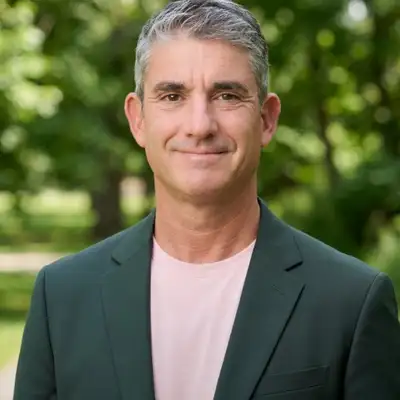
Host
Mike Montoya
Thirty-two years in education, twenty-two of them inside the kinds of organizations Stronger now serves before founding the firm in 2016.

Guest
Michelle Vilchez
Michelle Vilchez joined Innovate Public Schools, a national education equity organization, as CEO, in 2021.