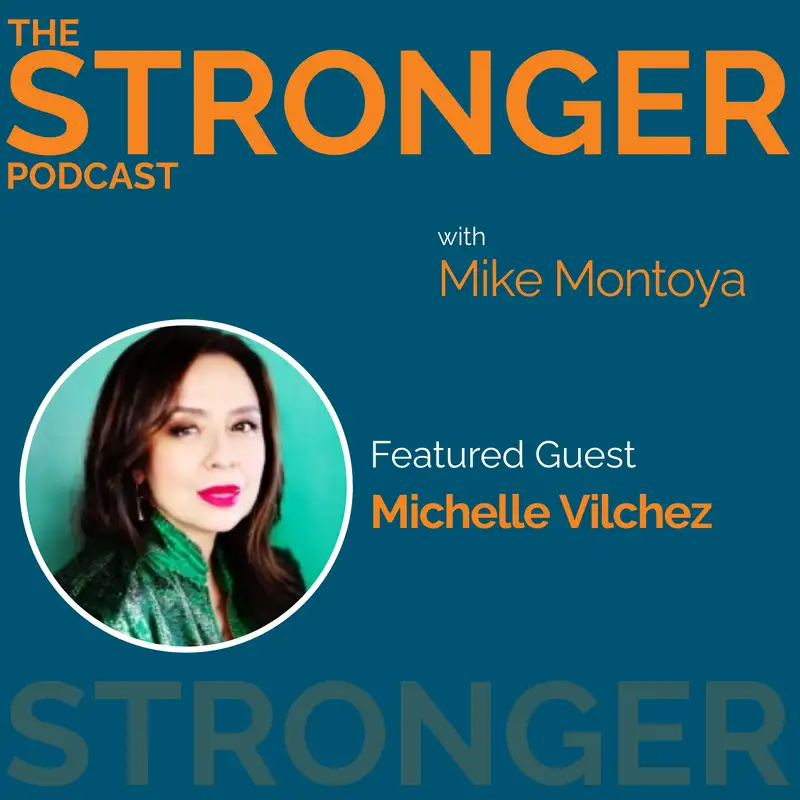
Unlocking Parent Power: How Families Can Democratize Educational Equity – with Michelle Vilchez
Mike Montoya 00:00:00
Welcome to the Stronger podcast. Each week we have honest conversation with education and social impact leaders about their leadership and career journeys. We talk about their origins, inflection points, and the work that they're doing today. The conversations are honest, human, and practical.
If you're here for real stories, and real takeaways, you're in the right place. Let's jump in and let's get stronger together. Hi, it's Mike, host of the Stronger Podcast. In this episode, we're joined by Michelle Vilchez, CEO of Innovate Public Schools, for our conversation about what it takes to move outcomes at scale without losing the stories of the people behind the numbers.
Michelle shares how Innovate organizes and equips parent leaders, why relationship building is the foundation of power, and how families are leading in today's educational landscape. Let's jump in. Before we dive into today's conversation, I want to give a quick shout out to Podcast Matter. Their mission is to help impact driven voices get the visibility they deserve. If you want to share your message with the world, check out their website in the show notes. Good morning, Michelle. Nice to spend time with you. How are you this afternoon?
Michelle Vilchez 00:01:10
I am I'm fantastic. It's Friday. Happy Friday.
Mike Montoya 00:01:15
Happy Friday.
Michelle Vilchez 00:01:18
Happy almost middle of December, which feels crazy.
Mike Montoya 00:01:21
I know. I'm laughing. I said it was morning and the afternoon right in the same sentence because like it's like right on the cusp. It's 12:00 noon Pacific time I think for our audience and it's a couple weeks before before winter break in our space. So we're kind of in that mode. And Michelle, you're in Northern California, right? Like near San Jose. Is that basically where home is?
Michelle Vilchez 00:01:45
I'm in the middle. I'm just in between San Jose and San Francisco. So I'm on the peninsula and and it's beautifully It's beautiful today. It's sunny. It's cold, but
Mike Montoya 00:01:58
I heard it was cold.
Michelle Vilchez 00:02:02
And unlike the rest of the United States, we're not battling, you know, 5 feet of snow or the 14 degree weather. So, I I try not to complain too much.
Mike Montoya 00:02:15
I feel like it's hard to I think Redwood City, where I think you and I first met, had like the best climate by government test thing for like 35 years. It was like a funny little little saying. Is that still a still a thing?
Michelle Vilchez 00:02:35
That's still a thing. That is totally the truth. But I would I mean, you know, the Bay Area and our microclimates, you have to bring along a sleeve, a sweater, a jacket just in case, depending on where you're going to go.
Mike Montoya 00:02:50
Be prepared.
Michelle Vilchez 00:02:53
I appreciate it.
Mike Montoya 00:02:55
Be prepared.
Michelle Vilchez 00:02:58
I appreciate it.
Mike Montoya 00:03:00
But no, no shoveling snow. So
Michelle Vilchez 00:03:03
Oh, that's true. Very It would be very strange if we did that.
Mike Montoya 00:03:10
That's right. Very strange. Well, and you know, and for our audience, I think let's talk a tiny bit. You and I met when when we were younger. Let's say that we were both a little younger and we were doing some work. We were doing community schools work in in and around on the peninsula region of San Francisco Bay, right? Is that about right when that was like 2004?
Michelle Vilchez 00:03:40
Yes. Something like that. Yes. So many years ago when the community school model was I think it was new. It was new concepts. Schools were testing it out. I think there was apprehension but there was a lot of just new research and this idea and structure that we could be in community and think about education from a wraparound perspective.
We had been thinking about social emotional learning after school support and what that really looks like. So that was those are good memories Mike that was it was
Mike Montoya 00:04:15
It was the beginning of it was the beginning of a pretty significant effort in the space right to really do things with kids that were not just about I think like no child left behind was in place right we were doing a lot of a lot of high stakes testing was in place and then and the community schools was kind of like some ways a response to be supportive of children's whole whole child stuff right versus just them as as I call them engineers of math and science only like in the high the testing pieces, right? Especially with younger grades, right?
Mike Montoya 00:04:55
Okay. So, that that kind of gives us a sense of where we started. Now, what are you doing roughly today? You're working you're working still in the same region of the country, right? But you're doing something a little bit different now. So, tell me a little bit about what what your role is now and what you're working on.
Michelle Vilchez 00:05:25
Sure. For sure. So, I for the last five years have been working with an organization. I have the distinct pleasure of serving as CEO for an organization called Innovate Public Schools. And the idea is that so, you know, we look at educational outcomes for kids, particularly black and brown students throughout the state of California.
And if we're just looking at California, the idea that, you know, our data is showing us that across California, three to four students out of 10 students are reading at grade level or and math proficiency is worse. We're seeing especially right now chronic absenteeism is at all-time high and graduation graduation rates at all-time low.
Like there's just a variety of outcome and measures indicators that are demonstrating that we have to do some work around education. And what we really believe at the heart of it all is that if we can engage and empower build the capacity of parent leaders to advocate and really be at the forefront of saying nothing less than greatness is what my child deserves in terms of their educational outcomes that we're really going to start to see the dial change.
And so we organize parents, we organize parents across the state of California, different regions throughout California that have larger populations of black and brown students, and then at the state level really pushing policy around education. We focus on policy related to education and related to a variety of things like the right reading—forgive me the IEP interpretation and translation, the science of reading, teacher pipeline, you know, a variety of big topic issues that parents are grappling with and so we want to ensure that we're magnifying their voice at that state level.
Mike Montoya 00:08:10
Fair well so focused on largely kids in urban centers still right and Um, lots of, as you said, black and brown kids. California has a like a very high, I call it minority population, right? So, it's like a large number of kids that that are part of this that group you're talking about that are kind of chronically underachieving as a population, right? Not necessarily as individuals, but that like the school systems have not historically been really great at supporting them, right?
And and a lot of kids for, you know, I think our audience knows probably some of this, but like you know, the opportunity gap and the achievement gap is like a real thing, right? It started and we started measuring it back like 1980, right? So, so and now we're and now we're, you know, way past that. 60 years, 60 years plus past that, right? And we're still still struggling with the fact that like what schools typically are doing is not sufficient, right, for the populations of kids as they continue to change, right?
So, the work is kind of ongoing. I don't feel like we've I think we've made progress in some areas and we certainly know more as a science about like what kids need to do to learn, but we have a really hard time applying that. And I think in some cases parents are disempowered, right? I think is one of the words that I I tend to use is that they're like, "Hey, I give it my power to the schools and they're not doing it, so I'm out of choices." Right? That's kind of a little bit like how I think about this work. Is that is that similar to what you guys think?
Michelle Vilchez 00:10:45
Well, two couple things of what you mentioned. One is that we don't necessarily feel like families are disempowered. I mean, there the power exists there. I appreciate the premise for sure. And the way that we look at it is that, you know, a lot of the families that we're working with actually surrender a lot of their power.
You know, they're surrendering a lot of power because maybe they come from particular regions or they come from communities outside of the United States where education, you know, is the end all be all. The educators know everything. The teacher knows everything, the superintendent. So why why would I question any of it, you know?
So that's one thing. Number two is that I don't I think even for families that are here within those different urban pockets that we're talking about throughout throughout California and beyond, I think that families may not understand that they can magnify their voice, they can actually partner with the school, they can see the outcomes and that the school wants to partner with families and you know and we have some of those traditional platforms for that.
We have school site councils and parent teacher associations and we have collaborations, you know, that already exists that are in place, but those don't tend to be the families that we're organizing. Those tend to be the ones that understand their power, their influence, the potential for their influence and how they can really demand high-quality education in some of the regions across California where some of the more affluent communities, they know how to navigate the system, Mike.
They know they don't need to question. They know what schools are the greatest schools and they know where their kids are going to be able to be supported in a way that is meant for them and and they have the resources. It always comes back to money as an influencer. They have the resources to live in those particular communities.
For other families, they don't necessarily have those choices. So, you know, early on the issues were related to supply and demand. How can I, you know, how can we create more opportunities for all families and what would that look like for all students to have the best quality education? One of the things that we do is we put out a top schools report. Actually, anybody can find it on our website. It's free for downloading and it takes information.
So, the way, you know, one of the ways that we are really building capacity of families to ensure that they have adequate data that it is digestible. The data is out there, but families like ourselves or others who may English may not be their first language or may not understand how to navigate through all of that data and information. We make it digestible so families can say, "How are the schools in my region, forgive me, performing? What does this look like? How are they supporting my child and the unique needs of my child that have my own experience, but what is the data showing us?"
So, we put out that report and for more, you know, for other other families throughout the state that understand how to navigate that, who may have the resources to not only live in a community that has high performing schools, but they have resources to supplement with high impact tutoring or one-on-one tutoring, then, you know, the outcomes look a little different. But for families who may not have those type of choices. We want to be able to get data in their hands and ensure that they can magnify their voice. And so that that's that's really at the key of what we do.
Mike Montoya 00:14:10
That's part of the that's part of the angle, right? Is is sort of providing like a I call it like it's like a a set of tools, right, in a way and and some training, right? I think you guys do a bunch of training, right, with with parents as leaders, right? So that they can also organize themselves and communicate amongst their own kind of constituency groups, etc., right? So that they become sort of like a little bit more of a kind of a powerful block, right, of individuals that have a voice or is that is that a little bit of a fair?
Michelle Vilchez 00:14:45
Absolutely. You know, it's it the other thing that we're doing is that, you know, it's all about relationship building. In our organizing cycle, we have this principle that the power is in the relationship. So, the idea is that I am having my own experience as a parent. Mike, I think I've told you, but I have four children and so they've gone through, you know, the educational system, you know, and and when you're thinking about that, what that actually looks like.
You know, as a parent, I know what my experience is and I'm very familiar with the the experience and we've dealt with 504 plans and IEPs and, you know, making decisions around charter, magnet, public traditional, like what does that actually look like? What's the information? It's a lot to manage. And I think that what tends to happen is that that families are having those experiencing, but they're feeling very alone. They're feeling very isolated.
And so the other thing that we're doing is building relationships across these silos that exist not because there's any fault in that families have in it, but because that that's just their experience or life is happening and keeping them very divided from other communities. So this this idea that we can actually be stronger together when we're magnifying our voice when we're sharing our story, when we're creating these pockets of empathy and action together, like it's not only listening to each other and getting smarter on what we know in terms of the data, it's pushing towards action.
Now, you and I, Mike, are going to work on something together. We're going to create the change together. We're going to, you know, develop recommendations and move that is going to, you know, move and create these changes, policy changes that are going to impact my child.
Mike Montoya 00:17:15
Yes.
Michelle Vilchez 00:17:18
And make it better for my child.
Mike Montoya 00:17:22
Yes. Absolutely.
Michelle Vilchez 00:17:25
But make it better for all of our children and for generations to come.
Mike Montoya 00:17:35
Yeah. So it's it's the actionoriented efforts, right? And opportunities for people to work together, right? This almost like building like I call it like social capital amongst communities that maybe are like not again naturally falling into those opportunities, right? And and like someone was like I think I don't know.
So maybe and we'll go back. I want to hear about I want to talk about your your kids and your experience because I got to go there because like I think about my And I remember my mother was super activist as a as a single parent, right? And taking care of like the opportunities for myself and my sister because she felt like education was like such a critical factor, right, in in our long-term success.
And so she was deeply involved in all those traditional systems like the PTA, the parent volunteering, showing up at the schools and and being on call. I can't I cannot remember a year that she didn't kind of get into something with my school leader or my principal or one of my teachers around something that was important for me from her perspective, right?
And I think that like she was a very I call it take charge kind of kind of parent, right? And like she was I think there were other parents like that too, right? Probably. But I know that she was like that was how she was. So tell me about tell me a little bit about your kids and your family. You have you I think they're maybe they're growing up now. Most of them are are kind of like going. Is that true?
Michelle Vilchez 00:20:00
Do I age myself? Let's see. So we have four, two boys and two girls. And our eldest is grown. You know, our second just got married like two months ago. Our third is about to graduate from UC Santa Cruz. Go slugs. And our fourth is graduating from high school in the Sequoia Union High School District in our in our region.
So, we're really very grateful, very, very grateful. You know, it's been and you know, I I am a child of immigrant parents. My husband is a child of immigrant parents. We were the ones who were translating interpreting, navigating the system. We, you know, I had engaged, I had supportive family, parents certainly that wanted to advocate more for me, but I I was the child in middle school and high school that took three public buses from where I lived in Coachella Valley and very southern region of California out into Palm Springs so that I could go to a school that my mom and my dad thought was going to have give me more opportunities.
At the time the the public school district did not provide transportation to the children. So I was on public buses and in the desert we call them the sun bus. They are the sun buses and that's what you took. So at a very young age I'm riding these buses to get to a campus where for the most of my education I was in trailers. I had substitute teachers. So it's like thinking about that from an immigrant family perspective.
And now given the experience that my husband and I have, we're both college educated. We're bilingual. We understand how systems work. We're highly engaged civically. This this thought about like civil engagement and what does that look like? And we've had to navigate challenges. I think that different parents have and I mentioned some of them before.
So I think that, you know, we're grateful for the system. We're grateful for the fact, but certainly understand our privilege that we have. We we actually moved about 27 years ago into a traditionally or historically redlined community on purpose. We did that on purpose because we wanted to ensure that we were surrounding our children and our family with the diversity, the richness of culture and traditions, not only from the Latino perspective, but certainly from the black community and the historically black neighborhood that we were moving into, Pacific Islander as well, and Asian-American.
And so all of these changes that have happened are certainly have taken place over the last 20 plus years and gentrification is a real thing. And so, but the school districts are a little slower in catching up to what that actually means. So, the price of homes has increased dramatically, dramatically. But the quality of our education in those same areas, that's taking a little bit longer. So, we've had to be really creative and and thoughtful about what that looks like for our kids.
Mike Montoya 00:23:45
Well, and it's like it's like one of the great conundrums in our society, right? If you choose to live kind of amongst your people, right? Let's call it that, right? And close to things that are either familiar or or enticing, right? To to kind bit make sure that your children also have roots in different ways that you have them.
It's hard when the schools don't meet you where you are, right? And that can be like that's one of the great dances and I know I do know I have other friends of course that have moved out into the the suburbs etc right in order to achieve like high quality schools like Orinda and Lamorinda and those places like incredible opportunity schools right but like it's very different kind of cultural experience for for kids and families right out there and it's like something that's just like not and as you said the prices of housing in some of these communities is quite prohibitive right for many folks right so
Michelle Vilchez 00:24:45
so you you mentioned Yeah, go ahead. No, Mike. And I mean that in and of itself, I mean, how are we not outraged? Like, how are we not outraged that, you know, again, money allows your child to have more quality experience? I mean, it's just a truth. It could be money, resources, the opportunity to navigate. It's those it is those tradeoffs.
But why are we not outraged that, you know, that every child has to fall within luck on whether or not they live within a community or given the opportunity. You know, at at one point I remember being in the car driving with our kids and we were with our three youngest and and my husband asked, you know, one is in college, one was at college at the time, the other one is high school and middle school.
And my husband asked the question, "Do you feel like you've had a quality education? Like, do you do you think that you've had a quality education?" And our kids are like, "Well, you know, yeah, kind of." One of them, you know, went to private, the other went to, you know, he got a scholarship and what what goes into quality education. We went into this like real, you know, pretty deep conversation, very very opinionated. All of our kids we we've raised
Mike Montoya 00:27:15
I can't imagine.
Michelle Vilchez 00:27:18
We're like, "Well, you know, it's not only the school, it's also our own drive, but it's also what we did with it. You know, I went to this school, but did I take advantage of all these opportunities and really exploring that what but why is that just not the standard that every child has access to high quality education."
And that's, you know, that's one of the things that we're really battling with and struggling with is like, do we set a course for our organization to focus on that first and foremost to say let's let's ensure that every child has the best quality education ever. Let's amend the constitution together. Let's think about what that actually means as we move into this space of inequity. And you know, and that might get some tension to be able to say that, but I think that that is an issue that we need to talk about that not everybody has the opportunities across the board. So,
Mike Montoya 00:28:45
I'm going to pause the conversation here for just a second to talk about books that matter. Every entrepreneur or leader needs a book that elevates their business, builds their credibility, and makes an impact. If you've got more money than time, a ghostwriter can help you build your story.
If you've got more time than money, a great book coach can guide you step by step through the writing process. If you already written a draft, these folks can save a lot of trouble and money by shepherding you through the publishing process. Head to booksthatmatter.org and get the custom support you need on your book idea or manuscript.
Well, and and I and I'll be careful about walking into the school funding conversation because it's quite complex, right? But it's it's one of the elements that like really drives for the like differentiation of of quality of opportunities, right? Like and you said you sort of said it like money matters, right? It matters.
If you can afford to live in a particular community, the resources that that the laws of different states in California in particular allow for kind of jurisdictions to draw lines around themselves in terms of the monies and the taxes, etc., and where the money can flow. And so, you know, kids will have five or $10,000 more per kid if they live in Piedmont, right, than if they live in Oakland, right? As an example.
And those are some of the the things that are kind of structurally in place, right? And I would say I mean I'm a little policy wonky, right? I would say like we're on the far end of the spectrum of people who have been like deeply involved in this for our careers, right? But like a lot of folks don't really know that like there's this huge gap between those resource types. Is that true? Is that is that kind of what I mean? Do parents really know much about the funding landscape at all?
Michelle Vilchez 00:31:15
Actually, it's so it's so interesting that you would ask that question.
Mike Montoya 00:31:18
Okay.
Mike Montoya 00:31:20
Okay. So, for audience knows that we we had a tech issue now we're back and so we were we were talking about resources and I asked the question. I said, "Do parents know do parents recogn or know that there's a huge gap in resources available to public school kids or is it like a big educational component that you have to sort of charge towards?"
Michelle Vilchez 00:31:45
No, they totally. So, I would say the average family member probably does not clearly understand where you follow the money, how it works. Even even a well-educated and informed parent may not be able to articulate what that looks like. And also like my state looks different than your state and you know So it looks very different across the board.
And then locally, what does that look like? And how how is money allocated to schools is one and districts is one. How the school and district spends the money is two. So those two big areas is what we spend a lot of time on to build the capacity of our families to really understand like what does it mean? How does it look like? What what is budget?
How do you how do how do leaders, school leaders determine how they're going to spend dollars and what's the role of families around accountability like actually these dollars are intended for this particular type of programming is it being spent in that way. One of the biggest areas that our families advocated in the state of California is around extended learning opportunity program or ELOP and a couple of years ago we were part of a coalition that won out on $5 billion dollar be as in burrito a billion dollars out on extended learning opportunities.
And so now what we've been really working towards for families in particular regions is that accountability portion of it. Okay, we want to make sure the families know that this is how the dollars are supposed to be spent. How are we engaging with afterschool providers and networks across the state of California? And how are we supporting their families to really understand and to hold the system accountable because at the end of the day if that money is not spent the way that it's intended to then families are missing out.
Mike Montoya 00:34:30
Yes. Where does it where does it might be go? Right. It gets really messy on the financial accountability side because you can't see where it goes and if they and if they don't know that it's a that it's there and b that it's being spent appropriately.
I mean I'm stronger is a big proponent of like hey high quality programming right and like we see in our clients and across the country right that there's like super high levels of variability in terms of the quality of experiences that kids are having especially in after school, right? Like some of them are like, you know, babysitting factories, which you know, childcare is a real thing and like it's a necessary item, but also is it actually enriching your kids experience, right, as it should be.
Or are they getting the extra dosage of math or tutoring support, things that that are essential to their kind of upbringing and the opportunity, right? Because you know there are these gatekeeping things that happen at different stages like if they can't read by third grade, if they can't do a certain level of math by sixth grade, like they sort of I call sort of start to de facto get tracked into like lower and lower opportunities, right?
Like then you get this class instead of that class and then you end up with like, you know, this this pathway to A through G requirements versus another one, right? And so California has all these very if you miss if you miss the boat, you know, in sixth grade, then you're kind of sailing sailing kind of shy for a few years, right? That's kind of how it works. And I don't know if you guys think about that very much, but it's
Michelle Vilchez 00:36:15
a lot about that. No, high quality, you know, it is about I'll just give you examples of what that actually has looked like. About 5 years ago, our families, parent leaders in particularly in San Francisco Unified School District and Los Angeles school district, which is our our two largest school districts throughout the state of California.
So, our parent leaders started talking about high impact tutoring and really paying a lot of attention. It was just it was we were in the throws of COVID and remote learning and parent leaders started hearing about high impact tutoring, our high dose tutoring. At the time we were talking a lot about highdose tutoring and realized that there were a number of high impact tutor providers that were supporting different families but they were costing 200 upwards of $200 an hour to be able to supplement what children were not actually getting because of remote learning.
So we started we went all in in really understanding what was the research and data telling us about high impact learning. What was what is what are some of the outcomes and impacts that can come from it? How can it supplement both inside of school and outside of school. What does quality actually mean? Defining quality and defining quality together with families.
What does it mean for them as well? Not only in terms of the research, but personal experience and testimonials. And we actually published a couple years about a year and a half ago, we published a toolkit for parents and providers that really helps to understand high impact tutoring, that definition, and what that actually looks like.
And just yesterday, in the peninsula. We hosted a tutoring summit for parent leaders, for providers, for district leaders, for for funders to say, "Hey, this is still a thing. This is still very important." We had a over a hundred registrants come and participate and engage in an all day session first to really hear from families. What do families want?
And parent leaders were actually at the forefront. They facilitated the whole day. They helped us co-design what that actually looked like. And then we had a ton of tutors. So talking about quality, the money is certainly part of it. Well, the accountability and partnering with schools and districts and then ensuring that it's quality and helping to define that together. This idea of co-creating that standard together is is really a powerful one.
Mike Montoya 00:39:30
Yeah. Well, and I appreciate the the I call it the the good old school community collective gathering, right? There's, you know, hundred people in a room at round tables. There's usually some food and or never enough food if like right there's always like we forgot to order enough food type of thing but like people getting together right and actually kind of I call it holding each other feet to the fire a little bit accountable because I feel like we all get a little bit like it's easy for us to forget pretty easily right if we're ever in a position of power or responsibility it's easy for us to think like it's going okay when maybe it's not because we don't get to see it very much and we need to kind of be reminded right and I think and also I think there's a lot of like you know when parents get together and are are leading each other they're back to the strengthening the the place of power, right, that that families actually have in the system, right?
That that it's not just like up to the superintendent on their own to go make a plan and decisions that that is like void of of responsibility, right? And like this is a collective action, right? In that regard. So, I appreciate that. So, thanks for sharing about that. What's your website called? It's innovate.org. Is that right?
Michelle Vilchez 00:40:40
It's innovate it. Well, so now you can go to
Mike Montoya 00:40:43
I know you guys changed it, right?
Michelle Vilchez 00:40:45
It it's changed now. So, you can go to webuildpower.org and see us be able to pop up there.
Mike Montoya 00:40:55
Perfect. So, webuildpower.org. Oh, yes. There we go. Yes, I remembered the change. So, I want I want to make sure we put this in the show notes, too, so people can come and check out innovate schools, but webuildpower.org and then it will take you to innovate and then that's where some of the reports and things are, right? Is that right? Um
Michelle Vilchez 00:41:25
reports are there. You'll read a little bit about our our grassroot organizing that is taking place. Ton of resources, a ton around our partnerships, our black student achievement efforts and our policy briefs. All of it is all, you know, there and and you can sign up for our newsletter and really understand some of the big trainings that you talked about our parent leadership institutes.
We actually did that about two and a half months ago. We had over 170 parent leaders from this region come together for an entire weekend to really learn the organizing cycle. What does it mean to partner with the school? What does it mean to be heard and magnify your voice? how how can I understand better the funding, the accountability, the program allocation?
How can I really hold my school accountable and how can I get, you know, and partner have the opportunity to partner with other parents who I know and don't know to be able to get this work done. So, you know, really exciting. So, that's one of our big trainings. And then the other is a fellowship, either between four to six month fellowship to learn how do I organize, how do I tap into this this brilliance of parent leadership and how do I maximize the opportunity?
A lot of school districts and other nonprofits are doing family engagement and we just want to offer this organizing framework to really understand where does it come from, how is it driven, what are the principles of this engagement and how can I replicate it for my community that I love and care so deeply about.
Mike Montoya 00:43:45
Right. So you have some of these trainings are available nationally, right, with organizations and leaders across the country in school systems that are choosing to participate in this way, right?
Michelle Vilchez 00:44:00
Yes.
Mike Montoya 00:44:02
It's a it's a great resource and I feel like it makes me think about like leadership development in general, right? Like there's like there's never a neverending need for it, right? Because every, you know, every year another crop of families and parents come into the into the experience, right?
And some of them, as you said, it evolves, right? The the systems definitely change and adapt in some ways, but also like if you move to a different part of the state or a different part of the city, right? You may have a totally different experience. And so the engagement around these things can look quite differently but but but as you said parents I think have like so many innate capabilities right as just humans right that care about their kids right and sometimes they just need to be kind of pointed in the right towards towards towards an aim of sorts almost like point point at the horizon right and then and and sort of be like and then they can go kind of together if that makes sense right that's kind of how I see that
Michelle Vilchez 00:45:30
there there you you know I love what you said Mike and you know there's there are these innate skills and ability and what we build on is the fact that you know as parents as guardians we love our children so much so it's based on that you know what would I not do for my child the last few years since the pandemic our we've really struggled with a variety of things related to mental health for for one of my children and you know we we did all of the plans and have worked with a phenomenal schools and district supports that exist.
But this idea that and I I say if I wasn't organizing around education, I'd be organizing around mental health in general. And there they really are one and the same when it comes to education. There's just so much. There was just a recent report that came out that, you know, how COVID has still to this day impacted, you know, a child's well-being and mental health.
You know, I I say that why? Because there's nothing I wouldn't do for my child. You know, it's there's nothing I want to set them up for the greatest success. And I think that we draw from that. One of the another organizing principle is who do you love? Like who do you love? What means the most to you? And as a parent, that's the self-interest.
Like there's nothing I wouldn't do to ensure that while I'm here and even after I'm gone, my child is set up for success. They're going to get the best resources possible and if and if I'm able and it's within my power, I'm going to do everything I can to advocate for it. So yeah, I think that's that's what's so beautiful about the work, the testimonies, the individuals who are at the forefront. It's beautiful.
You the one thing I wanted to mention too is yeah, we're doing a ton of things on a national level. Our team just came back from Chicago to do some parent leadership training there, some organizing training. Before that, we were in North Dakota and and we're talking to Texas right now. Before that, we've been in Utah and North Carolina.
We've been in DC. We've have this these relationships. We're not trying to do the organizing on the ground. We don't really have the capacity for that. What we want to do is build the capacity of or other organizations to do it. We we have some proof points we want to share. We have the test kitchens. We've been doing this for going on 14 years.
But the culmination of all of it is not to keep the secrets or to gatekeep. You want to share the good news. You know, when you've tasted something so amazing, you're like, Mike, have you gone to that restaurant? It's phenomenal. You know, or have you had, you know, this particular, you know, have you tried this particular recipe? Let me share it with you.
And I think that that's what we want to do. And one of the things that we're going to be focused on within this next year is we're going to be developing policy toolkit. So, it's another another aspect of capacity building to different organizations throughout the United States that want to utilize parent power building to move outcomes around policy reform and how do you actually do that and so we want to be able to put the recipe if you will in the hands of other organizations and then train them how to do that so we're doing that across the United States and really really excited about it
Mike Montoya 00:48:45
well and like you and when you think about the numbers of children again that come into the the public school systems over time, right? It's just like an enormous number of kids over time, right? And and I would think that like you even if you have a a small effect on a total population, right?
That that can make a huge difference, right? Certainly to the lives of that small sector of kids, but if you do in fact make some of these big policy moves which are but quite difficult in California to be clear like let's be honest about like the size and scope and the scale of that of that state, right? Like these are kind of significant in in I call it big dense right in a big system right that you can make a huge difference.
And I think in particular right it's parent action that have really played a big role in things like ensuring that you've had I call it effective utilization of special education law right in particular right and I think like the expansion of special education IEP applications has gone up considerably because right we've become better at they call it navigating that whole system and that comes from the actions of places like innovate right so I think we all have something they think they call it appreciation right for for organizers, right, that kind of make this stuff happen because otherwise we wouldn't even know about it, frankly, you know, without somebody sort of taking the actions and moving in that direction. So,
Michelle Vilchez 00:50:30
what we've we've calculated that our parent leaders across the state allow us to in essence punch above our weight. It's given us that that's really where the power is. And for every one parent leader that is activated and engaged in their region, they have the potential to impact another 10 to 20 individuals.
So, you take a particular region, let's say like LA USD that serves close to 800,000 students, but you're able to activate 500 families. That actually translates to 5,000. Those 5,000 then translate to another, you know, 50,000. So, what does that look like? You know, that's where we're trying to start the grass fires.
And, you know, in California, we we're really careful on not saying burst fire, but it's winter and so we're hoping that we're going to get some rain again soon. So, you know, thinking about like how does that catch on? What does that actually mean? And how much power can come from it? And I think that that's why we're clear that we we don't want to do this alone.
We want to be working in partnership not only with organizations here throughout California, but outside because the more that we can set ablaze to this particular movement, the more that we're going to see policies start to change influencing, you know, local practices, statewide policies, and creating the type of change that our children need for generations.
And then you're talking about hundreds of thousands of individuals being implemented or, forgive me, being supported and impacted from the work. So I I you know, we do believe in it and it's sustainable. The other part of it is often far far too often, and you see it, Mike, you you work with variety of districts and schools throughout your career is that we see change happen within leadership tends to stay the same is the community will stay the same.
The community is going to stay there and where outcomes can be cocreated and solutions can be co-created on extremely complex issues, it's probably going to be more buyin, more sustainable, more long-term outcomes that are really possible. And you know, I I think also So, you know, families are ready for real complex issues. You you talk about, you know, special needs and we were able to partner.
It was culminated out of a local campaign in the city in San Francisco where families were talking about special needs and IEP interpretation and translation. And in some cases, you know, families were not getting their IEPs interpreted or translated up to 90 days. And so, you if you're not an English speaker and you're not able to actually support your child with an IEP and the IEP that's being implemented or hold a school accountable for different accommodations.
How do you navigate if the language is not, you know, so San Francisco adopted SFUSD was phenomenal. They adopted this policy. Then we were able to get the word out and then we were able to work with an assembly member who helped us, you know, drive the law into the governor's hands who signed it last October. So about one year ago.
Today it got signed into into a law and from that parent leaders started asking the question how do we utilize technology to help us do this? How do we utilize AI? Yes, this is great but how do we get in the hands of families right now? And they co-designed and co-created a platform with the support of engineers from Northeastern University and the innovation lab to create this platform that now is being implemented in a variety of different regions.
We actually launched it about five months ago in San Francisco Unified School District and now we're talking about another pilot in LA USD and the hope is that if we can get a district to adopt it, it's been phenomenal. You know, safety has always come up as the issue
Michelle Vilchez 00:53:50
and districts have been amazed at the firewalls and the systems that are in place to ensure that privacy is really being upheld. So, you know, parents are ready to deal with really complex or to create solutions around complex issues. We just need to trust them enough and and I think that that's that's a big a big statement to make. Do we trust them?
Mike Montoya 00:54:30
Trust them. I know. And I think I think we tend to like, you know, as people who have been here a couple generations, right? Like we tend to I don't I won't put you in this bucket either, but but I know it's easy to start to think like, oh, because the language is different than my primary language, right? That they that these folks are undereducated and unable to engage in like complex stuff, right?
And it's just not the truth, right? And I think any like kind of like when you think about it, it's like obviously that's not true, but it's like really easy for us to default to that when we can't communicate with each other that there's a there's a like a almost like a thinking gap, which is not which is again not true, right? I think that it's really easy for us to fall in that.
But I was thinking about a when you were talking about the translation, I was thinking about AI because I use it all the time to translate things into but I'm not using it for student data, of course. So I'm like being very, you know, obviously I don't have the same sign of safety concerns, but I'm glad to hear that there's like I call it experiments and pilots going on because it feels like tech can probably solve a lot of these challenges like language barriers, right? I think my iPhone, you know, translates stuff all the time.
Michelle Vilchez 00:55:50
That's right.
Mike Montoya 00:55:53
So, it's been good for travel, but it's, you know, I think those are the things that we should all you know, we can be excited about, I think, in many cases, right? I also feel like, you know, living in the Bay Area, there's this like opportunity because like so there is so much tech excitement, right? And like a constant flow of money, right?
That there's opportunities there that like a lot of places in the country would be like, "Oh, I never thought of that." But, you know, San Francisco is like always kind of gunning for the bigger things like that.
Michelle Vilchez 00:56:35
That's right. That's right. We're innovative. We're innovative, you know, Genentech and we're we're embedded in the most innovative creative place. Okay, there's others. Portland is another
Mike Montoya 00:58:15
You got a big one, though.
Michelle Vilchez 00:58:20
Austin, you know, we get it. But Silicon Valley, you know, was the first. It was kind of in the Bay Area. So, why wouldn't families think about the use of AI and technology. Other districts are engaging that conversation and they're creating those those protocols and policies around them. Families want to be a part of that, you know.
And I I recently attended summit to talk about again youth mental health and outcomes for kids and what that actually looks like and I won't I won't name the place I won't name the districts that were involved I won't name the region but we were in a room where this plan was being launched it was being unveiled and we had probably upwards of 250 district and community leaders mostly grass-tops I would say about 99% grass-tops in the room.
You know, policy leaders, there was behavioral health, public health, you know, health in general, you know, all of us sitting in this room for this plan. Phenomenal plan, lovely plan. And as I look through that plan, I kept seeing where families were in the role of on the receiving end. They were in a constituent mindset role.
This idea that, oh, we need to build the capacity of families and that that was one of the outcomes or we need to you know share this information with families or we need to help train families on this or you know always on the receiving end and when I ask questions to others around like how was this plan developed and designed you have a whole five to 10 year road indicators and key outcomes and key results that we've where were families as were families part of the conversation and why and families are tired of being on the receiving end of things they want to co-create.
They want to stand in places where hard conversations are taking place and they want to offer solutions and they want to be part of the the design of it and they want to create it. I think that, you know, it's the time is now. As complex as it seems, as as complex as the system seems and as as sad as our outcomes are, families are ready to be at the forefront of of planning and solution building and cocreating and thinking innovatively, they're doing it already.
So, I think that we're missing the opportunity. We're missing the opportunity to be in a place of partnership. There is there's this idea of radical solidarity and this idea that we are in a place of radical solidarity and radical partnerships. Those unlikely partners need to be working with each other to ensure that outcomes and that ultimately our community looks and feels the way that it needs to.
Mike Montoya 00:58:45
I just want to say that if you're a leader, entrepreneur, or business owner who needs some support, there's an easy way to get a think tank behind you in your vision. The Genius Discovery Program at Thought Leader Path is like having your own one-on-one incubation and acceleratorship program.
They'll help you develop an approach based on your own story and your plan for impact and offer the tools and thought leader assets needed to really amplify your message, including launching a podcast like this one. If you're ready to stop grinding in the dark and start making real impact with the right support, check out geniusdiscovery.org.
Mike Montoya 00:59:35
Well, and I think you kind of nailed it. I feel like there maybe maybe we've, you know, it's almost like a light bulb goes on for me when I think about like part of the reason that the achievement gap and opportunity gap continues to persist, right, in our country, right, is that like well grass-tops, right, have struggled to really like imagine like how you know the actual constituents right that are that are part of the system right can and should be engaged in ways that are meaningful for them right so that it's not just the the the noisy few parents right but like globally parents and families are connected and engaged in the work that that is about their children and their kids right and I think that's like a real it's it's harder work right it's harder work than sitting in a room and thinking for yourself and deciding right like how these you know literally billions of dollars are going to be spent right it's harder work than that to engage people and ask them questions and listen to them and then actually implement with that in mind but it's also maybe part of the the missing it's like the missing leg right to this whole this whole project right so
Michelle Vilchez 01:00:15
That's what we believe yeah
Mike Montoya 01:00:18
Plenty of work to do
Michelle Vilchez 01:00:20
A question earlier in terms of like are we are the families that we're engaging tend to be the ones that are disempowered in ways I I think that what we're looking at now is some of the families that we're engaging engaging with and building the capacity for or with in collaboration with them are actually being silenced. They feel silenced. It's not only no do I not care what you have to share. I don't actually want to hear from you.
Mike Montoya 01:00:45
And that you know that is that's a this is the time where in some communities they're feeling silenced.
Michelle Vilchez 01:01:00
Yeah. And that looks a variety of different ways. All you have to do is look at, you know, Instagram or look at social media or look at the news and listen to you know for those who still read the paper which I do you know there are communities being silenced right now and so we need to ensure that the mechanisms and the platform still exist to agitate to be engaged in those dialogue dialogue and and deliberative conversation dialogic and deliberative conversations and I think whether we agree with each other 100% that's not really the issue but can we partner together to really see sustainable solutions and outcomes for our children. I think it's possible. I think we can.
Mike Montoya 01:02:00
Yeah. Well, I think, you know, school districts are almost like the genesis of of, you know, democracy in many ways, right? Like we're we're not only are they like a very small unit, right, of democracy, right? That's a it's an elected school board in many cases or a publicly elected, you know, charter school board, something like that.
These are entities that exist that it's easy to get access to those, you know, elected individuals, right? Etc. And then they, you know, were we're literally educating the next generation of civically engaged humans from the moment that they like learn to, you know, walk into eat and breathe and that kind of work. And like this is the like kind of the genesis of our democracy is that if we don't do this well, we end up with the next generation of people that are more and more disenfranchised, right?
And they kind don't believe that their voice matters, right? And I think that that's a huge risk factor, right, for for us. And I think that it takes organizations and agencies and people that have, you know, chosen this as their careers and professions, right, to to make possible for folks, right? Because, you know, everybody's also trying to like feed themselves and and you know, take care of the basics, right?
You know, make sure that there's there's a roof over their heads, right? And so, like not everybody can be wholly engaged in all all sorts of things, but I mean there has to be opportunities, right? And pathways for folks to do that in ways, right? So, plenty of work to do. Before we wrap, I want to shift gears for just a minute into a little bit on the leadership side in particular, right?
So, this is like a moment to be a little reflective and and bring a little bit of some of your again, not let's just call wisdom right to this space because because you know experience matters in this case and when you think about your your leadership arc right what are what are one or two things that that you if looking back right you're like hey like this was a important lesson that I learned at some place during your time that it really informs and kind of keeps you kind of steady as a guide right for you now something that you picked up earlier in your in your career that you're like now I'm like hey I had a lot of that it's an important feature Tell me tell me something. I know you got a couple in there.
Michelle Vilchez 00:57:00
Yeah, I I appreciate this. Oh my goodness. I appreciate this question so much. Yeah, I remember my first opportunity as as a leader within an organization. I, you know, we we've heard so many times, Mike, about this idea of impostor syndrome and I cared so much about what people thought about me and my leadership.
I remember I remember remember my first I remember my first annual appraisal and I was sitting there with my board members and a few of them that had led the process and they were really consumed and talked about on that on that document what I was what I was wearing, how I looked, how I presented myself, this idea and not really focused on the impact that I was having as a leader.
And I I remember receiving that appraisal and just weeping and going back the next board meeting and you know I think that I felt like wait a second that that has nothing to do with who I am as a leader you know whether I'm not presenting myself in a certain way or what that actually looks like or and as a matter of fact I was the only person of color that historically had ever been at the helm of that organization.
So what did that actually mean like what what did that mean? significance of that and was the board equipped to actually support me in my leadership as first-time ED. Then I went down this pathway of looking at data and what does data tell us? Data tells us that first-time EDs, especially those individuals of color, only spend, you know, the first two to three years in that role before they leave or or give up being in the nonprofit sector altogether.
So, what was this telling me? And I I think the lesson learned there is that doesn't It doesn't matter what they think of me. It doesn't. It's whether or not I am utilizing supports and resources and systems to actually get better to talk to others. Am I building community?
That's the biggest lesson is that had I learned early on that it was like, you know, I love thank you board. Thank you boards in general. If you serve on a board, thank you. Thank you. Thank you. So many ways. But am I connecting to other EDs that are having similar experiences so I don't feel like I'm losing my mind? like am I losing? Is this just me experiencing this?
Is everyone experiencing the fact that we have less dollars and you know and more work? Okay. Is it oh it's just it's a trend. Okay. Or I feel like where can I pull data from? And again you know I spoke about this earlier. The power really is in the relationship. Who can I draw from? How can I learn from their lessons?
You know how can I seek expertise? And how can I not recreate the you know recreate things constantly? Hey Mike, do you have is I can think a look at do is there something you could share with me? Is there a template? You know, we're thinking about doing X Y and Z. Have you ever done this before? Tell me what your experience went.
Where can I learn, you know, the lessons? Where were the bumps in the road? You know, all of that is talk to others. Build your community. Create your cohort, your sisterhood. I've been in so many cohorts now that are just pure women, women of color in a space learning from each other. I mean, a cohort right now of how women lead that is a Latina only cohort. report from leaders from across the United States and Brazil to understand like I'm leading out on this effort.
What does this look like? So, invest in yourself, in your own learning and development and the time and energy. Totally worth it. Totally worth it. I wasted at least a good 15 years on
Mike Montoya 01:00:30
Well, right. You can't wait. You can't wait for others to do it for you, right? And certainly almost it's very rare for people to think of others that are not like themselves, right? very carefully to think like, oh, if can I like people can maybe empathize or maybe they can sympathize, but they can't really be in your shoes like so they can't empathize effectively, right, with a with a woman of color or a female leader or first-time ED.
Like boards are just not kind of like intentionally not built that way, right? They're sort of diverse by purpose, right? They don't they don't often think about like the where where is this person coming from? What might they need? We run into that a lot. I appreciate you pointing that out and I think it's like one of the things that is unspoken and doesn't get talked about enough is like how leadership like is evolving in the nonprofit space in general, right?
Is that like we are leaning into like there are more women leaders than there have been historically, right? But there's still not as many not it's certainly not equal, right? Um in terms of mento women for example. Then also just like in terms of the supports and systems that are available to folks, right, for for folks um they're they're not as robust.
And maybe you didn't go to boarding school, right? And and have a magic whatever you know the things are that people have of privilege. You came from a kind of background and experience, right? So, you've had to build up some of that that capability, right, on your own, right? And through others, what I call investing in you and through you, right? Those are things. Do you how do you pay it forward now? Are you doing that with anybody? It sounds like you're part of a cohort and leading. I'm sure that you're a mentor for others. Like, tell me more about that.
Michelle Vilchez 01:01:00
Hey. Oh my goodness. So, right before I started with Innovate, I launched Silicon Valley Multicultural Awards program that was of it was designed as an 18month fellowship for first-time EDs of color. This idea Actually that first year we raised about $3 million to set them up for success.
I ended up transitioning out of the organization but that work did continue for a few years after that. This idea that if we could support each other on a regional basis, support each other in our firsttime role as executive directors that we're going to be more sustainable. At least 80% of that first class are still EDs, which is great.
It's a win for me. They're still executives. They're either in their organization or another organization. They're thriving. They're still in community together, which matters so much. They've learned so much. Been able to draw from that relationship. And and then I believe I believe in mentorship.
I believe in mentorship deeply in coaching, you know. I believe in coaching, coach, you know. So I think that that I think it it matters investing in yourself and being in relationship with each other, having regular calls with individuals that you just want to get in spaces, not because you need anything more than just to be in relationship with each other.
We know that nonprofit leadership, like other leadership, it's a very isolating role. It it could be it could feel very lonely and so being in community similar to what I was talking about with parent leaders being able to work together. I believe in partnership I I don't want to do anything by myself like you know I don't want to I want to have wins and success when we can have greater impact together.
Michelle Vilchez 01:01:35
And right now given the funding landscape, it would behoove us not to work in partnership. This scarcity mentality like can we please for the love of God throw it out the window and think that we can be greater and better and stronger together and share resources.
There's enough work out there and certainly enough resources if we can do it together. So it's it's working a little bit smarter and the grind is is real, you know. So I I love that I believe in mentors and I don't and they don't actually have to be mentors that are more seasoned than me.
Mike Montoya 01:01:50
They're new. I can learn a lot like yeah a ton of stuff especially around technology and how to do
Michelle Vilchez 01:01:53
and they're like they're we got a solution.
Mike Montoya 01:01:55
Text somebody my yeah my 20some mentor love that
Michelle Vilchez 01:01:58
that's why your kids are valuable in addition to that mean like you know
Mike Montoya 01:02:00
me too much. You know, in fact, stay away from I have to pretend like I know what I'm doing because they just shame. They shame. Yeah, that's that's Well, I mean, you know, we all cover the day when we can like put our phones away and never have to pick them up again, right? Um that that day will come, but not soon.
So, I think is ideal. So, I appreciate you a for the work that you do for the person that you are and for being my colleague and friend for many years and also for being part of this journey that stronger and stronger community is on. I mean, you're part of our our I call it our family, right?
And I'm deeply grateful for the work that you're doing and you know more more more to come in the years ahead and I think you said it stronger together and people keep saying that and I'm like hey I didn't even have to invent that.
Michelle Vilchez 01:02:05
So it was really fun and I'm really glad.
Michelle Vilchez 01:02:10
Oh I appreciate. No Mike, thank you so much for the invitation. Such an honor. I so grateful for you and your team and all that you do throughout United States and working with many of us who really care deeply and are coming at education from a variety of different roads and it just make ensuring that we're well connected. So I appreciate
Mike Montoya 01:02:15
we're doing better, man. We're going to we're going to keep going. We have plenty of work to do as we said. Plenty of work to do. Deep appreciation. Have a wonderful and safe holiday and we're going to wrap it up. Thank you so much.
Michelle Vilchez 01:02:20
Thanks, Mike.
Mike Montoya 01:02:22
What stayed with me from this conversation is Michelle's clarity that families don't need to be included at the end. They need to be at the table from the start. Whether it's organizing across regions, holding systems accountable for how dollars are spent, or using technology to speed up translation, Michelle reminds us that the power is in relationships, and that the work gets stronger when we build it together.
Don't forget to learn about Innovates work at webuildpower.org. Thanks for joining us and tuning in today. To find out about other podcasts that matter, visit podcastsmatter.org. Thanks for listening to the Stronger Podcast. this conversation inspired you, we invite you to follow the show and share it with someone who's on a journey to become a happier and healthier version of themselves. Links and resources are in the show notes. See you next Thursday, 9:00 a.m. Eastern time. Have a great day and stay strong.