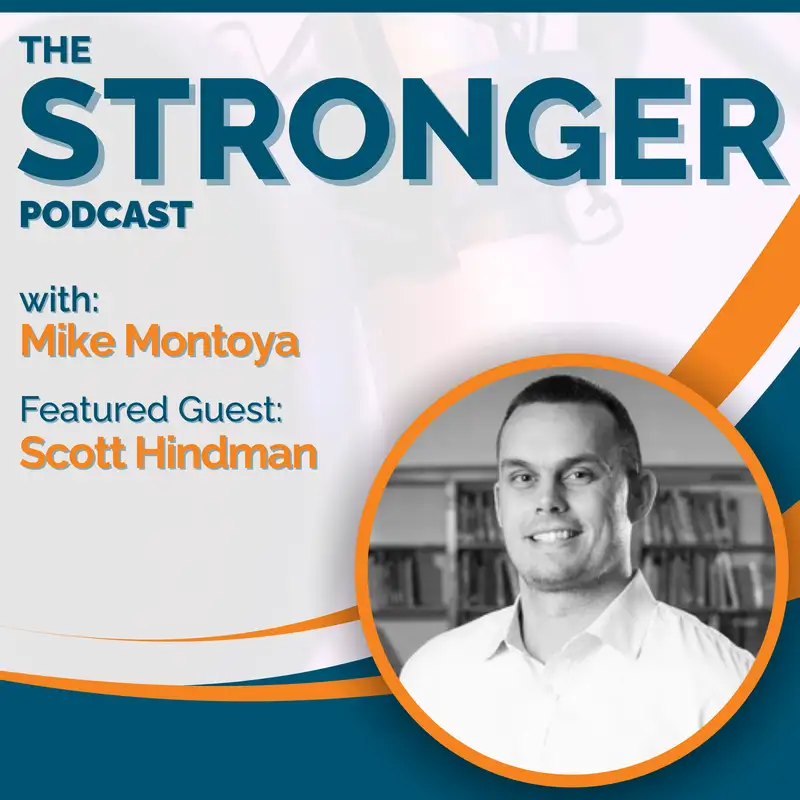
Stop Chasing the New: How Consistency Builds Charter Schools That Last with Scott Hindman
Welcome to the Stronger Podcast. Each week, we have honest conversations with education and social impact leaders about their leadership and career journeys. We talk about their origins, inflection points, and the work that they're doing today. The conversations are honest, human, and practical. If you're here for real stories and real takeaways, you're in the right place.
Mike Montoya:Let's jump in, and let's get stronger together. I've known Scott for about fifteen years, and this episode is a real look at what it takes to build lasting change. We talk about how baseball teaches resilience, why education work demands long term leadership, and what Excellence Schools New Mexico has learned about a decade of growing high quality school options, now teaching thousands of students across the state. Let's jump in. Before we dive into today's conversation, I wanna give a quick shout out to podcaststhatmatter.com.
Mike Montoya:Their mission is to help impact driven voices get the visibility they deserve. If you want to share your message with the world, check out their website in the show notes. All right, good afternoon. Good morning, everybody. I'm here with Scott Hindman.
Mike Montoya:He's the Executive Director of, let's just call it, Excellence Schools in Mexico. Is that the best way to describe it? And he has a whole life that we're gonna talk about here. So we're gonna jump in. Scott, it's great to spend time with you.
Scott Hindman:You too, Mike. It's good to to see you on video again. Sounds right.
Mike Montoya:Well, Scott and I spent a lot of time mostly on Zoom calls. We live, but we won't live out west. So just for our listeners, because they don't know you yet, right? But like, let's ground you, like, where are you at? Right now, you're someplace and then also, like, where do you basically operate your life?
Mike Montoya:Then also, like, then we're gonna jump to, like, where you were born, because this is, an important piece. So let's let's start there.
Scott Hindman:Cool. Yeah. So I'm based in Albuquerque, New Mexico, and have lived here. This will be the the tenth year that I've lived here. So I have spent time in every part of the country, I think almost every part, but the Pacific Northwest, and we ended up in the in the Southwest.
Scott Hindman:And I helped co found and still lead an organization called Excellence Schools in Mexico, and our goal is for every kid in our state to have access to a great public school.
Mike Montoya:Which is a challenging endeavor because it not only does it have to have access to a school, but a good school, right? Functional school that actually provides the things they're supposed to do, right? Which is elusive in some parts of The United States, right? It's like hard to find great opportunities for kids. And this is why we do this work together.
Mike Montoya:Right? So tell me, let's start with the grounding story, because I've known you for a while, probably fifteen or so ish years, right? Maybe longer.
Scott Hindman:I think that's exactly right.
Mike Montoya:Yeah. Maybe closer. I I can't believe we've been in Mexico for ten years, which is unbelievable, actually.
Scott Hindman:But
Mike Montoya:so where where where are your roots? Where did you grow up? What kind of what was your school experience like as a as a kiddo?
Scott Hindman:Yeah, so I was born and raised in the Chicago Suburbs, Northwest Suburbs, in a town called Palatine, which I think the best way to describe Palatine, it's it's like every other, you know, kind of typical suburb. Right? The suburb that you would see in a a movie about high school kids. And my mom was actually a teacher. She was a special education teacher, and then she moved up and became a principal and then worked in district administration at the district that I went to as a kid.
Scott Hindman:So I attended traditional k 12 public schools, you know, all the way from kindergarten through twelfth grade. And they were good, right? Or I thought they were good. Went to the the three thousand kid public high school with all of the sports and parties and the and the clubs. They just had a wonderful experience.
Scott Hindman:It's funny because my my wife grew up in New Mexico, which is one of the reasons why we ended up here. And she went to a private school that had about a 150 kids in her senior class. And and I just I I always tell her, I said, I I can't imagine that because the people I sat next to at graduation, didn't know. Right? But Yeah.
Scott Hindman:Wouldn't have traded it for the world. I loved it.
Mike Montoya:Yeah. So comprehensive high schools, when they work, right, can be amazing experiences for kids. Amazing. Yeah. But you do I I remember something similar.
Mike Montoya:Think I sat next to, I don't know, kids, I didn't know them in graduation. I knew, like, the people in the other row, because they teach you alphabetical. So it gets like a whole thing. But yeah, and in schools were like, when it when it works well, it goes pretty well, right? It can give you opportunities.
Mike Montoya:And then you well, so then you got you play baseball, I remember this, this is a piece of your story. So did you like, did you really aspire to be a baseball player? Or was that just like it happened because you were successful at doing doing the sport? Like, you just enjoyed it?
Scott Hindman:You know, I I loved it. So I, you know, I started playing baseball when I was five, and I was lucky because I'm tall and have big shoulders and big legs, big butt, right, which is a good pitcher's body, and I'm left handed. So I started off with a lot of advantages. And, you know, where I grew up, it was it was fertile baseball territory, which is interesting. I I was listening to a podcast actually a couple of weeks ago, they were talking about why a town in Vermont had produced so many Olympic Winter Olympic champions.
Scott Hindman:And and there are and and, you know, and there are a lot of reasons for that, but I I think I was fortunate. I grew up in a place where baseball was actually a really big sport and played through through high school and was drafted out of high school by the Cincinnati Reds. And I was I I was drafted drafted late, so I didn't sign because it it turns into a money negotiation. And I'd committed to go to play baseball in college at Princeton, just far from home, but somewhere I wanted to be. And, yeah, I was drafted again after my junior year of college.
Scott Hindman:If you play at a division one school, you have to wait three years to be drafted again and play minor league baseball for three years. And, you know, I did love it. I think by the end, was burned out. I got I got hurt, which didn't help. But as I've I've told many people about my experience, the funnel narrows very quickly once once you get to that level of talent.
Scott Hindman:And I played I lived with and played with guys who had long careers in Major League Baseball. And, you know, I was I was good all the way up until that point. And when you start playing with some of the best people in the world at that sport, the talent difference becomes becomes very obvious. And, so I said, you know, I'm having fun, but I am not at the level of I'm not at the level of of somebody who who makes Major League Baseball a career.
Mike Montoya:Well, I mean and I appreciate the, like, kinda humble approach here. Right? But there there's a story about, like, how much commitment and time, right, this level of athleticism requires, right? And yes, I think it's under underspoken. But as you said, the funnel, I mean, it's like, The United States can produce incredible everything at the scale, right, that it does, and it produces amazing athletes in the professional sector, right, for sure.
Mike Montoya:Do you do you have a because now that you've reflected, it's been a while, right? It's been twenty years since you were playing professionally, right? So if you look back on that, like, were there like a life? Is there any lessons from that era, right, that you're like that, That you haven't picked on for a little bit, I know they're out there?
Scott Hindman:Yeah, it's I mean, I think you hit on it. It's work ethic in following through on things and, you know, luck, right, the how you were born, and then your natural talent will will take you to a certain point. But, you know, the the minor league baseball season, it's it's similar to the major league baseball season. You start spring training in in February and March, and when you are working every day for seven six, seven, eight months, so there are really no days off. Now you're playing a sport, so it's different than going into an office for ten hours every day.
Scott Hindman:But, no, I mean, the the the persistence and the ability to work on your craft. And when you run into an obstacle, you know, to get through that obstacle, I think is something that, you know, I ended up in investment banking after that, and that's an industry that likes to hire a lot of athletes. And I think they like to hire a lot of athletes because they know those people can be worked, and they know that they can be coached, and they know that when things go wrong, you know, you'll come back from that. Baseball is a game of failure. Right?
Scott Hindman:Like, you get home run tid off you. You walk guys, you get booed, and it and you have to to turn that around and and be successful on that next pitch. And I think one of the things that I found different about working in education actually is that there aren't a lot of people who are athletes. My wife and I talk about this a lot. She was a college athlete.
Scott Hindman:She was a national champion swimmer, actually. And it's it's I have my ideas about why it doesn't attract as many folks as as other job sectors, the people who have that background. But, yeah, it's been surprising to me because I used to work with all athletes, and now it's it's a little bit more few and far between in this work.
Mike Montoya:Well, I mean, it's it makes that it's just I mean, now I'm super curious. I want to get into that question about like, why are there less folks that are athletic in leadership roles in public school settings? Like, I hadn't really thought about it, honestly. So it sounds like you guys have chatted.
Scott Hindman:Yeah. I've I've noticed it. I I guess because I came from like I said, I came from banking where, I mean, every single person had played I I shouldn't say that. Like, a lot of people had played sports. I mean, I I think I think it's sports is so much of, like it's like you eat what you kill in some sort of ways.
Scott Hindman:Right? Like, if you work really hard and you are willing to put in an effort that nobody else is now, you know, a lot of times your talent is still gonna come up short. You're you're you're you won't be as as good as you need to be. And I think in the nonprofit world, sometimes I think in education, sometimes there aren't those rewards, right? Like, you could work a lot and there are still limits to how much you can make to, you know, how much how much you can achieve.
Scott Hindman:I think I think there's a lot more regulation's not the right word, but there are more barriers than there are in the in the private sector to kinda moving fast and, you know, really being entrepreneurial. And I think to be successful at sports, like, you have to you know, like I said, you you have to be be willing to push forward really, really fast. And it's it's more challenging to do that in a field where I think deservedly so, like, things should move slower. You're talking about about kids' lives, about people's lives. The the mistakes seem like they're a lot bigger if you fail.
Scott Hindman:So yeah, I think that's been my hypothesis. I don't know if it's true, through Broad, where we met, had talked to folks who had done military and athletics, the mindset is just a bit of a different mindset. And I know people have felt not like that they don't belong or that they shouldn't be there, but like what they were used to is not, you know, what they were doing when they went into the nonprofit or education sectors.
Mike Montoya:Yeah, I mean, the incentives are really different, right? For sure.
Scott Hindman:Yes. Very different.
Mike Montoya:The are in this altruistic kind of environment, right? Where like we're achieving things for others, right? Or with others and children in particular, right? Like, you don't feel the feedback. And so it's a different, I call it, I think it lights up different parts of your brain, frankly.
Mike Montoya:Dopamine and things like that, they drive athletes and things like that. It's a really different experience for working with kids in schools. And it's almost like an intellectual exercise by purpose, right? In some ways, but it's it doesn't reward us in the same ways as adults. Right?
Mike Montoya:So it's a I think you put that really well, I hadn't thought about it
Scott Hindman:in that way. Right. But like the immediacy, right? The immediacy of the reward versus having to think in more of a long term manner. And I don't know, when I think about the jobs and finance that I used to do, right?
Scott Hindman:Like, I mean, it was a quarterly. It was a lot of short term thinking, there wasn't as much long term thinking that we have to do here in terms of legislative. We just finished a legislative session here, legislative cycles and grant cycles. We're talking, you know, years in some cases, as opposed to, you know, I'm gonna know if this works two months from now, and we'll be rewarded very well if it does.
Mike Montoya:Yeah. Yeah. And that yeah. The feedback loop comes much more rapidly in the finance sector in particular. Right?
Mike Montoya:Or especially or in sports. Right? Like, you can lose a game in minutes or whatever that is. It's a feedback that's almost immediate in that regard. And then you do it again the next day, again, From I a new game think this is worth exploring because one of the challenges, of course, is in the ed sector that we work in is that how do you maintain momentum and sustain excellence over a generation, over twelve to fifteen years of a life of a kid in a school system?
Mike Montoya:That's an enormous task. And without getting stale, the issue is that you can kind of keep great people around, but their capacities change over time. And it's hard to keep them engaged and fresh, so to speak. But brand new teachers are also a challenge because they come in with lots of enthusiasm, but then lots less experience. And so there's like a sweet spot, right, for teachers about like, hey, your best career years are after three to ten years, right?
Mike Montoya:And then it changes, right? And there's not as much opportunity to kind of become successful some other way. You kind of become a better teacher. And then it's a craft, right? It's a That's craft life,
Scott Hindman:right. That's well put.
Mike Montoya:Yeah. Well, we all look careful about straightening the teacher world because I've not been a teacher in a significant way, right? But having great teachers is like the big challenge of school systems, right? And maintaining them and supporting them. So tell me a little bit about let's go into like, you've been kind of part of these, like, I call it almost upstart movements in the ed space that you've been attached to.
Mike Montoya:So you did some work in Tennessee during an important era and then over to New Mexico. So just tell me about like what's it mean? Did you it sounds like almost like this is a great fit for you, given your background experiences to be in these like, kind of environments where like, it's a little bit unknown, there's lots of potential, and there's lots of energy. Is that kind of how would you characterize these two things?
Scott Hindman:Yeah, I think that's a great way to put it. When I think back even further than that, like, don't I don't know that I ever thought of myself as entrepreneurial. But when I when I started in banking, was at JPMorgan, and that was in 2005, which is right around the time when renewable energy was was really picking up and getting big. And I was I was in a general analyst pool, and I got on a it was a it was an IPO for an ethanol company. And I guess I guess the the team that I was on did a did a good enough job on that and helped start, you know, a lot of the renewable efforts there.
Scott Hindman:So that was something that was entrepreneurial even in a, you know, a a fortune 50 company. And then then left that job and went to go work for a company. We had worked a little bit on the deal, but that that had gone public, I don't know, probably six months before I joined. So I joined a solar panel manufacturer going, going, you know, into the renewable energy space because I'd been working on that. So same thing, like joined a company right after it had gone public.
Scott Hindman:Right? They needed they they needed they needed to hire a lot of junior people because it was a lot of senior people. They needed people to do the the day to day work. So I think that, you know, when I I I left the private sector and and went back to school, and when I was leaving, I had had two really good and interesting entrepreneurial experiences in the private sector and said, you know, like, I I I don't know what's possible in education or nonprofit. Like, it's there's there's not a lot of upstart stuff in that that, but I was attracted to it, and that's how I found the Achievement School District and, you know, through through the Broad residency, which was, if not the best thing I've done in my career, you know, in the top one to three, and was attracted to something I joined the year after it launched, and I was interested both in the startup phase of it, and also, you know, we talked about incentives earlier, right?
Scott Hindman:The Broad Foundation was offering incentives to get people to Tennessee, which was I would have never thought of going to a place like that had somebody said, Hey, there's important work here going on, like, we need good people there. And, you know, one of the some of the best advice I got in business school was to to to pick your your boss and not your, you know, not your job or not your organization. And that was being led by by Chris Barbic and Ash Sohal, both of us. I knew Ash, and I didn't know Chris, and and I spent some time getting to know them. And I was like, I don't I don't really care what the job is, but if I can go work for these two people, like, I'm I'm in.
Scott Hindman:Right? And that ultimately ended up being a great, great decision because I I learned so much from from both of them, especially Ash, because I was directly reporting to Ash, and, you know, they're friends to this day. I'm gonna see Chris next week, so it's Like, Tennessee. Yeah. Something that's continued through my career.
Scott Hindman:And then when I had the opportunity to launch Excellence Schools New Mexico, you know, I had no idea what I was getting myself into, but I at least felt that I had the, you know, both private and nonprofit public sector experience in doing something similar. So knew that it would be a lot and that, you know, a lot of things would go wrong, but that I had done that job. What was really attractive about that is, you know, and it's actually, it's one of my frustrations about philanthropy sometimes is I'd I'd spent time in an investing role, right, I'd spent time, we were looking at buying companies and making markets and and, you know, had gone to business school, and the skills that you learn doing that at, you know, a bank or a startup or in class, you know, at a, at a, at a, in a, in an MBA program, they're not, they're not that much different from, from what you need to be doing in the nonprofit sector, which I think, you you know, a lot of that was probably the theory abroad, right, was that, like, these skills are translatable. And so what was really exciting to me about this job was I got to take everything that I had learned, you know, doing that for private companies or doing that earlier in my career and apply it to something that I was more passionate and interested about.
Scott Hindman:And that time at DASD was the time that it really got me introduced to schools and how schools work, and our office was in a school. I was the CFO and COO of a five school network within the ASD. So really got to understand, like, you know, how principals think about their jobs, how schools think about growth, like the resources needed to be successful. I was able to take that and say, you know, can I apply a lot of that work to hopefully helping out in New Mexico? So it was a perfect fit.
Scott Hindman:I guess ten years later, that's probably why I'm why I'm still here. Right? Because because I enjoy the work so much.
Mike Montoya:I'm going to pause the conversation here for just a second to talk about books that matter. Every entrepreneur or leader needs a book that elevates their business, builds their credibility, and makes an impact. If you've got more money than time, a ghostwriter can help you build your story. If you've got more time than money, a great book coach can guide you step by step through the writing process. If you've already written a draft, these folks can save a lot of trouble and money by shepherding you through the publishing process.
Mike Montoya:Head to booksthatmatter.org and get the custom support you need on your book idea or manuscript. Well, I mean, and it takes a special kind of, like, individual to both be interested in that environment, like a super uncharted territory in some cases, right? It's like undiscovered in some ways. It hasn't been done before until the model is being literally created while you're doing it, right? And then to like, I call it adapt with the success, right?
Mike Montoya:As success comes, right? Or just as things change in the circumstantial environment that we all operate in, right? Those things, you need to be highly adaptable, right? And be okay and actually enjoy like, this is different than I thought, and here we go. That kind of attitude is really So, I think there is some startup There's a whole bunch of entrepreneurial culture, right?
Mike Montoya:But the grind it out piece is one piece of it, but also like the flexibility of thinking and like, taking it seriously, but not getting crushed by it, right? Is another piece of it. And I think that's what I know about like, your jobs and your career, right? And remember that I was the guy that put the incentive right on the ASD thing. So that's my fault that you went there, I think.
Scott Hindman:No, as I've told you before, I owe you a lot. I owe you a lot. I would add I would add to what you said is right. And I think a third piece, and this was something that made this job so attractive and has kept me in it for as long as I have is having having like those supporters and mentors. And when I when I moved to New Mexico, there there had been you know, I wasn't the one that came up with the idea.
Scott Hindman:I wasn't the person who did that. There there had been work on this, and they were they were trying to find somebody to to to lead it. And, you know, my wife is from here. We'd spent time here, but never worked here. And, you know, I had, when I got here, a group of five to 10 people who, you know, they were like my guides when I got here, right?
Scott Hindman:And they would explain to me, hey, here's why this is happening, right? Or here are these people you need to talk to, and here's what they're gonna tell you, but here's how you should respond to that. And a lot of those folks became my founding board, and I'm proud to say, like, a lot of them are still on the board ten years later. My founding board chair has been my board chair for ten years. You know, we've lost two board members over the course of ten years.
Scott Hindman:So I think people, I tell them this all the time and I mean it is, you know, when you have that support, they hold me accountable, they do a very good job of making sure like, you know, they they we have this vision that needs to be executed, and they will make sure that it happens. And if it doesn't, it's it's on me. But they also provide all the support in the world. And and when you're starting something new, having those people who I mean, they they a lot of them had done it before, and they really helped clear a path here to making this a, you know, a sustainable job and something that that would work because I could couldn't do that on my own. I always wondered what the point of a board was.
Scott Hindman:When I did a report to the board, I was like, why do companies have boards? Or why do nonprofits have boards? What do they actually do? And now that I have one and have a great one, I'm like, wow, that's been one of my biggest learnings and I'm still not great at it. There's still a lot I can learn about how to maximize, you know, the people on that board to help us achieve what we want to achieve, because, you know, these people wanna work, right?
Scott Hindman:They don't wanna just come into meetings and talk, like they actually wanna do stuff to help us be successful. So, going back to sports, it's like having a great set of coaches. And that's how I look at these folks. I mean, they have done everything and anything possible to try to help make this work.
Mike Montoya:Well, what you're talking about, I think, is an important piece to pull on here. This thread, there's an individual effort involved in all this work. But there's also the context is you can't do it alone, and you need people who are in it for the long game and for the right reasons, for reasons that are compatible with the goals that you're deciding to achieve. And it's almost like you can't imagine all the synergies that are necessary for this to happen. But once you put the human people together in the room with the vision, then it can start to turn into a thing.
Mike Montoya:And so let's talk about success here because Excess School of Mexico was kind of like an idea and just in its fledgling stages when you joined them, like 2015 or 2016 roughly.
Scott Hindman:2016, yeah.
Mike Montoya:So ten years ago. Tell me about the journey, like what, where are you now? Like what are some of the bright spots in terms of achievement? And I think I want our audience to know that like, hey, great shit's going on in New Mexico. But it's, like, an a little bit of untold story still.
Mike Montoya:Right? Like, not a lot of people know about it. Right?
Scott Hindman:Yeah. It's, you know, when you're surrounded by Arizona, Colorado, and Texas, it's sometimes hard to get attention, but I do love it here. Now, so we launched in 2016. And as I said at the beginning, our objective was how do we get more families access to a really high quality public school? And there are a lot of strategies you can take to get there, right?
Scott Hindman:There are a lot of ways that you can try to create high quality public schools. But the way that we did it was, you know, can we launch great new charter schools and expand those charter schools that are working? So that has been our strategy for the last ten years. I think when we started, it was really hard to open new schools and to get to get good schools to grow. And I think at this point, you know, when when our when all of our growth has been when all of the growth that we've funded has been built out, because schools are still growing, we have about 14,000 seats that are authorized, which there are only there are less than 300,000 kids who attend public school in the state.
Scott Hindman:So it's it's not an insignificant percentage of kids in the state who are attending a school that, you know, is in our in our portfolio partner schools. You know, we get to work with talk about entrepreneurs, like, you know, I I get to work with a lot of great entrepreneurs, and those are school leaders. You talk about I I feel like I have the easy job. The hardest job in the world is to start and and maintain a really good school, especially those that serve kids who are furthest from opportunity. And, you know, we work with 15 to 20 schools now, and I can never do the job of those people who, you know, are in it every day.
Scott Hindman:Yeah. Managing teachers, dealing with parents, you know, getting getting kids to be their best. And and I think that's what I really enjoy most about my job. And the outcomes that they've been able to produce, we we're lucky in New Mexico. We have a growth measure here.
Scott Hindman:Basically says, like, are kids learning faster, slower than they should be based on, you know, how similar kids perform? And, you know, 96% of the kids in our schools are growing faster than expected. So it's like, how do we know that it's working? Well, we have a very good metric that says that kids are learning faster in the schools that they attend that we have funded than they otherwise would have going, you know, to a traditional district school or a different type of charter school. So I think all the credit there goes to the people who are doing that day to day work, and we spend a lot of our time trying to figure out like, how do we create a system for those operators to thrive?
Scott Hindman:And that's really the next big step of our work is, you know, making that system better so that those who are doing good things, like have even more opportunity to do so, because I'm fully convinced, like the constraint, not just in New Mexico, but I'd say especially in New Mexico, because it's not a lot of, you know, it's a small state, Not a lot of people move here. You know, a lot of people leave, unfortunately. It's it's adult leadership. Right? So when we do find those great adult leaders who have the capacity to do amazing things, similar to how Silicon Valley thinks about great entrepreneurs.
Scott Hindman:It's like, how do we resource these people in a way that they're able to maximize their potential with a lot of support from people who want to cheer them on and be their biggest boosters? Well,
Mike Montoya:you're anchoring around the one of the more critical, like the critical job. A school leader is essential and important, and there's lots of data and research that points to this, and the stability of the learning environment over time is a real gig. Starting them from scratch is like a special muscle, right? For sure that can be then I call it bridged and those folks can like help these schools get to full, you'll have like 5% market share rate roughly when you get to full capacity or so, which is like a like a that's a dent, right, in the in the thing.
Scott Hindman:Yeah. And then Albuquerque, even bigger market share. You know, a third of the kids in our state go to school in Albuquerque, about a quarter to a third. So so a lot of our work is focused here because that's where the most need is. And, yeah, that's where the most kids are.
Scott Hindman:Yeah.
Mike Montoya:So that's where that's so bigger market share. And the the theory of action here, I think, and just so people can understand the pain in the picture, right, is that once you start, I call it disrupting a little bit of the effect of of the standard school experience, right, then it grows attraction, where parents want more of that and city leaders want more of that and that it can then expand with that in mind. And then basically, there is an effect on every single life of every single kid going through these schools. So that matters, right? Probably even more than the total percentage, right?
Mike Montoya:But like, if you can shift the system's way of thinking about it, so everybody then knows, those schools are doing amazing things with the same kids that we have. How do we get better at that? Is that conversation starting to happen now? And what's the tenor of that now on the larger policy side?
Scott Hindman:Yeah. So I'd say it's complicated. And I'd start by saying, like, what you said was right, and we are incredibly lucky to work with Citi Fund and Ethan Gray, who's our partner at Citi Fund, and and they have some really good research on, you know, as quality charter market nonprofit school, you know, they they can be nonprofit schools in places like Denver. As that grows, the overall system improves and gaps are closed between subgroups of kids. So so what you're saying, like, is right.
Scott Hindman:Right? Like, like, like, is that is happening for students in other where market share is high enough to really create change. I think in New Mexico, you know, like, we don't have a we have a good relationship with our school district here. I think we have a superintendent who, you know, wants to do the right thing and has accomplished some really good things early in her tenure, and they are doing, you know, like a lot, the first art school in New Mexico was a charter school, the first IB school was, so like that is happening. I think what's also challenging about here, and something that most people don't know about is like per pupil funding in New Mexico is really high, and it's high because of oil and gas.
Scott Hindman:It's the second largest New Mexico is the second largest oil and gas producing state in the whole country right now, and that has created a lot of money in the system to where even though districts are losing enrollment, the state is losing enrollment, budgets continue to go up. So I think where people are sometimes more forced to change or forced to fight back, right, because you can change and you could say, let's adapt to what's working and try to get that for more kids. Or you can look at the people doing that work and say, how do we stop that? Right? Like, how do we how do we not have more of that because they're competing with us?
Scott Hindman:And we've seen both of those reactions in New Mexico. But I think what has prevented, this is at least my theory, and it could be right or wrong, but what has prevented more of that sharing is that, you know, when districts lose students, that hasn't impacted their budget yet, right? It hasn't caused them to compete to get those kids back because it hasn't affected their bottom line, staff hasn't been fired, programmes haven't been cut. So I think we're in somewhat of a unique situation in this state, whereas, you know, in other places like after the COVID money ran out, the federal money ran out, like that created a big cliff. And here, that still created a cliff, but it created less of a cliff, you know, to really, you know, make schools compete.
Scott Hindman:Now, I'd say a lot of people don't believe that that competition is good, right? Would Yeah, I think there's a nuanced way to think about that. But I mean, we've seen at least in our district where they have done, they just expanded a dual language school here, because a lot of kids wanted to be there and they were losing those kids to charter schools when they weren't attending that school. They so they increased the size of that school. Yeah, it's a great school.
Scott Hindman:And you know what, like, we agree with that 100%. Because, because our role isn't just to make the charter sector great. It's it's like the goal is for all kids to be in a, you know, in a better spot for them so that this whole state can improve. Right? And I have a you know, even though I wasn't born here, I'm I'm not from here.
Scott Hindman:I've had a lot of people here, you know, be great to me to the point where like, this is something that is important to me because we want to be here forever, and we don't want to be in a place that isn't thriving.
Mike Montoya:Yeah, for sure.
Scott Hindman:You know, it's not like Well,
Mike Montoya:it's such a it's such a like, it's a fine line to to needle the thread, right? Like like, humans and institutions are funny like this, right now, it's gonna talk about like public in general, like, not even nailing on traditional public schools, right? Like like, They do their jobs as much as they're intended to do. And people don't like to change unless there's some pain. It's not an individual's choice, but institutions have inertia and they sit in the thing that they've achieved.
Mike Montoya:But we have examples of institutions like the great Ivy League schools of our country just provide excellence because that's what they're used to, Not because they're doing so many special and particularly innovative. And there are pieces obviously going on, but they just provide great stuff because they just do it all the time. And that's what they're used to. And so when we have like an okay system, right, then it just kind of does that, because that's how it's built. And it's just kind of like in the almost like system, the nature of how it exists.
Mike Montoya:Right. And so changing that stuff requires a lot of energy. Right. And sometimes it requires pain. And I don't think New Mexico schools are necessarily shrinking in the same way that some of the big cities are in terms of enrollment.
Mike Montoya:People aren't leaving necessarily in droves, but that hasn't happened yet. I was talking to Atlanta and they're closing 27 schools in the city of Atlanta.
Scott Hindman:Wow.
Mike Montoya:It's like a real number. It's not the whole system. It's like 10%, right? It's And each of those kids, again, matters, or each of those lives is being affected. But it's like the size of the systems are so over informed, right, that it takes a lot to get them moved.
Mike Montoya:Right? So
Scott Hindman:Well, I mean, I I'd say you hit it right that it's the system and not you know, it I think people who don't work in this or who might come from a private state, they blame the people. And it's and I don't know. I don't know anyone who wants to show up to work to just be okay, right? Or to not be I mean, are there are people like that everywhere, right? But that is a very small number of people.
Scott Hindman:And I think, yeah, it really is thinking about the system because we work with great people in our, you know, in Albuquerque public schools here all the time, right? And they are showing up because they believe in the exact same things that I do. But, like, there are different constraints that they have to deal with that we don't have to deal with. And and I think what I wish more people would look at would be like, hey. For the things that are going well, it's it's a lot of it has to do with leadership.
Scott Hindman:I think what I, what sometimes frustrates me about our work is, is people will attribute it to luck, some of it has to do with luck, but it's also like, no, it's great leaders who have worked really hard and they, and they under underestimate how important that is. But like, let's also look at the system to say, are our best people here who want to do great things allowed to have the runway and freedom to do it. And and I don't know, you know, that's always the case. I've worked in a I did an internship in a big city school district one year, and I actually really enjoyed it. I had a great boss, but I could also see the constraints of, you know, what this person was trying to do and how they had to kind of tailor their plan and their response in a way that they didn't want to do, but, like, that's just how things worked.
Scott Hindman:I
Mike Montoya:just wanna say that if you're a leader, entrepreneur, or business owner who needs some support, there's an easy way to get a think tank behind you and your vision. The Genius Discovery Program at Thought Leader Path is like having your own one on one incubation and acceleration program. They'll help you develop an approach based on your own story and your plan for impact and offer the tools and thought leader assets needed to really amplify your message, including launching a podcast like this one. If you're ready to stop grinding in the dark and start making real impact with the right support, check out geniusdiscovery.org. Put kind of untouchedly caps kind of get put on the our lids get put on potential, right, in regards.
Mike Montoya:I mean, in some ways, we also don't want schools that are just inventing stuff and experimenting with children is a terrible thing. Exactly. So the fact that The US has achieved what it has in terms of public education is remarkable on the planet, right? And at the same time, have, obviously, if we compare ourselves to other places on Earth, we have lots of bright spots, but lots of things that we can do better. And I think that reflection and just acknowledgment is one of the first steps.
Mike Montoya:It's almost like admit that there's work to be done. And that people can do it if they're, again, steered in some ways. I'm going to shift this out and pull this up a little bit just to talk about leadership, getting back to these lessons that you're learning. One thing I'm hearing from you is this humble acknowledgment of other people's involvement in success in your current experience. Is there anything else that you rely on in order to, again, move this, I guess, basically create the movement and move it forward?
Mike Montoya:What kinds of things are you on a regular basis in terms of routine and practice that people could pick up on and say, hey, these kinds of things help. Tell me about that.
Scott Hindman:Yeah, I'll be honest, think I don't know that I have any great insight. But I think what really works is just being consistent. And in showing up and being responsive and doing the things you're saying you're gonna do. And I have found that to be surprising, like, like harder. Like, that's not as easy for people as you think it would be.
Scott Hindman:And I think we, I, you know, there's, there's always pressure, especially in our work, you know, to be more innovative, right? Especially when you're applying for grants, what are you doing that's different? Or like, what is this new thing that you're going to change? And I think there's just a lot of value in, you know, we've been doing the same thing for the last ten years. I think like we do it really well in certain ways.
Scott Hindman:Now, you know, as we've discussed before, like what gets you there isn't what's going to take you to the next step, right? So we fully realize that. But, I mean, I think the way that I look at how do we how do we keep this going is, you know, to be very clear about what we're all about and, you know, to to to show up and do what we say we're gonna do. Because our our success, it's dependent on the success of the schools that we fund, and our funders' success is dependent on our success. Right?
Scott Hindman:So we we kinda sit in this middle spot where we have to manage. Managing up and down is not isn't the right way to put it, but we there are a lot of folks who have an interest in seeing this succeed here in New Mexico and many other places, and we are depending on a lot of other people to create that success for us, so I think what can be I've talked about this with folks here before, is like, what can be really hard is we just don't like, there are so many things that are out of our control, but what's in our control? Well, if somebody needs help, we can follow through on that with them. If, you know, if we need to be thinking about doing something in a new way, like, we have the, you know, the team who can support that. So I I would hope that's what the people that we work with would say about us is that, you know, we do the what we we say we're going to do.
Scott Hindman:We're clear about what we're after, and we're dependable. And it's amazing, I guess, how far that will get.
Mike Montoya:It is kind of amazing.
Scott Hindman:It seems so simple.
Mike Montoya:It seems like so simple, right? Like, still like, oh, they said this thing, I believe them, and then they did it. So I continue to believe them. And that is almost like that's the I know, I feel like we learn that as kids that I don't commit to stuff that you don't know how to do and and don't and don't don't not show up for the It means the people who I work
Scott Hindman:I I rely on the most here. Like, there there are certain people I know that my everyone on my board included. Right? But also some of our partners where if if something has to get done, like, you know that that person is going and that organization is going to do it. It's going to be done well, and that just creates a lot of a lot of trust.
Scott Hindman:And, you know, similar to to playing baseball, right, like, you were always trying to get better, like, little bit every single day. Well, right. Yeah. We've talked about that in our event. It's like, how do we get one win a week?
Scott Hindman:Like, how is something just that that much smaller, that much better? And and we all I also realize we're in a fortunate position to do that because, you know, as I said, we rely on our funders. We we've had one big funder since the beginning, the Daniels Fund out of Colorado, who has been amazing. And, you know, with with the new ones that that we're lucky to have as well, like, they show consistency and a long term orientation towards things, so it makes my job a lot easier when we have the luxury of just trying to get, you know, that win or that 1% better and don't and don't feel that pressure. We do feel a lot of pressure, but I don't feel that pressure to say, hey.
Scott Hindman:In three months, if this isn't working, like, you know, we don't have an organization anymore. We we get to work with people who are very smart in terms about how they think about change in in leadership, and, you know, that would be my advice for somebody leading a nonprofit is, like, who are your funders, and and and how do they think about the world? And we've gotten very lucky that we work with people who wanna see things happen very fast because that keeps the pressure on me, but they also when things are going well, they're not going to shift their strategy. They're gonna say, how do we do more of this? I think that's a fairly, yeah, that's a fairly unique position to be in.
Scott Hindman:Well, and that's a note to
Mike Montoya:all of our funder friends who are going to hear this somewhere in the world, right? It's like the consistency of showing up and supporting through the, call it, strategic shifts that are necessary and continue to hold accountable, but also being like a it's like a strong guide and supporter versus and back to the coaching and the parenting and the ways that we treat each other, is steadiness matters a lot because these problems didn't happen, they didn't just show up in our society.
Scott Hindman:That's right.
Mike Montoya:Sometimes we get things like COVID happens and it's an emergency. But these things have been in this is like the journey of American life, right? Like getting better from literally creation of nothing to something extraordinary takes a lot of time, right? Hundreds of years, right? And it's a life's work, right?
Mike Montoya:For sure. So.
Scott Hindman:Yeah. Yeah. No, we're we're we we realize we're in a very unique position. We try to I think expressing gratitude to people is important, especially when you depend on a lot of people to that to to help create your success. We we try to do I'm sure I could do it more, but to let them know that, hey.
Scott Hindman:This this is this is making a difference, and and and we appreciate it because I think that's why we've been able to keep our partners and our board members and our folks here for so long is because they feel like they're really part of a team. People want to be part of team, They want to be part of something that's maybe more sustainable.
Mike Montoya:Yeah. Well, as a as a native Coloradan and a former, I call it my family was in New Mexico before it was a state. I'm playing my playground appreciative of you and your and your wife, right, and for choosing that that your home and your place to to invest your energy and time. And you can share it. We'll share this with you and your you can share it forward to your funders.
Mike Montoya:We'll be happy to share your story. I mean, I know that they hear it, but I think I hear you. I'm being appreciative and aware of that. And that's like a bright spot for sure for the day. Scott, thank you for your work.
Mike Montoya:I'm glad that we met in this weird way that we have, but it's been great to be part of your life and I'm excited to see where it goes. Okay?
Scott Hindman:Yeah. Well, Mike, as I told you before, I can't express enough gratitude to you because you were the one who got me into all of this. So it's wonderful fifteen years later, because it has been fifteen years. It's been exactly fifteen years to to still have this this connection and and and, know, you've helped us. You've helped me personally, but you've also helped our organization so much along the way.
Mike Montoya:So so
Scott Hindman:thank you for that.
Mike Montoya:I need to work with you. That's exciting. Thanks for the content. Great. We'll talk to you soon.
Mike Montoya:Okay?
Scott Hindman:Alright. Thank you.
Mike Montoya:What stays with me from this conversation is Scott's belief that real progress comes from showing up consistently, doing what you say you'll do, and building the system that enables great leaders to thrive. From charter school growth strategy to the roll of boards and steady funding, this is a reminder that improving schools isn't about blaming people, it's about building conditions for success. Thanks for spending time with me. Thanks for joining us and tuning in today. To find out about other Podcasts That Matter, visit podcaststhatmatter.org.
Mike Montoya:Thanks for listening to The Stronger Podcast. If this conversation inspired you, we invite you to follow the show and share it with someone who's on a journey to become a happier and healthier version of themselves. Links and resources are in the show notes. See you next Thursday, 9AM eastern time. Have a great day, and stay strong.