From Classroom to Movement: How Dominique Lee is Reshaping Education
Welcome to the Stronger Podcast. Each week, we have honest conversations with education and social impact leaders about their leadership and career journeys. We talk about their origins, inflection points, and the work that they're doing today. The conversations are honest, human, and practical. If you're here for real stories and real takeaways, you're in the right place.
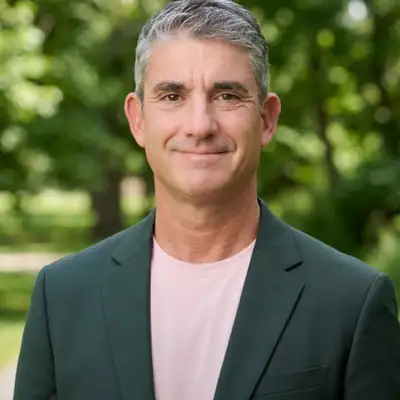
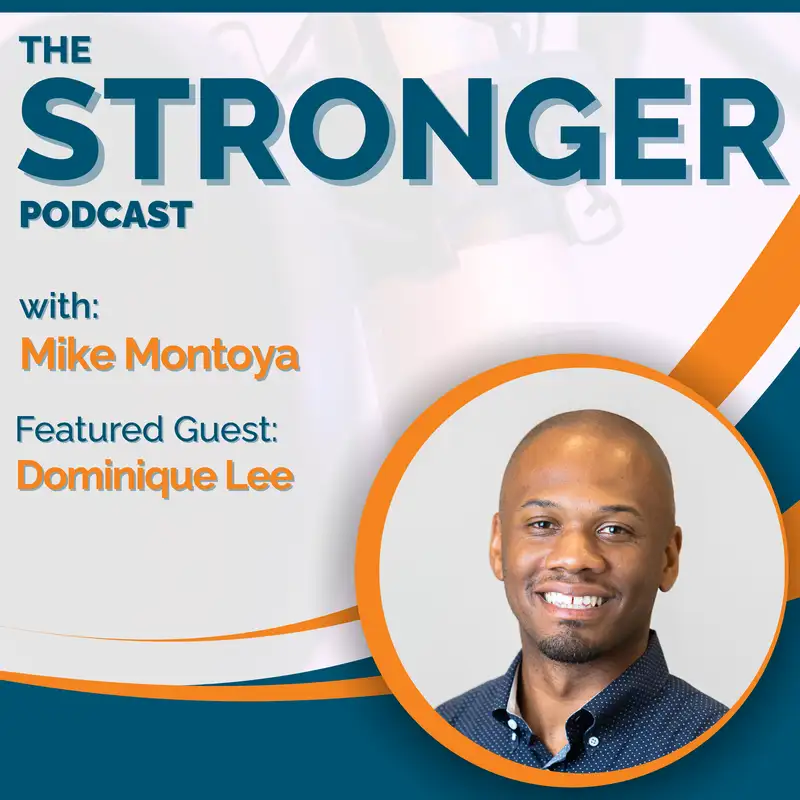
Mike Montoya:Let's jump in, and let's get stronger together. Good morning. In this conversation, Dominique Lee shares about a moment in a Newark School's classroom when he watched students struggling in the very system meant to serve them. This set him on a path to build something different. What started out as a question became Brick Network's creator of the career model, rethinking what it actually takes for community.
Mike Montoya:Before we dive into today's conversation, I wanna give a quick shout out to podcastmatter.com. Their mission is to help impact driven voices get the visibility they deserve. If you wanna share your message with the world, check out their website in the show notes. Good morning, everybody. I'm here with Dominique Lee, a longtime friend and colleague.
Mike Montoya:He's the founder and CEO of the BRIC Educational Network. And I'll let him tell you what BRIC stands for because the acronym is awesome, and it has a lot of, like, call it magical visualization when you hear about it and what what BRIC is doing in New Jersey and other places in the Northeast. Dominique, welcome. Thanks for being here.
Dominique Lee:Thanks for having me, Mike. It's been a long time, almost ten years. Right? Or more than ten years at this point. I think
Mike Montoya:this is, like, year ten or twelve that we've been Yeah. Been checking your plans in for the audience. You know, like, Dominique and I met in some hotel conference with part of the PAR network, right, as we've kinda all got pushed together as pretty young folks at the time into a cohort. Right? So
Dominique Lee:Yeah. California.
Mike Montoya:I think California California, the magic the magical space where magical things happen sometimes. Yeah. Tell me tell let's help people, like, ground a little bit. Like, where do you physically live right now? Where are you living?
Mike Montoya:And and tell and tell folks a little bit, like, where did you start your life? Like, is there an origin story that kind of like anchors you as a human?
Dominique Lee:Yeah. So I currently reside in Jersey City, New Jersey. Been over twenty years now here, straight out of college. My partner and I live in Jersey City, and no dogs, no children, yet, definitely no dogs ever. I originally reside from a city called Pontiac, Michigan, of which my biological mother lived and my father's family lived in a city called Bloomfield Hills, Michigan.
Dominique Lee:So that's currently, I guess, my origin story.
Mike Montoya:How far is this from Detroit as an example, right? And and Maybe
Dominique Lee:if you're driving normal speed, maybe around forty minutes, forty five minutes. If you're driving a little bit fast, maybe thirty, thirty five. Yeah.
Mike Montoya:So futable. So so that's kinda like the the stomping guys a little bit. And do your does your does your family still live up in Michigan?
Dominique Lee:Biologic mops still lives in Michigan. My father lives in Texas now. So you kinda can just picture this as, you know, Pontiac and Bloomfield was in Oakland County, Michigan, which was the heart of GM, Chrysler, Ford. So most of your individuals kinda move towards the suburbs outside of Detroit to kind of take advantage of the factories. Because believe it or not, many of the automotive factories were actually not in Detroit.
Dominique Lee:They were actually in Coopla County,
Mike Montoya:others
Dominique Lee:suburban places around Detroit. So that's kind of how my family migrated over to Bloomfield and Pontiac.
Mike Montoya:Yeah. That makes sense. So well, you actually need a footprint of of space to put a factory. Right? And that's kind of how But the tall buildings of the manufacturers are downtown, the actual plants and where the people go, right, on databases throughout the region.
Dominique Lee:Out yeah. Out in subpars.
Mike Montoya:So you went to went to school as a young man in that region. Were you a public school kid?
Dominique Lee:I was a private and public school kid. Okay. Next. I went to Trinity Missionary Baptist Church for my, I guess, youngest years, and then I transitioned to Oakland Christian Academy, which was in Rochester, Michigan, and then I transitioned to public schools for the rest of my life. My grandmother worked in the district in which I attended, so it, you know, there was a space for me in which I was given, you know, she knew what teachers to put me in and things like that, So that allowed for me to succeed at my school.
Dominique Lee:And, you know, quite frankly, because there was comp, there was industry, there was a, there's a big middle class, which allow for our normal public school to be quality. Did it have its challenges? Of course it did. But did it also produce, you know, an education program for children who took advantage of it? Yes, it did.
Dominique Lee:So it was kind of a middle of the road type of district because of industry around it, middle class upper middle class families.
Mike Montoya:Yeah. Sure. So like the public schools, which is the story of a lot of public schools in the country, like near urban centers, is like the suburban schools can be good or good enough. Right? And and most kids can do pretty well in those environments, especially when they have a family that's, like, thinking about it, paying attention to them, and and able to sort of navigate, you know, where there are messy parts.
Mike Montoya:Right? Because public schools are not unmessy, but the with family involved, it can be inapplicable, right? Is that true?
Dominique Lee:That is true. That was definitely true for an environment that I came in. You know, because you had a melting pot of people with means and without means and one of two high schools in a city, that allowed for you to have a diversity of experience in this setting. While it was public, gave us quality in some aspects, on some aspects of what's not.
Mike Montoya:And you know, I and I well, I heard you say you went to some kind of faith based schools as as a younger man, but I but I know that that you have a you have a active faith life. Right? So and if you're willing to share a little bit about some of, like I don't know if that has influenced the mission part of your work and your professional life. Can you tell us a little bit about how those two things are connected?
Dominique Lee:Yeah. So it has influenced every aspect of my life, marriage to the work that I do, to how I live. Many individuals who identify as being African American, especially from the Midwest. The church was a pivotal majority of, not everyone was part of the church, but, you know, part of the Midwest, being that, being Black, that was an experience that you took advantage of or was participated in. And so while the church does have a double edged sword, which there are traditions that took place in my church and in that environment that were negative, on the flip side of that, it was many there was positive, right?
Dominique Lee:Because that is where everyone came together. And so I saw Mel Farr, who basically was a black millionaire who owned all of the dealerships and was really known in the Midwest for owning dealerships, who was a pioneer in that space.
Mike Montoya:Like cars, yeah, yeah.
Dominique Lee:Yeah, car dealership, right? You know, you saw the local doctor, you saw the local lawyer. So you saw a diversity of Blackness, guess you can say. So that really gave me opportunity to see black excellence and understand who I was and what I could achieve. My church was the church that everyone went to.
Dominique Lee:So college was a big thing, you know. Every year pastor Bailey was my pastor growing up. When it came to, you know, signing day, you know, charter schools do signing days. Right. At my church, it was a signing day.
Dominique Lee:Like everyone stood up that was a senior and said, I'm going to x school. I'm going to Allison. If you went to Morehouse, you would like golden because that
Mike Montoya:was like the school. That
Dominique Lee:was the school, right, over Harvard. Now I remember hearing people say, I'm going to Brown, I'm going to these schools, then people clap, you know, but you say you're going to Morehouse, everyone like, it was like, that was the school because our church really believed in that. So while I grew up in that experience, I recognized the trauma that it also kind of put in some people's lives, but I still am rooted in many of those teachings. And as I learned, and as I have grown as an adult, I have taken away a lot of that, I guess, empire spirituality aspects of the church and left that alone and only taking the tribute of Jesus as I have kind of evolved into my own understanding of what faith in God is. So yes, if I say the one thing that guides everything about my life, I will say it is definitely my faith.
Dominique Lee:I truly believe that, you know, we should live by the teachings that, you know, that are present in the ministry of Jesus. I'll hold dear to that to this day. You know, my husband's on the church board one side of the house, I'm on a church board on the other side of the house. I volunteer really deeply at that church where, you know, he's a deacon there, dad's still in a church. Yeah.
Dominique Lee:So faith is important to me because it guides pretty much every decision of my life.
Mike Montoya:I'm going to pause the conversation here for just a second to talk about books that matter. Every entrepreneur or leader needs a book that elevates their business, builds their credibility, and makes an impact. If you've got more money than time, a ghostwriter can help you build your story. If you've got more time than money, a great book coach can guide you step by step through the writing process. If you have already written a draft, these folks can save a lot of trouble and money by shepherding you through the publishing process.
Mike Montoya:Head to booksthatmatter.org and get the custom support you need on your book idea or manuscript. Well, and thanks for sharing about that because what I hear you talking about is that it was this, like, institution that was around you as a kid that was, like, a group of, well, people and culture, right, that was kind of integrated in the church, and that helped kinda set the bar in terms of the temptations and achievement and school access, which is part of the path. Right? And then you've adopted as an adult or maybe as a young man, like, the, like, core teachings, right, of Christianity. And and those things have been, I call it integrated in your life now as a as a you're still a young man to me.
Mike Montoya:Right? So I think I knew you when you were a little younger, but now you're really still, you know?
Dominique Lee:Yeah. So so yeah. Yes. Yeah. But, yes, you're correct.
Dominique Lee:And, you know, I acknowledge that even with, you know, the church signing day, the kids who were not able to go to college, you know, our church frowned upon them like you. True. You know? So, you know, everything in life, there's always a, there's pluses and minuses to everything. So I, I'm not one of these people who kind of have shied away from my church experience, even as a black gay gal, recognized that it had power and also recognized that it had trauma, such as pretty much every day.
Mike Montoya:I was going to say, that sounds like a lot of people's church stories from the eighties or whatever, right? We all had that like, know, there's a lot of things that comes with that. And I think families you know, I I my experience is, like, families come to the church when they have kids because they want their kids to have some kind of, like
Dominique Lee:Some foundation. Some understand.
Mike Montoya:Yeah. And that can be, like, really form formative for them, and then sometimes they can go, like, a little pay wire, I call it, without without judging other people's
Dominique Lee:Yes.
Mike Montoya:Like, religions or anything like that myself. But that's the beauty of being an adult is you can make informed choices and decisions. Yeah. In living.
Dominique Lee:Yeah, make informed choices. And, you know, with therapy, you can learn and understand things a bit more.
Mike Montoya:So, yeah. That's very clear. I think, yeah, if you haven't gone to therapy and you went to church as a kid and you were gay, then you probably need some work still, right? There's still opportunity, are you? So.
Mike Montoya:Well, and I think I always love this about you because and you've shared some of this with me before, is I'd love this about you, how that has influenced the way that you think about and treat both your now in your leadership role, like your staff and the way that you think about family and community, right, in in your school system. So tell us a little bit about Brick. Because I know you you kind of were a TFA recruit, and you and you were a teacher in Newark
Dominique Lee:Yep.
Mike Montoya:As a as a as a first thing out of college, I think, roughly. So and then but then that turned into a real thing. So tell me about that that kind of transition and and kinda how how Brick became an idea in a life.
Dominique Lee:Yeah. So I was I graduated college, and I had finished a semester early, so that allowed for me to kind of take some grad school courses. So I took two courses with a professor called Marvin Kristloff, and these were law school courses. And was going to go to law school. And I enjoyed those two courses that he did.
Dominique Lee:And he was like, you know, I know you want to do education law because, as I mentioned, my grandmother was education, my mom is also kind of an education field, my stepmom, my biological mom, he was like, hey, you know, have you looked at this thing called Teach for America? And I said, no, don't know what you're talking about. And he said, you know what, the founder, Wendy Kopp, is actually speaking at the student center, which was right across the street from law school in Michigan. And I said, oh, okay. I'll go check it out.
Dominique Lee:And I went and heard her speak. I like Wendy, she's a great person, but she's not the most inspirational speaker.
Mike Montoya:A little intellectual.
Dominique Lee:Know, but it was, I was talking with people in there and I forgot his name. Oh my gosh, memory escapes him right now. And I was talking with him afterwards and he was like, you really should do this. So a group of us applied, went through all the thing and actually got an in, which was, I guess, a big thing during that time.
Mike Montoya:Yeah. And I
Dominique Lee:guess that, you know, Teacher of America is very selective
Mike Montoya:and I all this like yeah.
Dominique Lee:It's a big thing on campus, right? And I was like, oh, okay. Great. And so I came, I was ranking places, I knew I wanted to be on the East Coast, and I wanted to be somewhere near New York. And I also knew the history about New York.
Dominique Lee:And I was like, oh, this would be interesting place, you know, big art scene in terms of poetry, kind of, you know, rebellion, really African Americans kind of taking control of their community and things like that. And I was like, you know, they're kind of similar to Detroit. So let me go to Newark. So I applied, got into Newark, and loved it, to be honest with you. While my high school was a big chaotic that I taught in, while it was challenging, a lot of hurdles, I enjoyed it.
Dominique Lee:I enjoyed it for a simple fact because I enjoyed being around the students. And at this point in time, these are like high school kids, right? So they're fun. They're fun to be around. While some of them did challenge me, make me lose my hair, I would say 99% of them were they just wanted it.
Dominique Lee:They wanted they wanted something in life. And unfortunately, the system was not designed for them. It was actually working against
Mike Montoya:them. Working against them. Yeah.
Dominique Lee:Yeah. Yeah. So, you know, I remember my third year in a classroom because I was like, I'm not I took the outset, but I decided not to go back.
Mike Montoya:You're like, that's nuts.
Dominique Lee:You know, did I the two law school courses, I enjoyed it, but I'm not going back. And I remember sitting in Ms. Deacon's office, she was our principal, and her secretary comes in and goes, hey, the teachers are here. In a normal situation as a principal, you're like, oh, I have new teachers coming. You know, you'd be excited.
Dominique Lee:She was not. And she was not excited because our district had passed the limits. And so there was three teachers that couldn't hack it in the good schools, right, over in the north part of the city and in the magnet schools. So let's just dump them over here in the South War with with a school with all black children. Right?
Dominique Lee:Because, you know Nobody will protest. Please no one's gonna care, and these kids don't deserve good teachers. Right? So let's just dump them up here. And lord forbid, like, they were horrible teachers.
Dominique Lee:Two of them were actually on my floor, one on the left hand side of the classroom and then one was two doors down from me and Lord have mercy, you were just bad. So, you know, after that point in time, by the grace of God, had no obligations, no children, no debt, my parents paid for my education, I also had the freedom that if something happened, I could be back home, and things like that, and I was like, I don't want to go back into this classroom. I mean, I don't, and not the classroom, I don't go back into the experience of being part of a system where children are not the priority. I don't need this paycheck, that's not what I'm in this game for, So let me kind of progress differently. So that's where Brick came into being.
Dominique Lee:I remember sitting in Row 32 at Riverside Church, which was my church home at the time. And I asked God very simply like, what's next? What cross do you want me to bear? And and brick came into fruition from there, I guess, not with a, you know, a crystallized thought like, this is what you're gonna do. It was a very ambiguous concept of brick.
Dominique Lee:So that led me to find five individuals across, you know, Newark, we were all in various portions of Newark, Charity Haga, Princess Williams, Mindy Wyattman, Chris Purvidge, and Bernadette Scott. We're all Teach For America alums, still in the district schools at this point in time because remember Newark had a growing charter sector this time I'm in the classroom with Newark and Teach For America, but we set a good percentage of us in the district. And so I said, hey, let's come and do something different. So that kind of formed brick, and that was fifteen years ago. This is our fifteenth anniversary.
Mike Montoya:Five rave souls with an amorphous plan. But that's how things happen. You were pretty young, right?
Dominique Lee:Or mid-20s, very young. And
Mike Montoya:I call it ambitious and not aware enough to know how many things would be hard. Yep. But with a I call it a posse of and then I have a couple of those folks, Chris and Chris and Mindy. Right? Of course.
Mike Montoya:And Yeah. Oh, and, you guys, like, started to you started to go. Right? And so so you you formed the the charter, and you started to you tracked your kids, and you eventually you kinda, like, achieved buildings and and some of that work. But you guys have an interesting model, though, that's like it's it's a little bit of a combination of Harlan Children's Zone and Promise Neighborhoods with some other integrated trauma stuff.
Mike Montoya:Right? So tell us a little bit about Web and Brick because it's I think there are not a lot of functioning models like this in the country. Maybe there's a couple dozen. Right? Something
Dominique Lee:They're too that are just ridiculously hard. And so how we got there because remember, we actually did not start as charter. We actually started as district turnarounds.
Mike Montoya:Okay. Interesting. Okay.
Dominique Lee:Yeah. So we were the kind of the first in our state to So we did that for seven years of our existence, and we were able to kind of transform into schools and from chronically undercovering to unengrate people. Know, at the we're on the path to success, we've just got to continue to work at this. But it's from that experience, Mike, that we realize that in order for us to truly holistically support children, it had to look a bit different. And that's not saying that other schools are not doing it right, not doing that.
Dominique Lee:What I want to say is just like our ecosystem deserves all types of, I guess, schools. And so we needed to, for our environment, design a school that took into consideration all of the external factors that were including the academic rest of our children because of our context. That doesn't mean every school has to do this, but in our context, this is what we needed to do. So that's when we really started to research and understand other models out there of how to support children and families in a way that's necessary. Because when you have, you know, a large behavior disorder, know, classification, right?
Dominique Lee:When you have a high transient situation, and when you have other issues that are prevalent, right, you have to kind of evolve. And so that's when our model evolved to what we consider now a pre cradle to career. Everyone knows that probably the biggest known pre creative career and the one who pioneered this was Harlan Churnizal, with Mr. Canada and the work that he's done there. And other organizations across The United States have kind of started to really pick this up.
Dominique Lee:And so we started to transform the model, pre creative's career, maternal health, elementary schools, a wellness strategy, a housing strategy, a workforce development strategy, and how do you transform an entire ecosystem and create a pipeline that allows for children to be successful. So you fast forward from year seven to year 15, that is where we are now, which is we have a strong maternal health strategy in which we use community doulas that we train to basically partner with mothers to be ensuring that they have access to quality healthcare, to have healthy births and support them post birth with, you know, attachment and all the things that's necessary. Then those children should move into our pre K programs. Those pre K programs then should move into our K-twelve programs and then K-twelve, I mean, once you get down to twelfth grade, it should move into our post secondary strategy. On the guarding this pipeline per se, is our health strategy in which we open the health center in partnership with St.
Dominique Lee:James Health. We serve around 3,000 unique individuals as of today, We're building a 50,000 square foot center to basically get up to 12 to 15,000 capacity. We have a housing portfolio, you know, building around two fifty units. We are breaking ground on 80 units in the coming months with the goal to get to 300 over the next three years. And then, you know, our workforce development strategy, Gateway U, which is led by Sigma Nath, partnership with Southern New Hampshire University.
Dominique Lee:So it's pretty much how do you support this family in a two generation format, the mom, parent, guardian, and the child at the same time in the quality pipeline. So it's taken us fifteen years to get here, and that's
Mike Montoya:where we are now. It's super interesting to hear you talk about these, I call these expansions, right, of the housing and the health care because those were just I think when you and I were working closely together, those were just, ideas by inklings. Right? Yep.
Dominique Lee:They were. Just a little idea on the piece of paper.
Mike Montoya:And it's it's it's I've thinking about, like, how many things have to go well in order to start to get this stuff aligned because, like, you're basically building, like, a community and a home, right, that that has an integrated set of activities and services. Yep. And people have to trust I think one of the things I remember about spending time with with some of you and your staff is that there's a tremendous amount of trust building that's necessary between these institutions, right, and and families, right, individuals, especially parents and or caregivers or guardians. Like, that is how do you guys achieve that? I mean, like I mean, some of it's like doing what you say you're gonna do, right, of course?
Mike Montoya:But other what are some of the other things that help help it be successful from a trust standpoint?
Dominique Lee:Yeah. I would say the first thing is being proximate, and listening, and understanding, and listening again, and then creating, to your point, and then actually executing. For many communities, there's a people come in, they do the focus groups, and nothing changes, right? So our concept is, we're not going to do focus groups, we're not going to do the surveys, what we're going do is just come in and listen to the lived experiences and be with that on the ground. And then once we can mutually agree on what we need to do, then it is our job to execute that.
Dominique Lee:Right? It is not their job to execute. And some people kind of bristle at that when I say that. And so I I take a pause and I say, take a step back. If you are in a community in which the median household income is a 150,200, right, million dollar don't think those people are going and actually executing on what government and public systems should do.
Dominique Lee:Right? They expect you to pick up my trash because I'm paying the tech salaries for it. I expect you to actually build a community center because that's what we're paying for. So I always say that why is it that when we come to other communities that we're expecting them to go to every town hall meeting to fight, we're expecting them to say, you know, do this, we're expecting them to do that when other communities are not expected, the expectations split. It is the system's responsibility to do this work.
Dominique Lee:So that's what I believe, which is my job is to listen, to hear, and to execute, and be that person to execute on behalf of what they want us to execute on. I'm not gonna actually Yeah.
Mike Montoya:Why do we have to advocate our asses off to do
Dominique Lee:Yeah. You do something. Like, I it's it's all it's so mind boggling to me. I'm just like, I kinda grew up in an upper middle class community. I don't remember going
Mike Montoya:to any town hall that day. Almost It's like it's like an assumption that, like, if as you're urban, you have to struggle to get the basics. Right? Or the things that are being exchanged for, like, tax dollars and or other community agreement that Yeah. They're always like, oh, we're broke, oh, we have this thing.
Mike Montoya:And and they don't get it done. Right? That park that never got cleaned for the, like, ten years or whatever the heck it is. Right?
Dominique Lee:Right. We we gotta go march down at city, you know, city hall. We gotta galvanize people that take time out of their day when they're already raising children, cooking, cleaning, and all these things, and we gotta go down the train, and then we gotta do all these things. And I'm just like, that's not X. We're not requesting that Why out of other are we requesting so much from this community?
Dominique Lee:It's very it's a very interesting paradigm for me, and I don't think people fully recognize that.
Mike Montoya:Well, and I think in some ways, you and I are aligned in this thought process that, like like, it shouldn't be a struggle to do the things that are agreed upon. And what I feel like you're hearing me saying is that you guys have managed to listen to your communities and respond to Yes. Right, in an effective way, the things that are elevated, right, as necessary. So there's a way of getting information gathering, right, and and I call it consensus building, right, to to kinda, like, again, not do stuff to Yep. I think that's the other solution.
Mike Montoya:Right? It was like, just do stuff to communities that are not in their quest. Right? They're like, we're gonna fix you. Like, they're like, we don't need fixing.
Mike Montoya:Right? That kind of is another approach, which it sounds like this is not inclusive of.
Dominique Lee:No. And I think a classic example of that is the wellness center. Right? We knew from the data that there was not a primary doctor in our community. In our entire zip code, there's not one primary doctor.
Dominique Lee:And we also knew from community survey is that people want to increase access to healthcare. So our initial thought was, oh, we're building a new elementary school, so let's just tack on a, you know, a help center, right, into the school, right? That's what is going to fix everything. And by the grace of God, you know, we did not go down that road of just doing it. We said, of course, let's stop, let's pause, let's test this with our community.
Dominique Lee:So we had a couple of meetings and people were like emphatically no, do not do that. We will never go to a clinic attached to a school.
Mike Montoya:Seems like a good idea.
Dominique Lee:Hope, right? And they were like, do not. So we did it. And praise God we didn't, because we would have built something that people were not going to utilize. And so now the health center, you know, we're at capacity because we've listened to the community and executed on what they wanted, and which has given us the ability to galvanize and raise the capital stack to build a $50,000,000 community wellness center going from, I think we're around 7,000 square feet to 50,000 square feet.
Dominique Lee:That is kind of a classic example of not doing that to a community, but also not requiring them to basically go above and beyond for something. The community is just saying, we want this. This is what we want it to look like. And then there should be systems who execute on that. And that's Well, that's the role
Mike Montoya:of, like, all responsible sort of leadership. Right? People to listen and help, you know, like like some and you have a whole team of professionals working with you. Right? This is not again, you you engineering this all by yourself, but, like, those couple of leaders
Dominique Lee:No.
Mike Montoya:Definitely. Imagine the potential, listen, and then come up with ways to make it happen by putting the right resources and people to work on the problem. Right? And, like, let them tackle the thing.
Dominique Lee:Yep.
Mike Montoya:And it feels and it feels I mean, way you're talking about it, it's like, oh, it seems I mean, building a health facility is not a small task. Right? Either it's building a school, building buildings, institutions for like humans to be in all the days, all the time. It's like a real thing. Right?
Mike Montoya:Yep. It's different than a house building because you only have two people using it or something. So it's a huge endeavor. The do you do you all and and use, like, creator of the career and and pre creator of the career kinda language. Like, do you have, like, kinda, like, these images of or outcomes that you're looking for at at different stages of of life of life for kids and families?
Dominique Lee:Yeah. We we do. And I and I think this is you know, HCD Harlem Tresone has done a good job kind of mapping out these indicators that we have signed on to and a lot of our peers have, and also STRIDE has done some good work around this too. So we have some, I mean, we don't have some. Yes, we have these indicators.
Dominique Lee:I think the struggle that we have been facing is how to link all of them together to say, if we do all of this, this is going to lead towards economic empowerment for the people that are in our pipeline, right? I think that's where we're trying to push ourselves over the next three years with this new strategy, strategic plan, which is we're doing all these inputs, right? You know, a kid gets access to the health center when there's an emergency within twenty four hours, right? They don't have to wait six months for a pulmonologist. The mother has a healthy birth.
Dominique Lee:Is that actually going to lead towards economic prosperity? That is where we're trying to make that jump, right? People say by research, of course it's
Mike Montoya:going to lead to
Dominique Lee:economic prosperity, but do we really know that, right? Because if I just educated this kid, if that do all this, will that also lead the economic prosperity? And so that's where we're trying to push ourselves, and I will say the biggest problem for us also in all this is to keep the people in the pipeline. When you have a highly transient population, which America is right now, because people just can't afford where they live, no matter where you are, it's hard to see the impact build upon the progress. Well, that's not our control.
Mike Montoya:Housing solution. Right? You're trying to, like, think about how do you get people into affordable I'm gonna assume it's affordable plan, right, to help people, like, state things.
Dominique Lee:Right?
Mike Montoya:And and not unhoused and to have stability within their their pipeline experience, right? That's the way you're talking about. It's like more time in your system of experiences gives them a better opportunity to do some of the other growth areas, right, including high quality educational experience, right?
Dominique Lee:That's exactly why we're doing it, but there's also fear there, because, you know, we can't build our way out of this, right? When you have, you know, 12,000 people that need to be in the pipeline, we have 6,000 unique individuals in the pipeline, there's no way we're all going be able to build even half 3,000 units. Right? There's just not enough land. There's not enough resources.
Dominique Lee:There's just not. Right? So it's a larger issue, which is, is we want to start really getting serious as a nation when it comes to economic disparity for families, which means to alleviate headaches off families' lives in order for them to focus on empowering themselves. How do you ask? You know, I had an institution come to have a meeting with me, a big institution that gets a lot of money from the federal government to run this institution.
Dominique Lee:And they want to partner with us around workforce development. And my word was, well, are you providing stipends? Are you providing childcare? Like, you know, eliminating barriers and headache in order for someone to actually take advantage of X upskilling. And we're like, oh no, no, no, we don't do any of that.
Dominique Lee:We just do the upskilling. And I'm just like, but, so how does a mother who's working forty hours a week at T Mobile making $5,560,000 as, you know, one of the sales trucks there, take advantage of this when she has to work those hours and then take care of her child at home because I want her to breathe to her child and build relationship with her child. I'm
Mike Montoya:So not more stuff, right, yeah.
Dominique Lee:Not have any relationship.
Mike Montoya:For free.
Dominique Lee:Right? And then she's spending, you know, twenty eight hundred on just a two bedroom for her and her child, which is about 45 to 50% of her income. How do how do you expect them to how do you expect her to move from sales clerk to manager?
Mike Montoya:Yeah.
Dominique Lee:It can make sense. And it bothers them when we're not having those realistic conversations. It's just like, people just think of Magical where he appears. I'm like, everyone who has been able to have, be in a position to own their destiny in terms of, let's say, economics, have gotten the lift in life. Mine was my parents' pamper and education that eliminated the debt from my life.
Dominique Lee:Right? You know, I moved on a little list of all the things that have helped me get to where I need to go. So why aren't we replicating that in other spaces?
Mike Montoya:Yeah. And it's well, without disparaging the institution, that's kinda like seems like they're off the market a little bit and then has some room for, I call it, listening to you and adjusting their approach, right, is is a potential here. Right? So the the insight, right, that you just brought, which is like families need this is the core equity argument, right? Everybody needs a little bit of something different at different times of their existence.
Mike Montoya:And none of us got to where we're at without some of that magic dust falling on us at the right time. Yes. Somebody cuts all that. Right? In in the in the fairy dust way, used to think about, like, when we're doing foundation work, like, you know, when you drop the right money in the right place with the right people at the right time, it can really make a big difference.
Mike Montoya:It's like Miracle Gro. Right? It, like, can really turn someone's life into a positive trajectory because you just drop something at the right time. And that's what I think is that equity. Sometimes we have, like, we get lost and, like, what is equity?
Mike Montoya:And and, you know, everybody annihilates us for using the language sometimes because they're like, you know, we're and Yeah. But none of us got here, you know, without some some pathways moving, right, and improvement No. Opportunity. Right? And some of it's because of our skin color, and some of it's because of our education, or our parents dropped, you know, support at the right time.
Mike Montoya:And I appreciate you kinda like, you know, keep pushing on that, I guess, is what I'll I'll keep saying because I feel like, you know, people can't get access when they're overstressed and overstruggling. And and the kids, right, if the parents absent, right, you're just kind of starting the cycle again. Right? So this this whole this whole recycling of of problems. Right?
Mike Montoya:And so
Dominique Lee:Definitely restarting it. And, you know, what it boils down to what you know, I'm only about on this planet forty one years, but, you know, this might change with another ten years, just when the Earth's surface, you know, wisdom on this planet. I just don't think people trust people. I, people don't trust people to make decisions for their lives. And that is exacerbated when you put black and brown people in that equation.
Dominique Lee:You know, if mother needs new tires to get to work every day, why not as a government or institution, I support mom to get those tires so she can drive to work every day. Right? Oh, no. We can't give them money.
Mike Montoya:They're gonna go to
Dominique Lee:you know, they're gonna they're gonna it. And it's like, no, she's gonna buy those tires to get to work every day. Why would I not give her that subsidy to do that? Right. And so it just boils down to what, you know, and it gets worse as you you put identity markers on there.
Dominique Lee:Oh, you know, it's automatically poor. We don't trust you. Oh, they're poor and black. Oh, we really don't trust you. You're poor black and woman.
Dominique Lee:Oh gosh. Never.
Mike Montoya:Right? You know, it's like we villainized. We've created this image of the person. Yes. Which is, you know, all sorts of tones of of racist and and everything else, right, going on, right, in that in that conversation.
Mike Montoya:So it's interesting that you're in the nexus of this. Do you feel like, I mean, were you built for this, or do you feel like you're still stretching and growing and and I call it learning that you're you're 41 years young, so you got, like, thirty years left, so at least on the work side.
Dominique Lee:Yeah. Yeah. I think every day is a new adventure in this world. And that's one thing, I took a step back as we approach fifteen years now. Pretty humble guy.
Dominique Lee:Well, to my please, you know, break is nowhere near what we were at year 15. We thought just put a quality teacher and a great principal, let's work, I do. Push yourself. I still don't think I know, be honest with you. Unpacking years of racism and systems development that was designed to keep people down takes a lot of effort, right?
Dominique Lee:It takes a lot of mental energy, it takes a lot of resources, right? Because people, you know, we can argue if they did it maliciously or just subconsciously, right? It might have just been a mixture of both. But at the end of the day, we have designed a system that rewards the wealthy, it punishes people who have basically been redlined and sidelined on the margins of our society. We praise the people who dodged the taxes to figure out how not to pay any taxes, and then we don't call that, then we don't trust people, because that's a subsidy too, right?
Dominique Lee:We're giving them money, right? But then we don't give money over here for people who maybe want to upscale their lives or do something different. So, as I said, maybe morals and values are just, they're just, with any of my. So I am, you know, I wake up now, I will say as I've gotten older, it has given me more patience and the ability to be able to speak in a way that people hear me and not be turned off by that young, you know, I guess, idealistic, aggressive voice that might have had the pain. So it's not patience in terms of, you know, I know you get away with it, but it is patience to understand that this is And like a my job as CEO is to, to, what do you call it, value that process and not shut on it, but still have a sense of urgency to, you know, to do it, but value that this is not going to happen overnight and you have to work in the system in order to get that system to change.
Dominique Lee:So I think that's what I would say is learn a lot, but also have learned how to have the best stuff to understand. System change is a long
Mike Montoya:It's a really long Well, it took a long time to get to where we're at. And as you said, it may have been intentional or subconscious or both over time, many centuries, right, of of creating this way before America became a country. Right? There's been a on the planet. And and, you know, we've, you know, as a society, adopted some of those behaviors in a really I call it ways that continue to call it, like, almost, like, make it make it slippery, right, for folks to get traction in the way that the, you know, the world functions.
Mike Montoya:And I would say, like, you know, if if if the I call it sidelining and redlining stopped even if it stopped completely, right, we still have a lot to catch up on, but there's still, it's still happening, There's still lots of like nefarious stuff going on in our society that is like, again, championing and rewarding people for other things, right? So we have plenty of work to do, I think, right?
Dominique Lee:We have a lot of work to do, and, you know, one day I just my my pray is that one day, majority of the nation would just just come to some just recognize the data in front of them, be willing to do what's necessary to reverse that, right? If every time a group of people, and I speak up from my culture, every time we decided to take our own communities into our hands, and we built things ourselves, our own land, it was stolen. We built our own shopping centers and community centers, they were burnt out. Right? We started to build our own communities there, they took it away.
Dominique Lee:Right? So if you continually take away resources that people build, what do you think is going
Mike Montoya:to happen?
Dominique Lee:Right? So you got to do something to reverse the harm. And that's my dream, it's just like, look, at the end of the day, like it happened. Not saying you did it, but it happened. And so as a nation, we got to figure out how to reverse that.
Dominique Lee:And reversing that looks like X with the community saying, this is what we need to reverse it. That would be my prayer and my dream.
Mike Montoya:I just want to say that if you're a leader, entrepreneur, or business owner who needs some support, there's an easy way to get a think tank behind you and your vision. The Genius Discovery Program at Thought Leader Path is like having your own one on one incubation and acceleration program. They'll help you develop an approach based on your own story and your plan for impact and offer the tools and thought leader assets needed to really amplify your message, including launching a podcast like this one. If you're ready to stop grinding in the dark and start making real impact with the right support, check out geniusdiscovery.org. Well, and the way you say it, it seems like it seems reasonably simple to just get to that agreement.
Mike Montoya:And I think my view is that there there are people who sort of think that there are a a finite amount of resources and that that if if I give it if I give it to somebody else that I don't get have it. Right? Or if my community thrives Yeah. I'm gonna not thrive because they they live across the street and Yeah. Like, they're they'd look different than me or whatever that is.
Mike Montoya:And that so that's like a the zero sum Yeah. Kind of approach. Right? And then the the other side of of the ticket, which is, like, there's so much abundance and potential for all of us that we can, like, cooperate, align Right. And agree and, you know, treat people decently.
Mike Montoya:Like, there's plenty of stuff to go around. Right? But there's and those two camps are always at war and attention. Right? And it's in inmate.
Dominique Lee:Is so fascinating that people are like, there's finite resources. So I'm just like, you know, look, capitalism has its forms, but it's a one system that has brought more people out of poverty than any other system we know on this planet. And one thing about capitalism is that the economy always grows as you get more and more productive people into there. So I don't understand why people say there's finite resource. I'm like, but that's, that's not how the system works.
Dominique Lee:The system works by, it expands, expands, expands, expands, it's more productive, productivity More in,
Mike Montoya:more you get more out, right? It and it's sort of like it's almost like no kidding when you think about, like, hey. When you, like, try to grow a plant or whatever, like, you literally nurture and feed and water that thing, and it just produces fruit and vegetables or whatever. Like, it's just it's like it never stops. Right?
Mike Montoya:Right. As long as you, you know, revert to till the soil and sow that appropriately. Right? And there's there's so much potential.
Dominique Lee:Our our biggest expansions in American history, not not saying it was suspended for everyone because it wasn't, but our biggest expansions was when we had more distribution of wealth. So let's just put the guardrails in where everyone can get that distribution, and let's see what happens. I think we might actually triple that expansion.
Mike Montoya:But And there's some people who like, well, we gotta take it from somebody else, which is what we're doing now as a nation, like, being imperialistic with our current administration being, like, a little bit, like, insane in some ways. And it's there will be a we will look back on this time, right, this this quarter century and be like, what the heck was going on with all the fear mongering, etcetera, right, and the, like, reignition of the wars.
Dominique Lee:Oh my gosh.
Mike Montoya:Yeah. How many things to work on as a society. So I wanna be cognizant of of your of your, like, leadership time and and think about now that you've and kind of pull us to this place of what are you hopeful about in the year or And two what would you like to say to our audience? There are a lot of people out there who don't know who you are, who don't know about the brickwork. But if people are looking for a role model of sorts around people who can get shit done, right, on behalf of of children and families.
Mike Montoya:Like, Dominique is an incredible person to model off of. And do you have anything that you would wanna share about like, you know, humbleness is one thing I heard, but anything else that you wanna impart to the, I call it, the next generation that is, they call it where you were when you were just a young guy?
Dominique Lee:What am I hopeful for? You know, my pastor has been on a great spiritual teaching since like November. I passed across the Brown Wheeler Baptist Church, Houston, which is my parents. And, you know, I know these are very dark times and I don't want to underestimate it, I don't want to deminize it, I want people to understand, I truly, truly understand and feel it. But I do think there's some light in the tunnel, like we have to kind of go through some fires in order for us to wake up and realize, oh, we actually can do something better.
Dominique Lee:That's why I'm hopeful for is that there is actually something at the end of this, you know, journey that we're on, you know, this hell journey that will be better, which means we actually don't have to think that we can be against each other. We actually can operate as one. I'm not saying it will be, you know, roses and roses all the time, but, you know, I'm hopeful that majority will say there's not a find out enough resources, there's an abundance and that abundance, we all can take advantage of that. So that's what I'm hopeful for, is that that is why we have to go through all this, right? It's like the phoenix, you got to burn to get something positive on the other end.
Dominique Lee:I think if I were to speak with the generation underneath me, I would say the most important thing is to deny yourself and pick up your cross, or if you're not a spiritual person, deny yourself and pick up something beyond yourself. Right? Because we can sit in our own space and think we have the silver bullet and think we are solving something. And we just might be solving some, you know, this little finite thing over here. But when the larger macro things, that little finite thing is just going to go by the wind, the wayside because the system itself is that.
Dominique Lee:So be, be inconsistent, challenging of yourself around what you need to do in order to make society better by listening to the people who are actually, you know, that you want to serve and be willing to be a light because, you know, there's gonna be times where you're not gonna like Unpopular. You know, leadership is hard. Yeah. Very unpopular. And I think the last but not least, I would say, you know, proximate, being willing to be unlike and be able to have the tough conversation.
Dominique Lee:Yeah. Pick up your cross and deny yourself because it is so easy to kind of just be focused on your own ego and your own little mission, your own little strategy and not lose sight of the larger context.
Mike Montoya:Well, that's super, and thank you for going there because I think like, you know, when people think about leadership, are, they get super focused on self, right? And they're like, how do I get better? How do I build and grow? And how do I achieve this thing or whatever? And part of that is by being close to others and listening to them and participating in ways that, I call it, there's a, I call it, emotional body experience where you're like, oh, I understand, right, what it's like to be in this situation and and to be part of a community.
Mike Montoya:And then it almost like it activates parts of your psyche and your brain, right, that, like, you can't access independent of that. Right? Which is like, know, and that, you know, passion comes from. That's where the commitment comes from. That's where inspiration comes from.
Mike Montoya:It's through these experiences. And what you're talking about is ways to channel those in powerful ways. And I don't know if young people, myself included, is to say, we sometimes forget. We sometimes forget, like, being close to, right, others helps us activate, right, in ways that we and ourselves. Yes.
Mike Montoya:We get more competent, more capable because we're we're listening, paying attention, and being close to folks. So Yeah. It feels your cup. Yes. And there's there's an analogy.
Mike Montoya:There's a spiritual one here. Right? You know, there's there's all these, like, magical phrases from the wisdom of of of of, you know, our society that and and religion that can help us here. So, Dominique, I wanna say, a, congratulations on your many years of service. And thank you.
Mike Montoya:Thank you for being the man that you are and for being a model for for those of us who are out here doing this work alongside of you. I mean, and I call it it's wonderful to have such a I call it a brilliant, committed champion out there doing doing the hard work. And and just imagining the next steps. Right? So that's that's you're hopeful even though it's hard, right, sometimes, the positive is ours.
Mike Montoya:Yeah.
Dominique Lee:I mean, every day you wake up, you're on a lot of stress and problems. You're just like, come on.
Mike Montoya:When is it? The end.
Dominique Lee:But, yeah,
Mike Montoya:my pastor has been saying stay hopeful. Gotta stay helpful. Alright. Well, thank you so much. And we'll we'll wrap up here and we'll listeners will send all the show notes and other things.
Mike Montoya:So check out BRIC BRIC Education Network in Newark, New Jersey and beyond. And we'll we'll drop the links for the for folks to check it out in the show notes. Thanks, Eric. Bye bye. As we close out, there's a moment in this conversation that stuck with me when Dominique brought proximity, listening, and what it actually takes to execute in this work, not asking communities to fight for what they deserve, but systems that respond to their needs.
Mike Montoya:It's a simple idea, but as as you heard, it's incredibly hard. If this conversation challenged your thinking even a little bit, share it with someone else who's doing the work. Thanks for joining us and tuning in today. To find out about other podcasts that matter, visit podcastsmatter.org. Thanks for listening to the Stronger Podcast.
Mike Montoya:If this conversation inspired you, we invite you to follow the show and share it with someone who's on a journey to become a happier and healthier version of themselves. Links and resources are in the show notes. See you next Thursday, 9AM eastern time. Have a great day, and stay strong.