 Episode 33
· 46:50
Welcome to the Stronger Podcast. Each week, we have honest conversations with education and social impact leaders about their leadership and career journeys. We talk about their origins, inflection points, and the work that they're doing today. The conversations are honest, human, and practical. If you're here for real stories and real takeaways, you're in the right place.
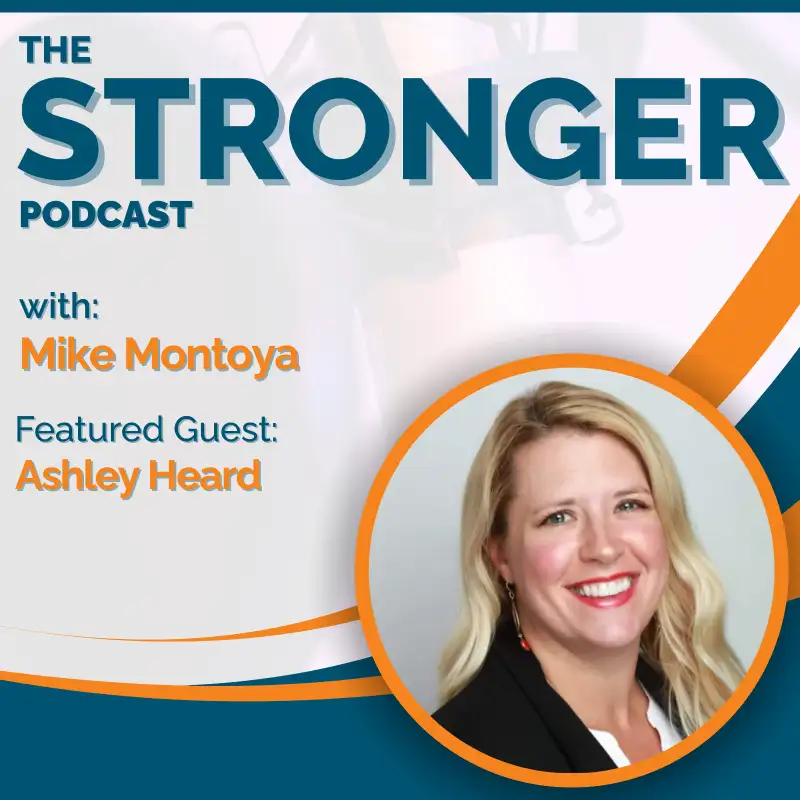
Mike Montoya:Let's jump in, and let's get stronger together. Today's conversation with Ashley Heard is about much more than charter schools. It's about what schools can mean for democracy, belonging, and fairness, and why intentionally diverse schools still matter so deeply in this moment. Let's jump in. Good morning.
Mike Montoya:Good afternoon, everyone. It depends on what time you're listening, of course, what that what the date and time is, but it's great to see folks and be with each other. And today, I'm here with Ashley Heard, who is a multi year friend that I met that I met at the at the New Schools Conference in San Francisco Bay Area, like, ten or fifteen.
Ashley Heard:Forever years.
Mike Montoya:Okay. Wild. So, Ashley, welcome. Thanks for being here.
Ashley Heard:Yeah. Thanks for having me, Mike. It's it's good to be here.
Mike Montoya:That's awesome. And you currently are, I call it chief of development in external affairs. What is your title at DCSE? Tell me a little
Ashley Heard:bit, just
Mike Montoya:a tiny bit about that.
Ashley Heard:Sure. Fundraising and External Affairs Lead is my title. It is actually the second job I've had at the Diverse Charter Schools Coalition. I've been here for eight years. It's been a while.
Ashley Heard:My first role, I came on board to launch our incubation program. So we supported folks launching new, intentionally diverse schools. Did that work for three, four years, five years, six years? My goodness. And now I and I pivoted into a new role.
Ashley Heard:So now I'm doing external affairs and fundraising, and I love it because we are a small, scrappy team that cares about diverse public charter schools, and I get to talk about why that's important. And so I really like my job. I love the work that we do, and I feel very, very lucky about that.
Mike Montoya:And you're a student for it and passionate. I think we're gonna talk a little bit about kinda how you got here. So let's and for for our listeners out there, there's another podcast that's in in the series from Sonya Park, is one of Ashley's colleagues. And so if you wanna learn more about Diverse Charter Schools Coalition, you can check out Sonya's podcast as well. But, Ashley, you you kinda grew up as a traveler of sorts, right, moving around the country.
Mike Montoya:Tell me a little bit what was your childhood like? Like, me, like, where do you do you feel like you have an anchor home?
Ashley Heard:Yeah. Question. It's funny. It drives my husband bonkers. People ask me where I'm from, and I say Louisiana, and he's like, that's not really true.
Ashley Heard:Cause because the truth is we did move around a lot. So my mom's side of the family is from Chicago. My dad's side is from South Louisiana. I was born in South Louisiana, and then my mom and I left. And so I grew up in Texas and in Chicago, in Denver, back to Texas, and then ultimately graduated from high school in Tulsa, Oklahoma.
Ashley Heard:And that entire time, I spent every sort of summer and every other holiday down in South Louisiana. So I'm here now. I live in New Orleans. I moved back to Baton Rouge in 2015, and I've been here in South Louisiana ever since. So despite my sort of roaming as a child, I've come home and this feels like home.
Ashley Heard:Yeah, yeah. Yeah. My family's here and my friends are here. And look, there's no better place to live than than New Orleans. So I'm very happy to be home.
Mike Montoya:I People love New Orleans. The people that live there love it. And I mean, there's a bunch of reasons, right? It's like it's like lively, and the weather is decent, and it has some, like, kind of weather chaos that everybody is familiar with that has happened historically in that region. But it's a good place to live and raise a family, it sounds like.
Mike Montoya:But Yeah. You know, something new in your life, and we just chatted about it before we got started. So, like, tell me about you have a you have a young one, almost senior. Is that true?
Ashley Heard:Yes. Mike, we had a baby. I had a baby. It was not we did not have a baby.
Mike Montoya:He did not.
Ashley Heard:I birthed the child, but my husband and I welcomed our third kid. So Owen will be a year, May 5. He's a Cinco de Mayo baby, and he joins a family with two other kids. So my stepdaughters are now eight and six. So, you know, it has been a beautiful, chaotic year and we are here.
Ashley Heard:We have survived the year. Everybody is healthy. The kids are doing well. But it's been a lot, you know, and it has really pushed, pushed me in lots of ways. Right?
Ashley Heard:What do I care about? Where am I spending my time and my energy and my resources, both personally and professionally? I'm lucky in the sense that my personal and professional life have aligned really well. Right? I care deeply personally about the work I do professionally and vice versa.
Ashley Heard:And having Owen has has, solidified that. Right? So even simple things like, you we're trying to figure out where to put him in school next year. He'll start like a pre K program. And I'm thinking about what his experiences will be like, right?
Ashley Heard:He's gonna he's a white dude. He's gonna grow up to be a white dude. And I don't want him in like enclaves of privilege. And I want to give him a really good shot at a good life. And so these questions around school quality and what we want schools to be have taken a new tenor now that I'm making choices for my own my own children and where they where they're going to go.
Ashley Heard:So, yeah, he's and he's brought so much joy. Our kids our older daughters love him. I mean, they are so incredibly helpful. They're so incredibly, like, loving and sweet towards him, and they're really helpful. I mean, you know, I thought it would I didn't know what it would be like to add a third kid, and in some ways, it's gotten a lot easier.
Ashley Heard:He's also a very happy, bubbly, giggly baby, and so we got very lucky there. Yeah. Life is good. It's chaotic. It's just you know, it's chaotic and crazy, but it's beautiful.
Mike Montoya:He's got a he's got some sisters, so he'll have, I call it, very unique experience growing up in that experience. Right? I mean, that that'll be his his his grounding light. It's, like, lucky they haven't locked him in a closet yet for too long. I mean, we I feel like my sister did that to me a few times.
Ashley Heard:That's coming. You know? I'm sure.
Mike Montoya:Well, congratulations on that. And, you know, I you know, surviving the first year and and having a a newborn is like as you said, it refocuses on things or brings some clarity about important issues that that we work with professionally. And, like, we have, like, lots of kids in our minds. I mean, for me, like, I think about children a lot. Even though I don't have my own children, I'm thinking about like, I have images of children that I've known and that I know in my life that are, like, the drivers of why I do what I do
Ashley Heard:Yeah.
Mike Montoya:Because I'm imagining what their experience could or should be like, right, versus what it what it is in some cases. Right? And so then it becomes more important, right, to do I call it good work and find great places for them to be growing up right in that respect. Do you feel like like Owen is going into a society that is, like, prepared for, you know, like, this kid that's going to grow up in a family that thinks about diversity. Mean, the way that you described it a little bit is we have to give them opportunities, and we don't need them to be privileged opportunities all the time.
Mike Montoya:But there are other things. So how do you imagine that's gonna play out? I mean, are there school options for for young ones with that kind of family experience?
Ashley Heard:Yeah. I mean, thankfully, you know, New Orleans is a choice market. Post Katrina, New Orleans is 99.9. There's one district school in in the city right now run by charters, and a lot of them are intentionally diverse. In fact, my daughters go to an intentionally diverse charter school here in New Orleans, and they are largely having a good experience.
Ashley Heard:Now, my older daughter needs a little bit more individualized attention. And so we are looking at private schools. And I do so with chagrin, right? With this, like, feeling of deep guilt.
Mike Montoya:Ah, guilt. Yeah, yeah.
Ashley Heard:And I don't know if I don't know what we're going to do. You know, I don't. But I think we have good choices in New Orleans. We don't have great choices. And they require a lot of knowledge and energy.
Ashley Heard:And as someone who knows schools better than most, right, this is my profession, I find it to be a pretty difficult process to navigate. And I can only imagine what that's like for others who don't have who don't work in education, who don't know what charters are, you know? And so I'm happy that we have choices. I worry that they're not accessible. Right?
Ashley Heard:I find them hard to access. And I like I said, I'm in a pretty good I know more than most about schools. And so I think Owen will have good choices. Right? But Owen's going be fine.
Ashley Heard:The truth is Owen's going be fine. You know, he's a white dude from a middle class family, and we're going make sure that he reads, writes and does math. Right? So I care deeply about what happens for him. But I it makes me care even more about what happens for kids who don't have parents who work in education or don't have a flexible job to go take their kid to an interview or to an open house.
Ashley Heard:Or I mean, navigating this system is complicated and time consuming and therefore inequitable. And so I worry about that, I think about that. And it's created some questions for me about my work. A lot of my work now is national. The Diverse Charter Schools Coalition is a national organization.
Ashley Heard:We operate in 28 states. We support two eighty one campuses. But most of my work doesn't live here, right? Yeah. There are diverse schools here, and they are part of the coalition, and I'm happy about that.
Ashley Heard:But a lot of the time that I'm spending in my work is for people and places elsewhere. And so I'm starting to wonder, and I don't know if it's because we just had Owen, I don't know if it's because we're just in a new phase of life, but I I do wonder about the difference between sort of national and local work, and that's something I'm thinking about. How do I spend some of my time, energy, and treasure impacting my neighbors here in New Orleans?
Mike Montoya:You're that's what the proximity question becomes more relevant. Right? Because, like, you you spend time with the families and and people in your neighborhood in one way, and then they go to school, maybe in a different neighborhood. Yeah. Different sort of set.
Mike Montoya:And then you're working with this national audience, which is, like, wildly diverse. Right? It's kind of, like, 28 states. Right? That's a lot of places to be in your mind, and that can be something to to wrestle with in that regard.
Ashley Heard:So For sure.
Mike Montoya:Do you feel like you see when you I mean, because you get so much exposure to a large variety of schools, like, have you seen great places? I mean, because we're just we're just talking about how, like, New Orleans has some really good things, but they don't have, to say they have plethora of great things. And there are some great private schools that we've all seen. But do you see that in the in the public charter sector that you're working in?
Ashley Heard:Yeah. I see bar setting schools, and and this is a blessing and a curse. Right? I've seen bar setting schools that in different areas. I cannot tell you one school that is a place that is nailing all of it.
Ashley Heard:So, you know, you go to, like, a school like Community Roots in New York, and you're like, man, the progressive culture here is incredible. And then you go to, say, Success Academies down the street, you're like, wow. The results here are undeniable. Right? But I have yet to see a school, and perhaps this is what keeps me in the game, I have yet to see a school that does both, and does both well, consistently, over time.
Ashley Heard:And that to me is sort of the North Star. And, you know, when I ran the fellowship program for folks incubating new schools, that was always my question to them. How do you get the culture of, say, community roots, and the academic results of, say, a Success Academy? And I think, you know, once we figure that out, then I can, like, be like, alright, we're good, you know, and I'll and I'll quit my job, and I don't know, go work in a bookstore or something. But yeah, we should be able to do both.
Ashley Heard:And I still haven't seen it. I certainly haven't seen it here at home in the state of Louisiana, and that bothers me. That keeps me up.
Mike Montoya:Yeah, yeah. The consistency seems to be missing, right? And well and and this question and we talk a lot about school choice, and and and in that, there's a there's a core tenet that says, like, families or parents or caregivers, right, who are raising children should have options. But by that fact, right, that means they may make choices that you or I wouldn't make for our own kids. Mhmm.
Mike Montoya:Right? Because they do have options. Right? And so some of them don't. Obviously, there's not school is not widely available everywhere, of course.
Mike Montoya:But, like, do you feel like we're making progress as a as a country around options for for kids? Or is it still I mean, I feel like we're, like, climbing up a big mountain here. Yeah. And we've we've made it, you know, 10% of the way, maybe in some cases, maybe 30 or 40% or maybe 90% in New Orleans, but it's like New Orleans is one town. Right?
Ashley Heard:So Yeah.
Mike Montoya:Like, is is the movement of of diversity and and options, like, improving and getting better?
Ashley Heard:Yeah. I think it is. And as it does, I think it shows cracks in the system. Right?
Mike Montoya:Mhmm.
Ashley Heard:So for example, if we're gonna run a choice if we believe in choice, great. Cool. One, we should have real choices. It's not a you don't have a choice if your choices are all bad schools. Right?
Ashley Heard:Or choices are schools that you don't want to send your kid to. Yeah, that's not a choice. And we have to have a way to let parents practice choice. You know, this is so interesting. In my family, my husband is from rural Indiana, and he went to the elementary school, the middle school and the high school to which he was assigned.
Ashley Heard:There was no choice, right? And he got a decent education. So he kind of looks around down here and he's like, charter schools? We're applying for charters? Are these are public schools?
Ashley Heard:Why are we applying? It sounds like a charter a private school, you know? So choice is great, but only if and when choices are good and they're accessible. I gotta tell you, there are times where I'm like, I wish we lived in rural Indiana, because this is a lot. You know, this is a lot to navigate.
Ashley Heard:And so, you know, I think there's a question about accessibility. And I think that, like, those of us in the Ed world are so wonky. Right? How many how many cities have you seen put out these, like, data sets, right, or these sort of platforms where parents can go and pick what's, you know, what school is best
Mike Montoya:for Like buying a house on Zillow, right?
Ashley Heard:Right, right. And like real time, no one's making choices that way. I'm sending my kids to school based on reputation, what my what other moms and families are doing, who is in charge of the school, leadership changes. I mean, so I'll be honest with you. I haven't I haven't once looked at this sort of publicly available data on school performance in New Orleans.
Ashley Heard:And I have made all kinds of choices about where my kids go. And so that's a question that I have. That's something that I'm kind of thinking about. Choice is great, it has to be accessible. Secondly, I still think that we have a pretty low bar.
Ashley Heard:I still think that we have a pretty low bar for schools, you know? And I hear all this talk of innovation. I tell you what, Mike, if one more person tells me that we're going to reimagine education, I'm going to lose my minds. Like, we don't need to innovate for innovation's sake. Like, if you want to go play or tinker with some new ideas, please do so.
Ashley Heard:But we actually have a lot of evidence and research about what helps kids learn best, and that's what we should be doing. So again, innovation for innovation's sake, reimagining it. I'm over that. We need better schools. We have research about what makes a good school, and I wish that we spent more time talking about that.
Ashley Heard:An excellent piece that supports this point that I've read that I really like is TNTP's recent article about opportunity makers. Right? And what they basically found was they looked at a bunch of schools and they basically said, Hey, these schools that are consistently producing results for kids don't do anything super sexy. They do good teaching and good learning across multiple grades for multiple years in a row. And that's the secret, you know, and think that's a really interesting thing to think about.
Ashley Heard:And yet this sector cares a lot about, still cares a lot about the shiny new thing, you know? And I think it's obvious.
Mike Montoya:I agree with you. There's like so much in, I call it investment, right, into the innovation stuff. They they looking for this magic thing. And I think I always, you know, controversially, maybe think that, like, we're trying to perfect something that's already, like, been perfected as a as a as a civilization. Let's just call it that.
Mike Montoya:Like, the transfer of knowledge and and ability to learn from, like, one generation to the next, right, has been ongoing for ten or twenty thousand years, right, when humans have been around with, like, language and voice, right, things like that. So so, like, that that has already we've we've learned how to do that because we are clearly still alive as a society. Now we can the transfer the what the information is and and and how it gets transferred is, like, a is kinda like where we're tinkering. Right? Like, you know, kids learn and they grow up.
Mike Montoya:Like, if their their their first teacher is their mom or their family, right, whatever that human is that's taking care of them from the earliest moment in their life. And that's that's the basics. Right? And, like True. We just try to, like, replicate that and expand it so, like, parents don't have to homeschool their kids indefinitely, like, forever.
Ashley Heard:You know?
Mike Montoya:As soon as they get to calculus, we're screwed or whatever
Ashley Heard:they Right. For sure.
Mike Montoya:I feel like yeah. And I think I agree with you. And I I sometimes one of my criticism is just like, let's just do the what we do welly well, really, like, more of it better, right, continuously with consistency instead of, like, trying to invent this other thing.
Ashley Heard:Yes.
Mike Montoya:And I think we get like, resources get sucked off to different places. I think a diversity question, though, that you're that DCSE is about is something like we must give people the options to choose the kinds of environments that they're in. Like, how does it feel? But also, like, is it safe for all types of kids that need a safe space? And does it serve the needs of kids that have, like, different kind of learning needs?
Mike Montoya:Right? And I think that's where the diversity, I think. In rural Indiana, I don't know what that was like, but my guess is some limitations, right, about like Sure. Like, if kids weren't kind of in the middle, in the homogenous norm, then they would be like, they could have had a different experience. Is that don't know if you have any knowledge of that, but I'm like, that's just my assumption about some place.
Ashley Heard:Yeah. Mean, different different people in different places need different schools. I mean, there's a reason why this country has a decentralized education system. You know, the feds aren't really that involved.
Mike Montoya:And to make it sound like they are, but they're not.
Ashley Heard:Right. Right. I mean, despite all the conversation in the last year, the feds really aren't super involved in education. And and that's a we think that's a good thing, right? And we want schools that reflect the local community.
Ashley Heard:And we support schools that are not diverse, right? I mean, there are KIPP schools have done an incredible job. There's no denying the results of the KIPP of KIPP schools. And what we're saying is absolutely, there should be KIPP schools and there should be uncommon schools and there should be Montessori schools and EL schools and PBL schools, and there should be intentionally diverse schools. And so not to say that diversity is a model per se, but we do appreciate the diversity of approaches of schools.
Ashley Heard:We want them to be, we hope that they are sort of community based, community specific, and that they're good. You know, I mean, that they have there has to be a quality bar here, you know? And I think too often we think about all these sort of things around schools when really their charge is quite simple. It's very hard to do, but it's quite simple, right? And so when we invest in all these things like ed tech, and look, there's tons of reasons why those things might and could be very promising, but it's really hard to imagine a good school without well paid, highly trained educators, professionals who know their craft, people who are engaging parents and community members.
Ashley Heard:You know, we're not building widgets here. And so I, you know, it's hard work, but I think sometimes we overcomplicate it, you know? And sometimes it feels like the things we pursue are Band Aids to bigger problems. Like, we are never going to have great schools if we don't pay our teachers. And so
Mike Montoya:Like, stay in the profession. And I think one of the Yeah. Like, a lot of the research was talking with with another another charter leader yesterday, and one of like, the key is, like, he's, like, you know, kids being consistently in a school environment for multiple years with a consistent set of adults. Right? Yeah.
Mike Montoya:With teachers, principals, etcetera, the other humans that are in there that are being supportive. And that provides my view is that it provides a sense of, like, stability, right, for children. And whether they have a stable home or not, right, it provides a sense of stability for them where they can actually expand and grow, and and they don't need to be constantly shifting. Like, who's the next person in the room, and when's it gonna be different? And I think diversity of educational opportunities, I think, really matters when they get to middle school and high school Yeah.
Mike Montoya:Right, when they should be making their own choices about some of those things. Right? Yep. You know, and parents are, like, a little bit like, hey. Make sure this high school is, like, you know, got a lot of options.
Mike Montoya:Right? But it's but they they get back to, like, they're good options versus, like, they're terrible things. Right? Like, bad math is bad math. Right?
Mike Montoya:Or the I think I had a bad math teacher. He's always coming up in my head, this guy is a bad like, I should have gone to the other school with the good math teachers, but, you know, like
Ashley Heard:But you remember those things because they they changed your trajectory, right? Like, remember the people who were involved because they were either really good or really bad. You know, I remember the first time I liked Math, Ms. UTech in sixth grade, and it changed my perspective on that particular content all the way through high through high school and beyond, So you the people in these schools matter, and they matter more than the tech or the, you know, whatever the cool new thing is. And it's just I hope that I hope we keep our eye on the ball when we're thinking about what a quality school looks like.
Ashley Heard:I hope that we are not pulling in all kinds of new fancy newfangled things because we're not willing to make the harder choices around how we're funding schools, how we're getting kids there, you know, these things that are absolutely essential for our schools.
Mike Montoya:Yeah. Think there's been efforts to, like, really elevate the school funding issue nationally, right, and locally. In some places, in small local communities and certainly wealthy communities, like, have resolved that. Sure. There's more money than that there's more money than they need.
Mike Montoya:Right? And and the kids have incredible choices and opportunities, but they're kind of narrow and specific. Right? But on a national scale, the way that school funding works is quite complicated Yeah. And quite inconsistent.
Mike Montoya:And if as you said, it, like, it really impacts what teachers and and their livelihood and how they function. Like, there's a lot of scholar communities where kid like, the teachers can't live in the communities where the kids are because they're too expensive. Right? For example. Right?
Mike Montoya:So then you're importing teachers, and they don't have a sustainable life. And then or you're they're always really young and inexperienced, and then it's like that process of, like, getting them to be excellent takes time.
Ashley Heard:Correct.
Mike Montoya:And then they move on because they're like, I'm broke.
Ashley Heard:Right? I mean, I I would love to teach, and I can't afford it. I mean, you know, I would love to go back to the classroom at some point, and I can't make the math work. That's a problem.
Mike Montoya:Yeah. Because, like, we have to live in a society that is, like, inflation related, etcetera, which is like a whole another, like, giant issue. Right? So so I I agree we should be focusing on some some other things as well as innovation. But and and maybe just for our listeners so that way I don't get caught later.
Mike Montoya:It's like like, there are not enough great schools doing enough great things for all kids. There's some schools doing great things for some kids. Right? And there's a big gap between the kids who get it all and the kids who don't. That achievement gap and opportunity gap is a real, you know, data point, and it's been known for now, my viewpoint, since 1980, right?
Mike Montoya:Yeah. So what is that? Fifty years, right? So that's a long time to not have resolved some of these big
Ashley Heard:challenges, And I also think, you know, this is I think this is a problem in Ed reform. We talk about problems, right? So we can all talk about nation at risk, right? Everybody in Ed knows about nation at risk. But we don't spend enough time about time, I think, is talking about the bar.
Ashley Heard:Right? So, like, I look around New Orleans, and we've got a bunch of schools, private schools, public schools, different types of schools. And none of them, I think are great. I mean, like, and that is not to say people aren't doing great work. I think they are, you know?
Ashley Heard:But it's like we saw a nation at risk. We see all the things that aren't working. We've got insufficient funding, and we've got poor infrastructure. We've got there's all these problems. I think our biggest problem is I don't think we have a big a bold enough vision of what school can and should be.
Ashley Heard:And that's why I think diverse schools this is why where I hang my hat on the diverse school hook. Because, you know, I was in law school. I went to law school. I did not practice. I went to law school, and a professor in law school, of all places, defined learning as some synapses firing in new patterns because they've they've encountered something novel.
Ashley Heard:So by definition, learning is putting is is seeing something you've never seen before or grappling with something that is different, that is unusual, that is uncommon to you, right? And so when I think about great schools, really great schools, they have to be brain disruptors. And what better way to disrupt our brains than to put us in the class with students who don't look, think or believe like me? Right? It's almost like it's almost like having a diverse student population, not an integrated population.
Ashley Heard:I'm not talking about like diversity and all black kids are sitting on one table, all Asians and kids, you know, that's not what pops up. I'm talking about diversity and integration. If we have those things, it's really hard to imagine a world where kids aren't learning, you know, all the time.
Mike Montoya:In a more even way, right? Yeah, from each other and
Ashley Heard:from From each each other, in the hallways, in the lunchrooms, not just in classes. And so to me, that extra dose of the extra consistent, constant dose of disruption is what I think is really powerful, and I think exciting about attending and being a part of an intentionally diverse school.
Mike Montoya:Yeah. And for for I know you're in the in the fundraising development world, right? So I'll just say this to all of our people who have dollars out there, right? Like like, if you haven't been to a diverse intentionally diverse school yet, right, it's an incredible experience, right, to sort of see and feel the differences, right, that are happening there and understand, like, the kind of intentional structures that that that these organizations are putting into place to both attract families of all sorts of types of backgrounds, but also to say, like, that they're giving them opportunities to be interconnected and interwoven with each other throughout the school experience. Right?
Mike Montoya:And, like, that that's like it feels really different, right, than Yeah. Like, a traditional public, you know, school in, you know, in a neighborhood in Colorado for a time. Right?
Ashley Heard:For sure.
Mike Montoya:I encourage people to go. And I think one of the one of the magics of fundraising around this work, right, is to get people exposure, right, to the school environment. Right? Because we all went to school, right? Most of us somewhere, right?
Mike Montoya:And so we have that version of like, Oh, I know what school feels like. But none of us have like, most adults don't go into schools unless they have children, right? Or they have individual kids' schools, right? And certainly people who have, it high net worth are not exploring this, very often. Right?
Ashley Heard:So Right.
Mike Montoya:That's a call out. So all of you people who have money and access to high net worth people, talk to Ashley so that you can
Ashley Heard:get access
Mike Montoya:to this
Ashley Heard:Please do. Email me. And, you know, and if you're a school leader, if you're a parent, if anything about this is of interest to you, please talk to me. I mean, we believe in a big tent, you know? And there's lots of ways to participate in this kind of education, and frankly, this kind of reform around democracy.
Ashley Heard:I mean, like, yes, we're talking about schools. We are absolutely talking about schools, and schools are important. But to me, fundamentally, schools are a tool of equity and an antidote to the very inequitable, world that we live in. And so, you know, yes, this is about schools, it's about education, it's about pedagogy. It's also about politics, politics, and it's about what kind of world do we want to live in?
Ashley Heard:And I can't help but imagine if all kids, whether at school or somewhere else, although I think school is the best delivery mechanism, if all kids had a childhood wherein they were exposed to other kids who don't look, think or believe like them, I imagine we wouldn't have some of the problems we have now. Know, you can imagine that we would live in a kinder, more empathetic, collegial world.
Mike Montoya:You Cooperation. Yeah.
Ashley Heard:Yeah. And isn't that the point? Why aren't we supposed to be a melting pot? Great. We're a melting pot, but we're out here shooting each other, you know?
Mike Montoya:Yeah. And I, and I think that's one of our challenges, right, is that there's a myth about what the American story is. That's just not true. Right? And, like, you know, the the constitution and the the preamble and all that stuff, like, has this idea, but it wasn't really conceived in a way that it could be achieved.
Mike Montoya:Right? And so it is work to be to be continued and protected. Right now, have a bunch of people in charge that aren't that don't believe that.
Ashley Heard:Correct.
Mike Montoya:Right? And that's the opposite. So they grew up in this society too, but they grew up in a different version of what you and I are trying to talk about and create. Right? And and some enough of us are have voted for that situation.
Mike Montoya:Now we're now we're dealing with that consequence. Right? So, it will not be that way forever, though. So I am
Ashley Heard:We hope. Black on wood. Right?
Mike Montoya:Right. You know, I mean yeah. And now now that I passed the half a century, I've started to be like, I'm like, oh, yeah, this is the arc. But we started this arc in, like, the seventies, right? This, like, this tension, this hypertension between, like, the right way to do it and, you know, like, it's like a backlash, right, from stuff in the 1800s and then this and the, you know, slave trade that this country is founded with.
Ashley Heard:It's not like we can just run away from our history, right? So we might as well embrace it and say, Hey, there's a lot of different people here. This was a big country with a lot of different people. Why don't we interact with each other and see if perhaps that would make our, you know, the structures that we build better? You know, there's an organization, Beloved Community.
Ashley Heard:Got you. Yep. And one of their key tenets is wait a minute is people make systems, right? And so sometimes I feel so overwhelmed, right, by the, like, bigness of our structural political problems. And then I remember like, no, no, no.
Ashley Heard:We we created this. We can actually create something different. And and and so for me, you know, this work is it's about schools, yes. But it's about politics. It's about power.
Ashley Heard:It's about equitable access. And frankly, just moral fairness. Yeah. You know, I so yes, this again, this work is about schools, but I think it's a lot about a lot something much, much bigger. And in this particular moment in time, I don't know what we're calling, I always say, in quotes, these times, whatever we're calling these times, I do believe that intentionally diverse schools are an antidote to the problems we see now, educationally and otherwise.
Ashley Heard:Right?
Mike Montoya:Well, I have to say that, like, something happened in our society since I was a child, right, that has made it a kinder, more gentler place in some ways, right? Because it was, you know, I don't know, in the 80s, schools were not very safe, right, for kids in some ways. And now they have more levels of tolerance, right, whether the quality is where it should be. But they're at least more friendly in the sense of children are getting more caring experiences in many schools that then existed. So I do feel like we're on a positive trajectory in that And as you said, that's not done.
Mike Montoya:And we need more of it. And again, this is an opinion piece. So I'm not trying to be neutral here in that regard. I think it's important that people understand that that's what places like DCSC and Stronger Consulting are really about. We're trying to make these places better because otherwise, what's the point?
Mike Montoya:Because know, rebuilt all the systems. We might as well and we have to live with them. And then our children, our children's friends, all that stuff have to live with that stuff too. Right? So Yeah.
Mike Montoya:We kinda owe it to them, to the opaque. Tell me a little bit about let's back let's back out of the the moment of of these times. Right? Let's talk let's talk a little bit about, like, leadership. Yeah.
Mike Montoya:A a woman in in leadership in these times. Right? And and how how are you how are you how are you leading? Like, what kinds of, I guess, do you have any, like, anchors or tenants, right, as a leader that you're like, Hey, I like to I like I rely on this piece of myself, right, in order to do my work well as a as a woman in the society that we're in right now?
Ashley Heard:Like Yeah. I think I have a two part answer to that question. The first part is this is a real time of reflection for me. I don't know if it's because I just had the baby. I don't know if it's because I'm getting older.
Ashley Heard:I'm getting tired. I really don't know. But I am I am I'm feeling a lot of draw towards also, a Teach For America alum, so I, you know, I I came up through Teach For America in the early aughts. And at that time, it was very much about so my early professional experiences, and also just sort of how I am innately, have always been go go go, right? Like, build the strategic plan, put it in the spreadsheet, measure your goals and your metrics and your KPIs and go, go, go.
Ashley Heard:And I think I'm coming to realize that that is no longer serving me or and frankly, not it's not serving my colleagues or my work. So a couple of things that we've read recently that have stuck with me. We did we read, Shawn Geinwright's, The Four Pivots.
Mike Montoya:Mhmm.
Ashley Heard:And I, and I reread it because I actually saw that a school we visited in New York, Compass Academy, was reading it. And I thought, interesting. Y'all do some pretty great work. Your staff culture looks strong, and y'all are quite reflective. And so I thought, well, if they're reading it, let's read it.
Ashley Heard:So we read it as a as a team, and I really liked it. It pushed me, and there are things in it that I was surprised to read. But the the pivot that stuck with me is the author argues makes the argument for moving from hustle to flow. And I would like to move from hustle to flow. I would like to fight Right.
Mike Montoya:Have lot of balls in the air. Right? Yeah. Yeah. Sure.
Mike Montoya:Yeah.
Ashley Heard:And so I don't know. I you know, we read that book several years ago, but I I'm thinking about it a lot lately. I have less capacity. I am busier, but my passion for the work has not decreased. And so I'm I'm trying to figure out I'm trying to think about I'm thinking a lot about how to move from hustle to flow, both because of capacity issues, but also because of the sustainability of the work, you know?
Ashley Heard:Like, I don't think this work is going to last I don't think any of this work that we do well is going to last if it lives with one person, or needs to be done in with groups.
Mike Montoya:Yeah, cooperation, collective events, right? Yeah. And community, right? Yeah.
Ashley Heard:Correct. And it's, that is an asthma to how I naturally work and how I sort of came up professionally. So that's been a tension point. Same deal. I mean, I recently just reread Bell Hook's, you know, All About Love, and same deal, you know?
Ashley Heard:So these authors are advocating for a sort of softer, slower, more thoughtful and loving approach to work as opposed to a fast, let's get it out the door and meet these metrics approach to work. And so I'm trying to make that change. And my colleagues are really helpful in this, right? You know, as we are a small, sort of scrappy team of four, and far too often, my colleagues have come to me and said, Hey, Ashley, you appear to be at the five yard line with this project, and none of us know what you're doing. Like, you need to bring us in earlier, you know?
Ashley Heard:And and they're not wrong. And when I do that, when I listen to my colleagues' advice, the work is much, much better. It's slower, but it's much, much better. So I'm trying I'm trying to work on that. Do feel like I
Mike Montoya:mean, that is definitely there there's, like, it's almost like the Internet, right, and and the activity flow of information, right, currently is, like, hustle, hustle, hustle, do more, do more, do more. Right? And there's, like, a constant barrage. Right? I don't know about you, but I wake up to, like, 600 emails of people Yes.
Mike Montoya:That they don't know trying to sell me something that I don't need. Right? And that's just, like, how my day starts. Right? And I'm like, okay.
Mike Montoya:Every day starts like that. And that doesn't feel right or good. Right? And Yeah. I think I that's like and this these authors that you're talking about.
Mike Montoya:And and the flow concept, right, goes back now a couple of decades. Right? But people are still learning how to be with that. Right? Because Yeah.
Mike Montoya:We have these different demands and pushes on us, right, in various ways. And everything's on a schedule, and the schedules are super full, and there's, you know, 200 meetings a day, and that kind of stuff is is kind of common, right, in our space, especially now that we're virtual. Right? We do a lot more meetings than we do, like, walk and talks, and we're just like, that's kind of how things are. Right?
Ashley Heard:Yeah. Yeah. I mean, it seems logical to me that our work would be better if we stopped to think. And I rarely think these days. I feel like I'm constantly executing, and that's not good.
Ashley Heard:That's not good for the work, and it's not good for the sustainability of the work. So, yeah, and it runs totally afoul of our modern life. Right? I mean, yes, I've, you know, I just had a phone call come through and it came through on my computer and on my phone and on my watch. And you know what?
Ashley Heard:It distracted me. Yeah. Sure.
Mike Montoya:Absolutely. And it happens a lot. And it happens all the the same things. My pings are going off. I'm like, please stop for, you know, this moment.
Mike Montoya:I'm, like, in the black heat or, like, a bubble. What do you call it? Like, I I kind enjoyed that, the wicked movie and the Glenda, the good, is floating around in her bubble. Yeah. Them.
Mike Montoya:But I'm like
Ashley Heard:You wanted a bubble? I get that.
Mike Montoya:It's a little safe space to be a little isolated from all the inputs for a moment. Right?
Ashley Heard:So For sure.
Mike Montoya:Okay. So you're you referenced a few authors. There's a book called Essentialism, I think it's I have to I have to find it, but it talks a little bit about, like, hey. How do you stay focused on the things that you care about the most? Right?
Mike Montoya:And there's there's maybe I'll I'll reference it for you in the future. What are you reading? You said you had something on
Ashley Heard:your Yes. I'm so excited. So I made the decision. I I'm reading for pleasure now. I've I'm I'm done reading parenting books and, like, self help books, and I'm I'm not doing that right now.
Ashley Heard:So I'm reading this book called Mothers and Other Fictional Characters by Nicole Grave Lipson. Oh, I realize that we're on.
Mike Montoya:I you go. Thought I showing you Yes, Mother and Other Fictional Characters. Okay.
Ashley Heard:It's she's fabulous. She's an incredible author, incredible writer, and it's it's a series. It's it's called A Memoir and Essays. The author is a former perhaps she still is high school teacher. Yeah.
Ashley Heard:And yeah. And and she's just she's a beautiful writer. Her style, her background, and the content is just it just hits all levels for me, Mike. Like, it's it's checking all my boxes these days. And so I've really enjoyed this book.
Mike Montoya:Is it a novel?
Ashley Heard:No. It's it's it's a memoir in essays. Okay.
Mike Montoya:Essays. Okay.
Ashley Heard:So it's kinda and and and it it would be anyone could read it. Right? It's called Mothers and Other Fictional Characters. But if you're not a mother, if you're not a woman, I think that you would still enjoy it. I particularly enjoy it because I have both of those things these days.
Ashley Heard:It's just it's just it's an incredible book, and it's giving me it's kind of a it's putting in words and right in front of me some of the, like, feelings and struggles of the last year. And so that's been nice. It's been sort of like it's a book that's been a friend in what has been
Mike Montoya:a hope you integrate some of these things that you've happened. Right? Like, almost is a and I think that happens with us. Like, things come to you, not you specifically, but, like, things come to people when they're, like, kind of in that back to, like, I'm a I'm a universe guy, which is, like, like, stuff flows to you Yeah. When you're in that vein and vibe.
Mike Montoya:Right? And that that stuff starts to show up, and and it sounds like this is kinda one of those moments where, like, you're, like, you're going through this expansion, right, of yourself and your family, and also a pivot, right, with regards to, like, how you wanna work, and you're and you're on that pathway, right, for that.
Ashley Heard:So Yeah. Yeah.
Mike Montoya:My I'm gonna ask you one more question, then we're gonna back out of this. So my my and you can think about this, so take a moment to think. But the the question is is, like, if you were to give some thoughtful input to, like, a mentee or someone younger than you that's kinda entering this space, you know, like, there's a lot of new TFA, Teach For America folks that are kind of coming in and starting their careers, right, in the education space first. Is there something that you'd want, like, you encourage them to think about or to know about their pathway that you would say, Hey, I've learned this. It's almost like a wisdom bite, right, if that makes sense?
Ashley Heard:Yes. I wish yes. If I were giving advice to some version of someone like me from twenty years ago now, God, we're old. I would say something like develop your healthy habits now. And I don't just mean like eat well.
Ashley Heard:I mean, learn now how to take care of yourself mentally, physically, and spiritually. Because I think that if you want to do this work, you can you can learn how to teach. You can learn the skills and the, you know, the tactics of whatever it is that you're choosing to do, whether it's being to be a teacher or, you know, something else. But what I think where I am struggling now is I didn't do what I just suggested that you do, right? Which is, early on, develop your, like, systems and habits to keep your mind and body and spirit strong.
Ashley Heard:Because I've had to learn those late, and it's hard to teach an old dog new tricks. And then because it impacts everything, right? It impacts how you show up for work and how you show up for your colleagues and for your families. And, I've had to do a lot of through self work in my late thirties that it's just a little harder now, and I wish I'd done it earlier.
Mike Montoya:Yeah. Well, and thanks for being vulnerable about that because you're right. Like, there's ways of, like, perfecting ourselves, right, which is like the perfect way to show up and go to the gym and eat well and all those things. But then there's like the self knowledge and the awareness of of your personality and and components of yourself that, like, take time to discover Mhmm. And then to, like, I call it, bring them to the table.
Mike Montoya:Right? And not just your work life, but also in your, like, personal experiences. Right? Because at the end of it, like, I always I always think about this thing. I'm like, who's gonna be around when I'm, like, 60 or 80?
Mike Montoya:And some of my colleagues may be around. Right? And many of them I value in that way, but a lot of them are gonna be the people that I, like, spent my young life with. Yeah. And my family.
Mike Montoya:Right? And those are the folks that I want to, like, experience the best parts of me. I I wanna do great work, but at the same time, I wanna have a, you know, reasonable set of people around me that, like, I love and care about. Right? And it I'm a bristly dude too, right, sometimes.
Mike Montoya:And I I think I I got to some of the things that you're talking about in my forties. Right? Yeah. So it took me some time to, like, start to be a happier, healthier self in that regard. Right?
Mike Montoya:Mhmm. Even though I'm, you know, whatever.
Ashley Heard:So Yeah.
Mike Montoya:Thanks. Thanks for that.
Ashley Heard:Yeah. Of course. Yeah. I don't know if I mean, I'm I'm working on it. I'll let know how it goes.
Mike Montoya:It it it it's a process. Right?
Ashley Heard:And Right.
Mike Montoya:And it can start at lots of times, of course, but if if they the the nugget is, like, start sooner than later.
Ashley Heard:Yeah. Think about how you want to show up, right, personally and professionally, and build that in you, you know, because it's way too hard to do later.
Mike Montoya:More effort, right, for sure. Like, I really plow too late. Right?
Ashley Heard:Right. There are ways yeah. There are benefits to doing this earlier.
Mike Montoya:One of my call my my colleague Ron Rapatalo , is is pregnant with a his his wife is pregnant with a new kid, and
Ashley Heard:Oh, god. I didn't
Mike Montoya:know that. Ron is 50. So you can ask Ron about that. And I'm like, Ron, you're gonna be a gentle gentle old man letting that child get out of
Ashley Heard:high school. Yes.
Mike Montoya:It's it's a moment for him. So we should we the three of us should get together. And I mentioned this to Sonya, and so we can talk about this at some point. It's like, how do we get together with a group of some some of the other, I call it leaders from DCSC, not just your internal staff, but also leaders from your, call it, bright spot schools, would be an amazing opportunity to tell more about the stories. Because I feel like the opportunity here is for people to hear and discover, right, like what the options are, right?
Ashley Heard:Yeah, absolutely. And there are a couple ways know, we will first of all, thanks for having us on this podcast. Stronger Consulting is a valued partner of the Diverse Charter Schools Coalition. Y'all do excellent work, and our leaders love working with y'all. So I'm glad that we have this partnership.
Ashley Heard:And I wonder too, you know, we'll be at the National Alliance for Public Charter Schools Conference here in New Orleans in June. We're going to do a happy hour, so that might be a place to mix and mingle. And then for folks who are interested, we do an annual conference. Stronger is an annual sponsor of that conference, which we're very grateful for. Our next annual convening will be February 2027 in Las Vegas.
Ashley Heard:So if anyone's interested in coming, please shoot me an email. It'll be up on our website soon. But that's a great way to kind of see if this conversation was at all interesting. There are people who talk about this kind of thing, with much more experience and gravitas than I have. So please come to the convening.
Ashley Heard:It'll be a great time to kind of talk about these issues that we've been discussing today. We'll also go visit schools. And so we'll go see schools. We'll see what's working, what's not. But I think, you know, very rarely do people leave school visits to good, intentionally diverse public charter schools uninspired.
Ashley Heard:I mean, most people leave thinking there is something We more
Mike Montoya:of that, right?
Ashley Heard:We need more of this. And what role can I play? So we would welcome folks who want to attend
Mike Montoya:the meeting. Yeah. The the annual con convenience. So it's in late January, early February in Las Vegas so people will know that. Here comes one of our other colleagues.
Mike Montoya:So
Ashley Heard:alright. Ashley,
Mike Montoya:we will see you so very soon. Okay. Thank you so much.
Ashley Heard:And have
Mike Montoya:a great morning. Okay. Take care. Bye bye. Ashley leaves us with a powerful reminder that we do not need innovation for innovation's sake.
Mike Montoya:We need better schools, well supported educators and learning where children can and are truly exposed to people who do not look, think, and act exactly as they do. Thanks for joining us. Thanks for listening to the Stronger Podcast. If this conversation inspired you, we invite you to follow the show and share it with someone who's on a journey to become a happier and healthier version of themselves. Links and resources are in the show notes.
Mike Montoya:See you next Thursday, 9AM eastern time. Have a great day, and stay strong.
Listen to The Stronger Podcast using one of many popular podcasting apps or directories.